
I’ve been experimenting with making my own papyrus and discovering that there are lots of variables to control in order to make good quality writing material. One thing that especially surprised me has to do with the color of papyrus.
Modern commercially available papyrus produced in Egypt is often treated with an alkaline solution and bleach during production, which gives it a yellowish color (as outlined in this video, at the 1:40 mark). Commercially available papyrus produced in Sicily, at least the samples I have seen, tends to have a more brown tint. I’m not sure if the Italians use any additional processing. In any event, the papyrus sheets that one can buy aren’t entirely helpful when thinking about the color of papyrus in antiquity.
In making my own papyrus, I expected that different plants would yield sheets that looked a little different, but I was surprised to find that two stalks from the same plant could produce sheets of quite different colors. The image below shows two small sheets that I made using two stalks from the same plant.
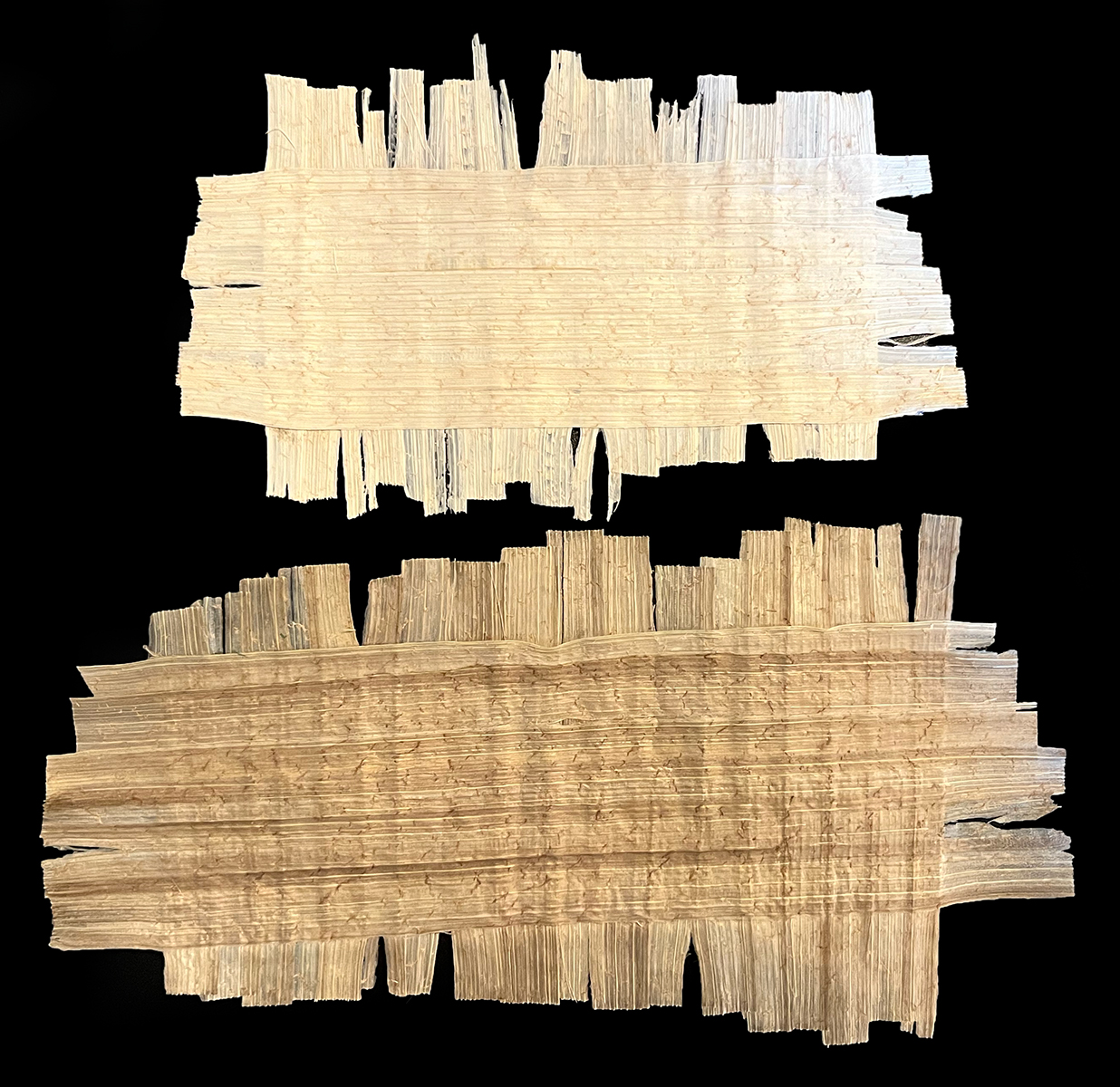
The two stalks were cut at the same time. The pith of each of the stalks was an identical color (white with a slight grey tinge). I cut the strips in the same way from the same central portion of each stalk. I pressed them under the same conditions. Yet the colors are very different.
I’ve wondered about passages in ancient Roman authors that describe papyrus sheets as white. When Pliny discusses different grades of papyrus, he lists several qualities by which papyrus sheets were judged: fineness, firmness, smoothness, and whiteness (candor). At least one Roman poet describes papyrus rolls as “snowy white” (Tibullus [Lygdamus], Elegiae 3.1.9: lutea sed niveum involvat membrana libellum: “But let yellow parchment wrap the snowy white little book”). It makes me wonder if there was something different about the papyrus plants that grew in Egypt in antiquity, or if there was something in the ancient processing that helped to produce uniformly white sheets (for instance, Pliny mentions that papyrus sheets were dried in the sun–could that have a bleaching effect?). It would be challenging to produce papyrus sheets on an industrial scale if you had to worry about strips from different stalks potentially having quite different colors and ending up on the same sheet. That kind of thing did happen occasionally. Notice the differently colored papyrus strips in this bifolium from the Bodmer Menander Codex:
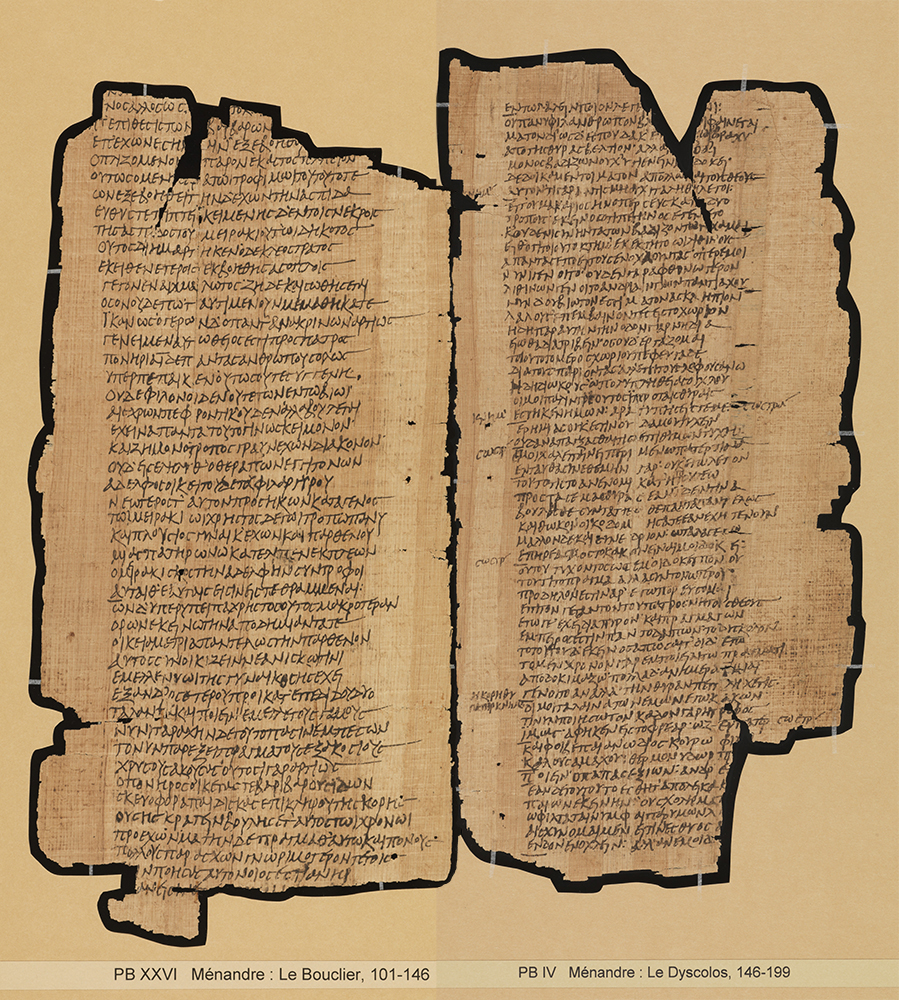
You see this phenomenon from time to time (thought not usually so pronounced). For the most part, however, it seems like ancient bookmakers tried to avoid this kind of thing.


 Variant Readings
Pingback: The Color(s) of Papyrus and Pliny’s Instructions | Variant Readings
Thanks for this. So it seems that a combination of soaking, pressing and drying can bond the strips together. Does this mean that two completed sheets will stick together if subjected to certain conditions of soaking, pressing and drying? Could the outer coil of a papyrus scroll stick to the next coil, if stored on a damp shelf in antiquity? Do we have any evidence of papyrus sheets fusing together from such a process, or from mold or anything else?