I’ve written before about the reopening of the museum at Ostia Antica in 2024. One of my favorite displays there involves material from what is now known as Tomb E 200 from Isola Sacra–an interesting sarcophagus with equally interesting contents.
This sarcophagus was uncovered in 2008 on private property north of the excavated archaeological park at Isola Sacra. The Guardia di Finanza thwarted would-be looters, and the sarcophagus was excavated with its contents intact.
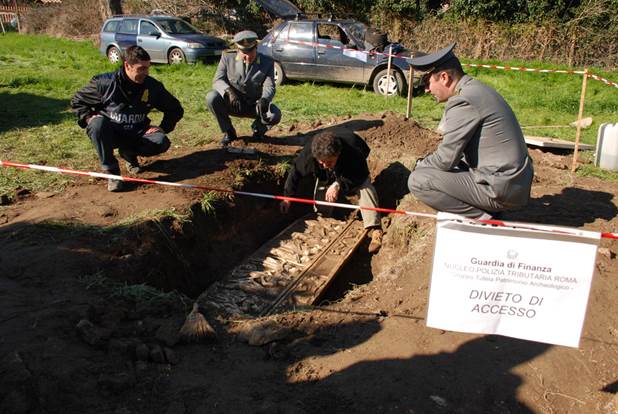
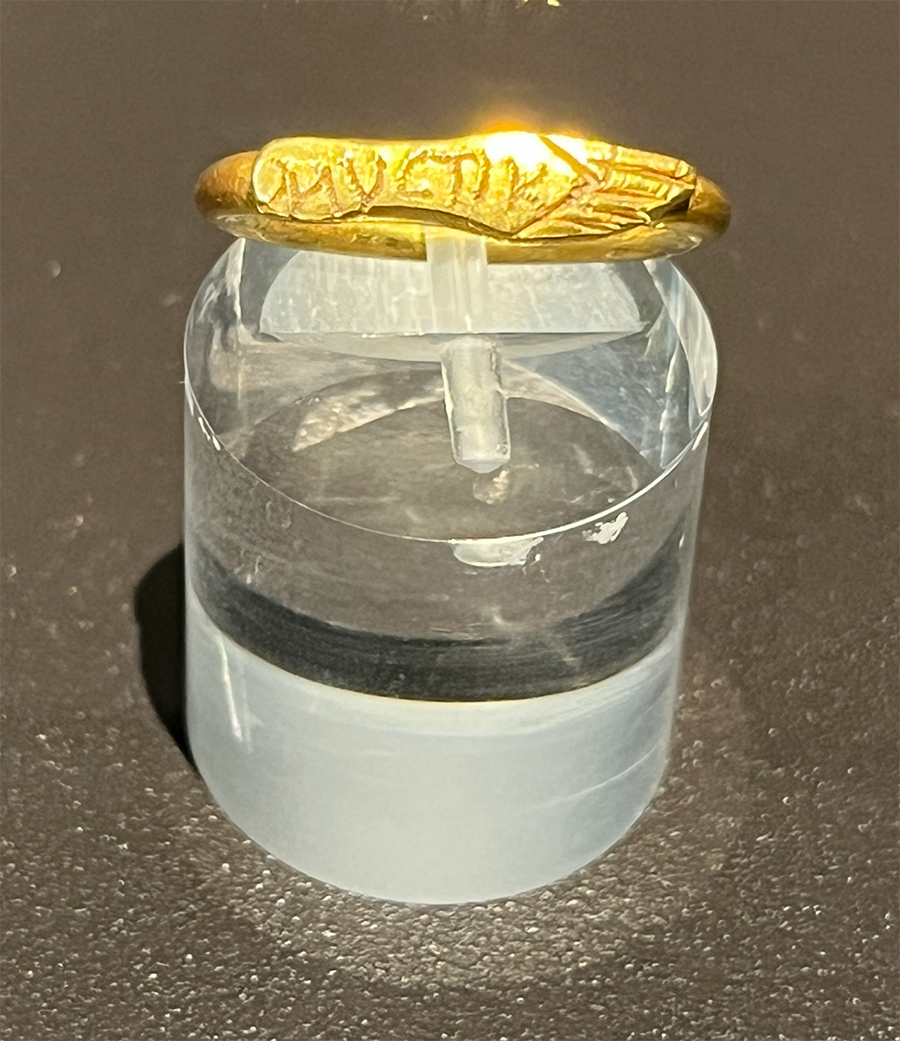
The sarcophagus found inside a damaged structure and was set on its rear side with its front facing upward. The body inside the sarcophagus has been identified as that of a five or six year-old child. Among the materials inside were two gold rings, one of which is inscribed with Greek letters spelling out μυστικ on a foot-shaped bezel.
Inside the sarcophagus near the remains of the child’s head was a corroded bronze coin datable to the late first or early second century CE (a coin in the mouth for Charon?). There was also a bent iron nail, a type of artifact often found in Roman burials.
Both the sarcophagus and its lid are elaborately decorated with imagery relevant to the topic of manuscripts and readers. Although some imagery associated with reading is common on Roman sarcophagus reliefs (for instance, a bust of the deceased holding a closed papyrus roll), the density of the imagery on this particular sarcophagus is notable.
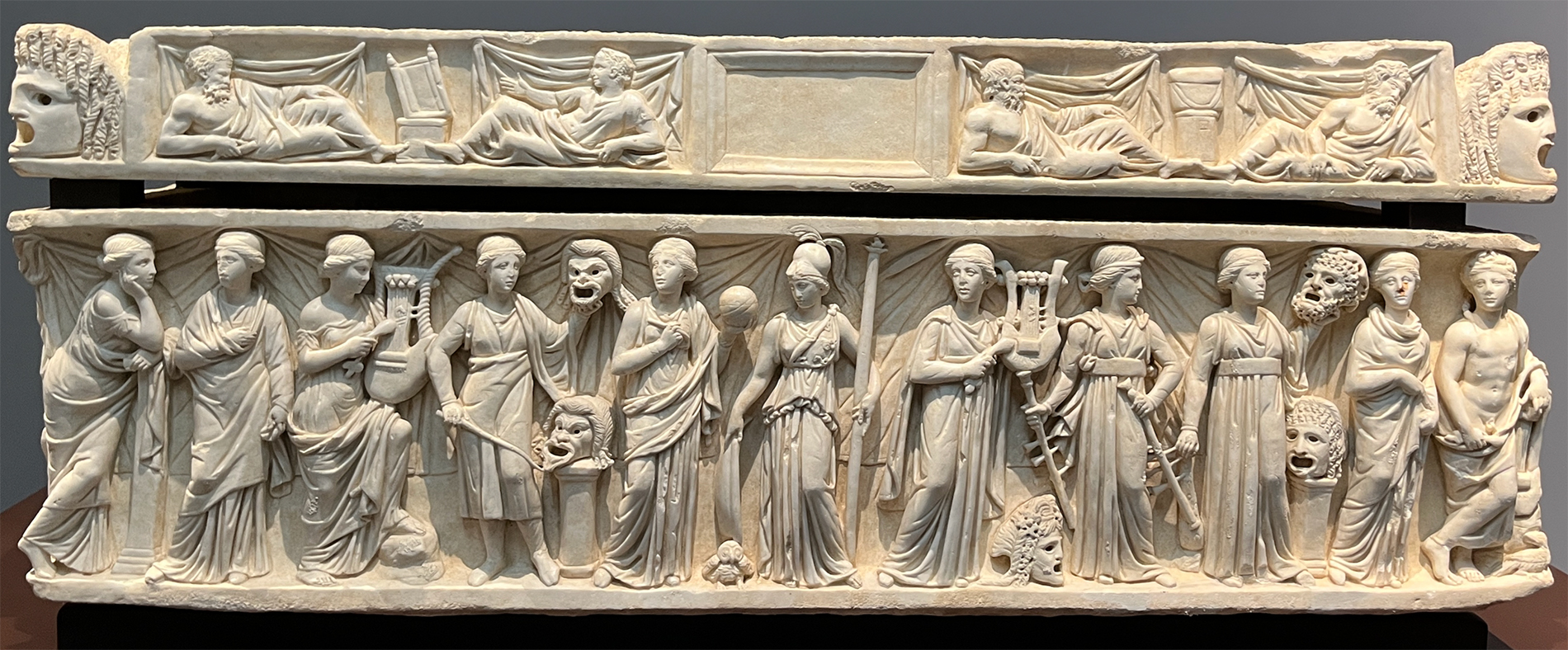
The central figure in the main relief on the front is Athena, who is flanked by the nine muses and Apollo. But it was the imagery on the short ends of the sarcophagus and the lid that really caught my eye.
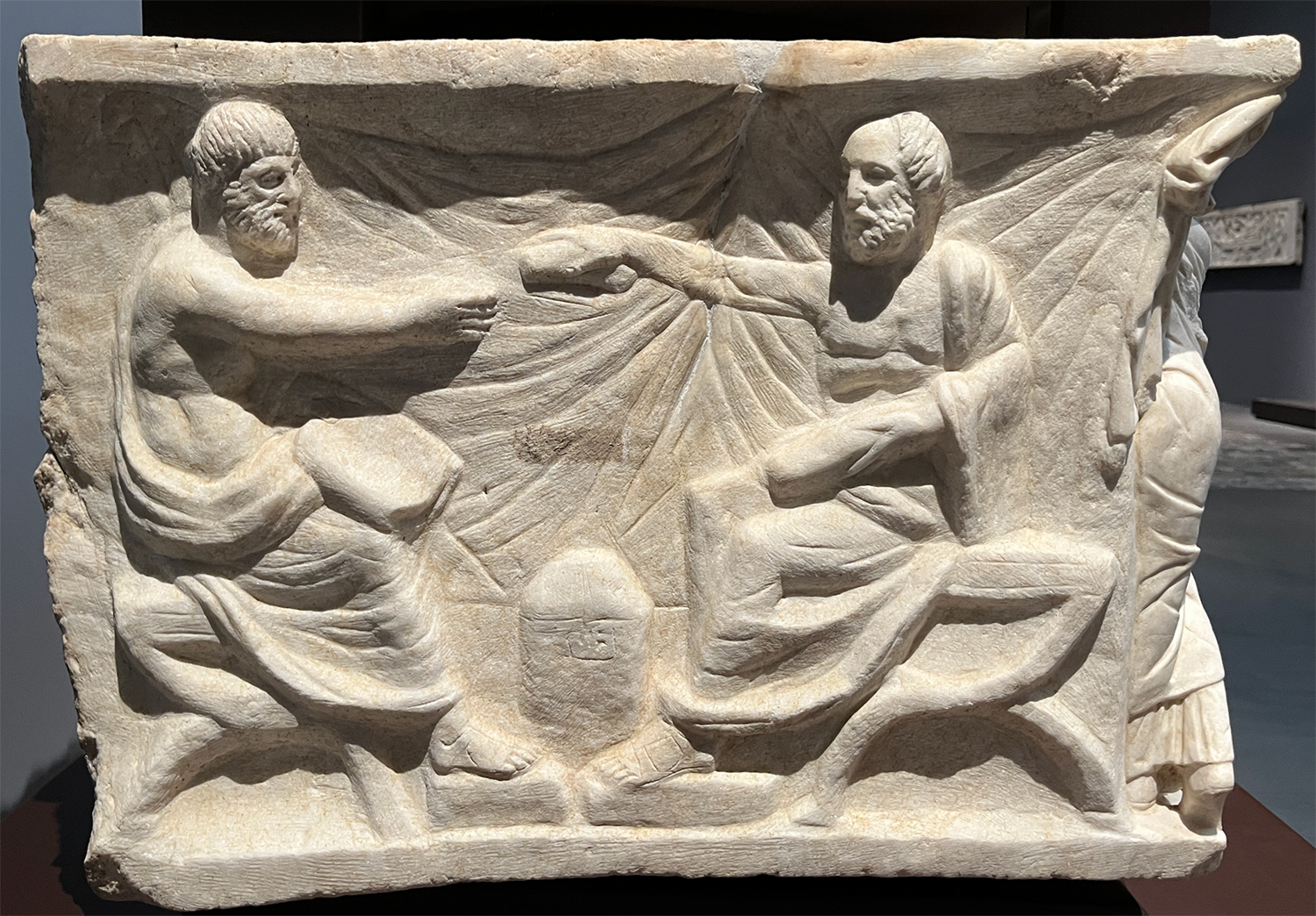
The two short ends of the sarcophagus are especially rich. On one side, a seated figure on the left holds an open papyrus roll in one hand and reaches out to receive what looks like another papyrus roll from the outstretched hand of the seated figure on the right, who holds a closed papyrus roll in his other hand. In the center of the scene between the two figures is a case for holding papyrus rolls (a capsa or scrinium).
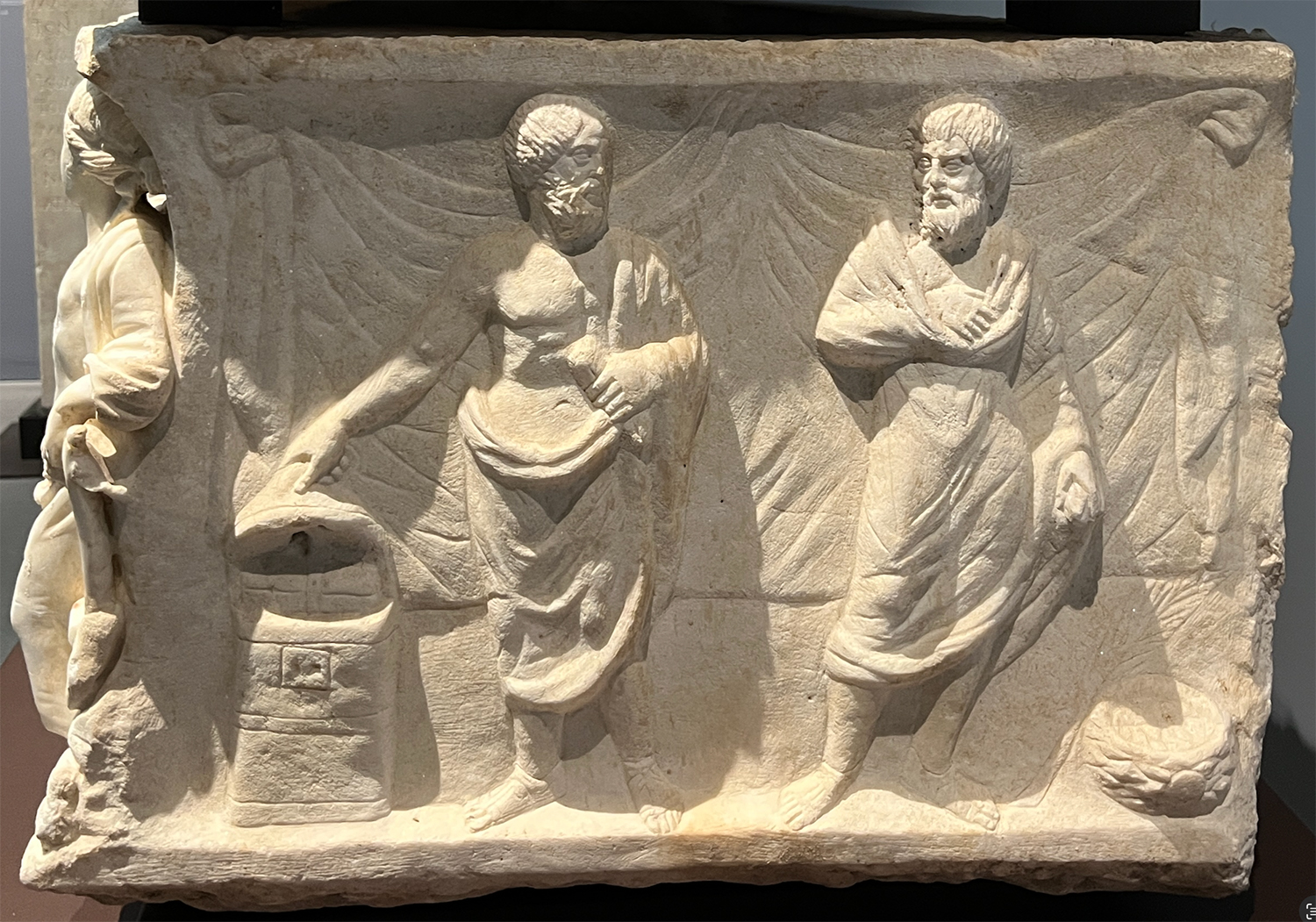
On the opposite side, two standing figures each hold papyrus rolls in their left hands, while the figure on the left lifts the top off a capsa to reveal bundles of papyrus rolls.
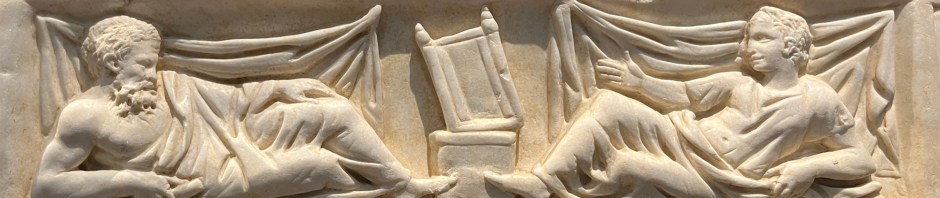
Most interesting to me is the lid. Between the two theatrical masks on the corners of the lid are two scenes, each with a pair of reclining men. The two men on the left sit on either side of what looks like an open papyrus roll in a holding stand of some kind.
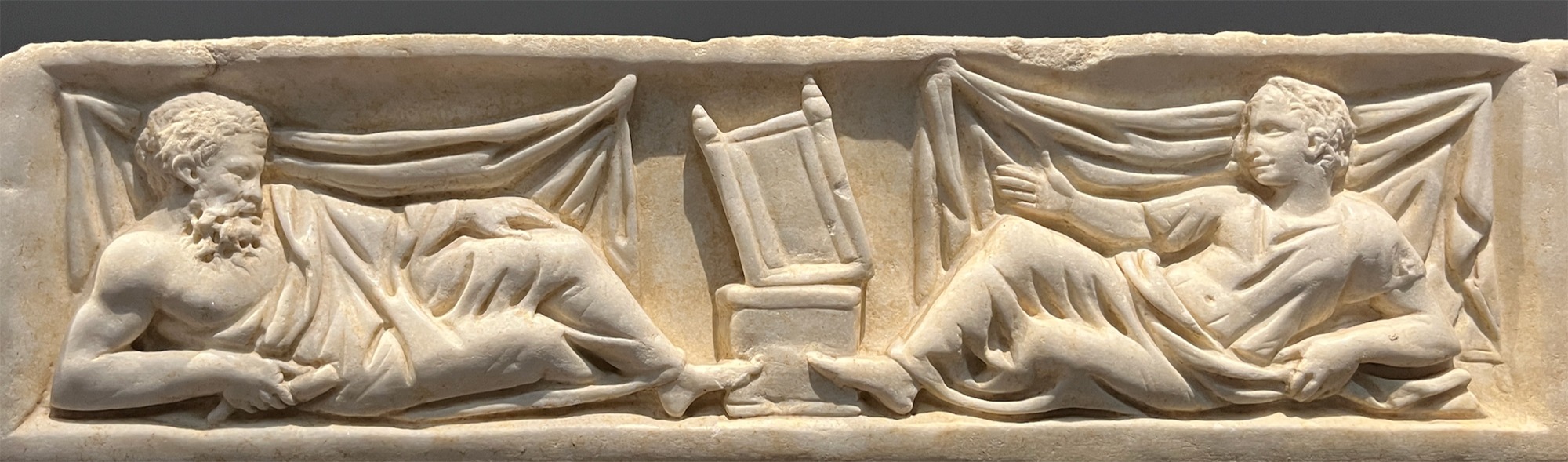
Similar devices are sometimes shown standing atop a pedestal, as on the well known tombstone of Abeita in the British Museum. Here it sits on a low table or box, perhaps another capsa. The figure on the right holds what looks like a closed papyrus roll in his right hand (an early publication, Germoni 2009, identified the object as a writing instrument, but I am not so sure).
On the right side of the lid, a parallel pair of men recline. Between them are two objects.
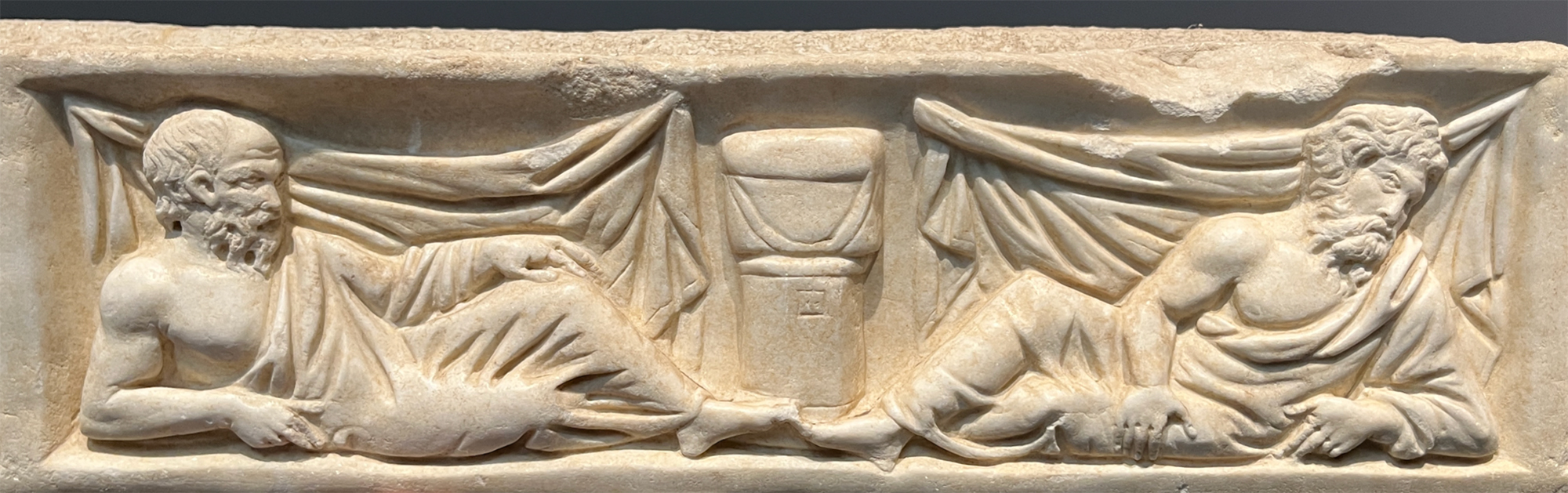
The lower object between the two figures seems to have a latch, which is characteristic of capsae. The upper object has a dangling strap also characteristic of some depictions of capsae.
This is a fascinating artifact, with its attention to detail and clear interest in the imagery of reading and learning. I wonder: What is the story behind the burial of a child in a sarcophagus with this kind of iconography? What is the significance of the inscribed ring?
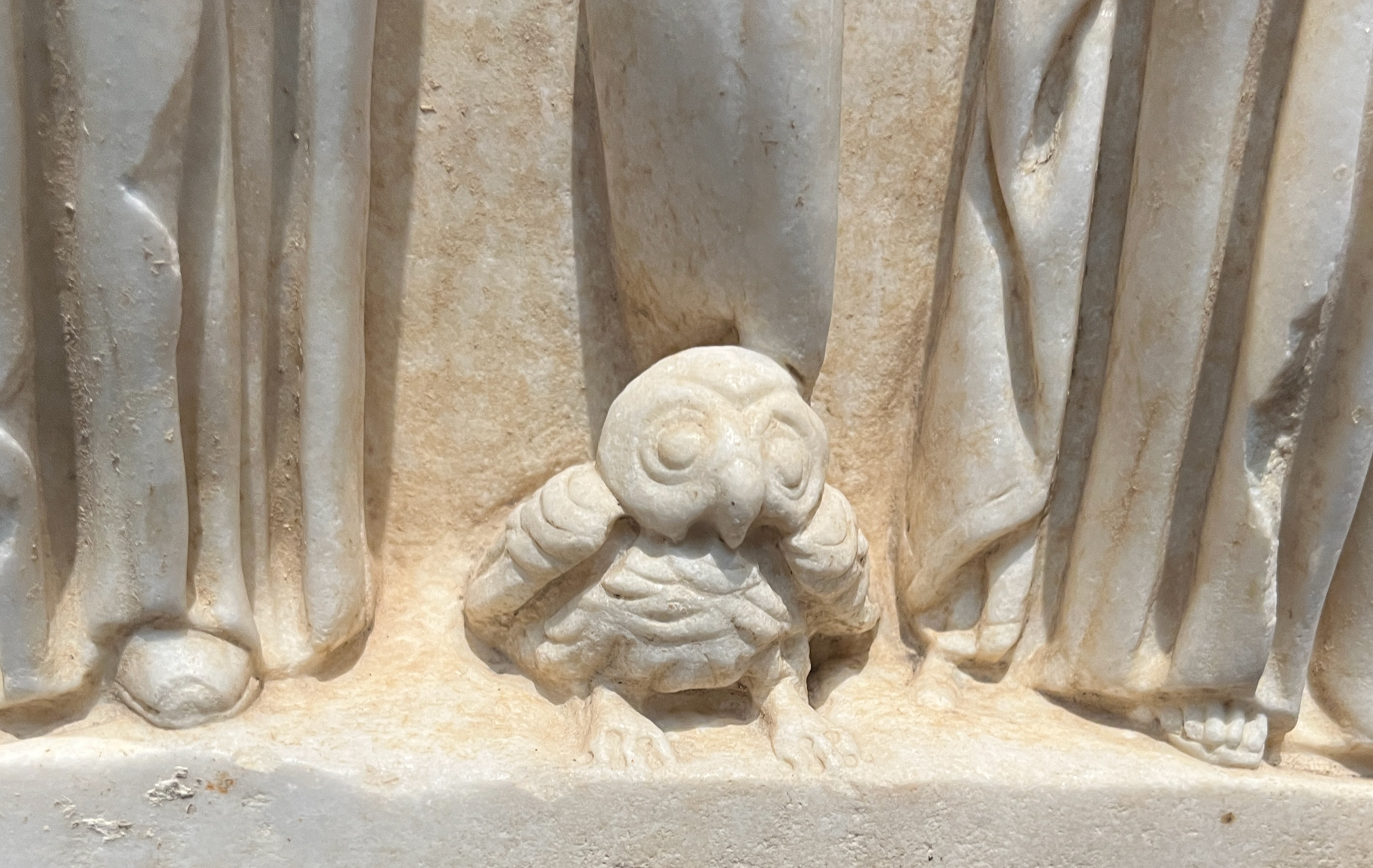
And one last small detail that just delighted me about this piece: Look at Athena’s little owl at the bottom of the sarcophagus. It’s perfect:
Sources:
Bondioli, Luca, et al. 2018. “L’infante e il sarcofago delle Muse dall’Isola Sacra,” in Ricerche su Ostia e il suo territorio, edited by Mireille Cébeillac-Gervasoni, Nicolas Laubry, and Fausto Zevi. Rome: Publications de l’École française de Rome. https://doi.org/10.4000/books.efr.3712.
Germoni, Paola. 2009. “Fiumicino-Isola Sacra: Vecchi e nuovi rinvenimenti.” Bulletino della Commissione Archeologica Comunale di Roma 110: 398-404.


 Variant Readings
Super interesting! With no expertise or experience in this at all: perhaps the child’s parents (or one of) were playwrights.