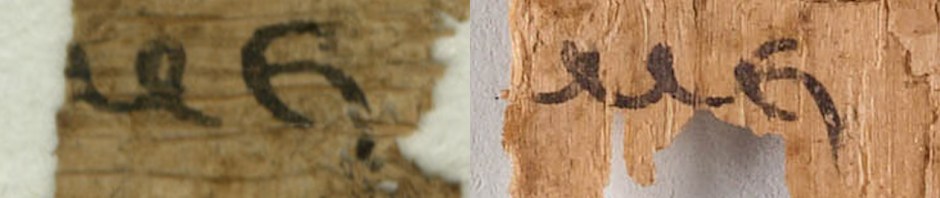
The editors of P.Oxy. 87.5575, the recently published papyrus fragment with a collection of sayings of Jesus, stated that P.Oxy. 60.4009, another papyrus with material about Jesus, “may well be in the same hand, though the loops in that papyrus are sometimes more pronounced and there is perhaps less lifting of the pen.” In preparation for a meeting of the North American Society for the Study of Christian Apocryphal Literature yesterday, I spent some time with images of the two papyri and managed to convince myself that these pieces were in fact copied by the same person.
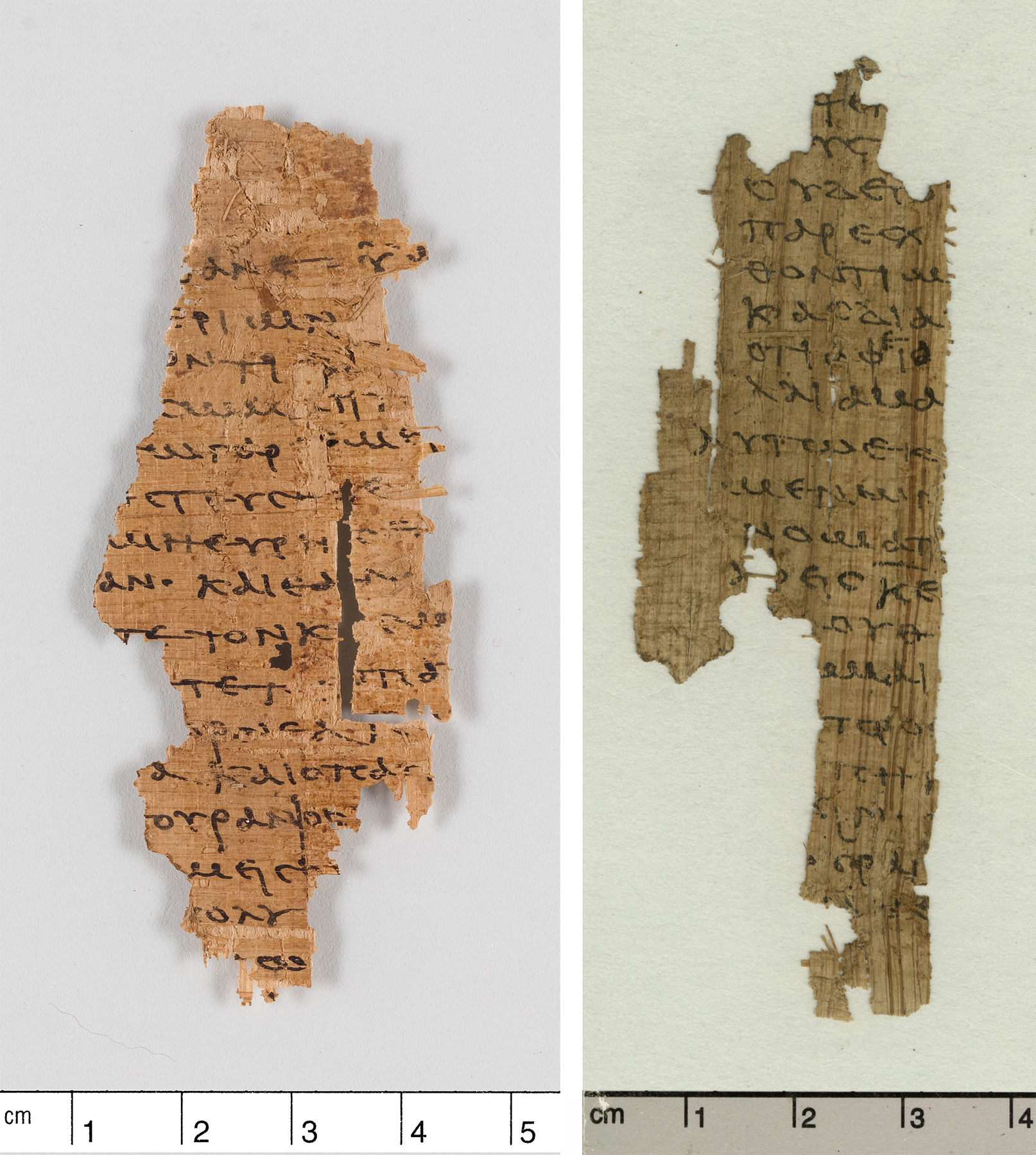
I’m often critical of efforts to assign precise dates on the basis of handwriting to undated manuscripts of Greek, Latin, and Coptic writing of the Roman era. The comparisons involved in that process depend on a number of assumptions that I’ve discussed elsewhere on multiple occasions. The comparisons made in palaeographic dating are always a matter of more similar and less similar, and there is always room for debate. When the question has to do with identifying the work of a particular copyist, however, the task is sometimes easier. I say “sometimes” because when it comes to expert execution of highly formal scripts, it really can be difficult to tell the work of one copyist from another (think of the debates around the number of copyists involved in the production of Codex Vaticanus). But when the scripts involved are less formal and the degree of execution more, we might say, relaxed, the process of identifying the work of a single copyist in multiple manuscripts can be more straightforward. It’s a matter of saying, “Look at this combination of idiosyncrasies. These two samples of handwriting were produced by the same person.”
So, here’s a side-by-side comparison of what I would consider a set of idiosyncrasies sufficient to identify the work of a single copyist in P.Oxy. 87.5575 and P.Oxy. 60.4009:
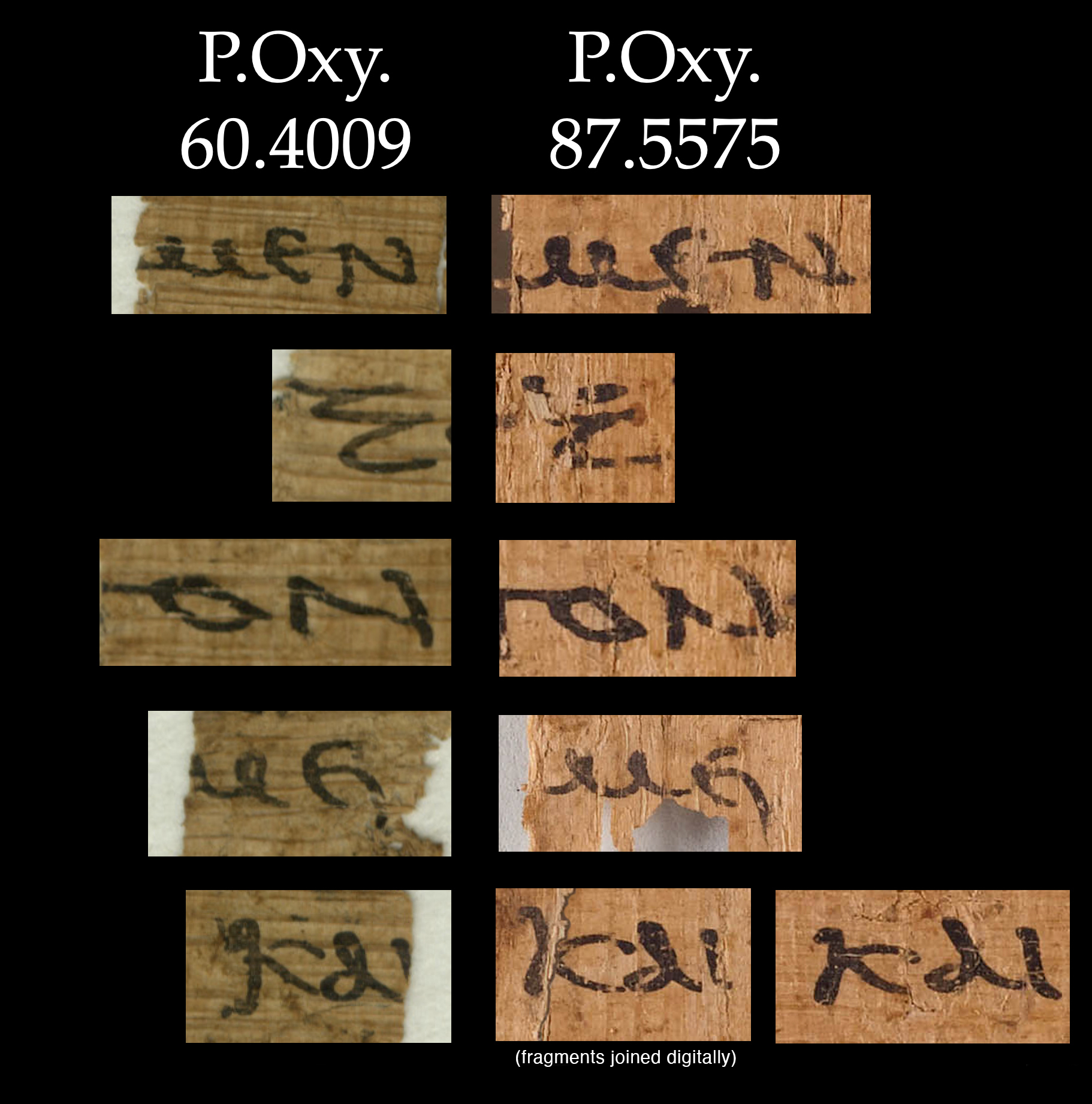
The mu is formed with no lifting of the stylus and with the belly sitting on the lower notional line. The crossbar of the epsilon extends to the top of the first vertical stroke in the nu. The formation of the ξ in both pieces is virtually identical, made without lifting the stylus. The upper right quadrant of the omicron in both pieces is occasionally flattened. The epsilon-iota combination is regularly produced with the iota simply trailing off the middle bar of the epsilon and extending below the lower notional line. The oblique strokes of the kappa in και extend out in an almost horizontal fashion and bend down slightly toward the lower loop of the alpha.
Each of these individual features could be paralleled pretty easily in other papyri, but the combination of all of them in both pieces and the level of graphic similarity on display here make me comfortable saying these two fragments were the work of the same copyist. There are occasionally some slight differences in the formation of some letters, but these all fall within what I would call a normal level of variation for any copyist.
There is at least one other example among the Christian material at Oxyrhynchus in which we find the same copyist responsible for two manuscripts. AnneMarie Luijendijk pointed out to me several years ago that P.Oxy. 8.1078 (Hebrews) and P.Oxy. 6.850 (Acts of John) were likely written by the same person. Arthur Hunt had actually made the identification in his edition of P.Oxy. 8.1078, but I had not noted the reference. It is also worth recalling the recently published set of Septuagint papyri, P.Oxy. 84.5404-5408, which seem to have been copied by the same person but apparently were part of different codices.
I would be even more interested to see if it is possible to identify the work of a single copyist who was responsible for both Christian and non-Christian papyri.


 Variant Readings

Brilliant, Brent!
An example of one scribe copying Christian and non-Christian texts is found in NHC VI where Christian texts occur alongside parts of the Republic and Asclepius, of which I am sure you’re already aware.
Thanks, René. Good point!
Very nice. As always, well done. I’m convinced. Did someone argue that the two derive from different dig sites?
The box numbers for the fragments making up P.Oxy. 5575 were 16 2B.47/A(b) + 16 2B.48/C(a), so both second season. The box number for P.Oxy. 4009 was 62 6B.82/C(1-3)a, sixth season. The editors of P.Oxy. 5575 wrote, “4009 was found in Grenfell and Hunt’s sixth excavation season, in which they do not seem to have returned to the mounds dug in their second excavation season: see A. K. Bowman et al. (edd.), Oxyrhynchus: A City and Its Texts (2007) 353, 365–6.” This seems right as far as specific mounds go, but it’s possible that they were digging at adjacent mounds (perhaps K23 in the second season and perhaps K22 in the sixth season?).