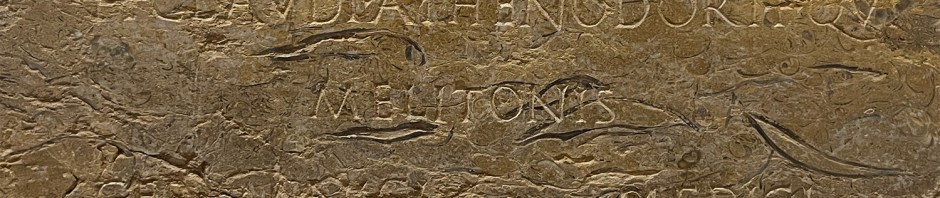
During a recent visit to the Museuo Nazionale at the Baths of Diocletian in Rome, my attention was caught by a funerary urn made from a type of stone with very interesting patterns [[Update 27 Feb. 2026: I am informed that the stone is astracane dorato (castracane), a north African marble.]]
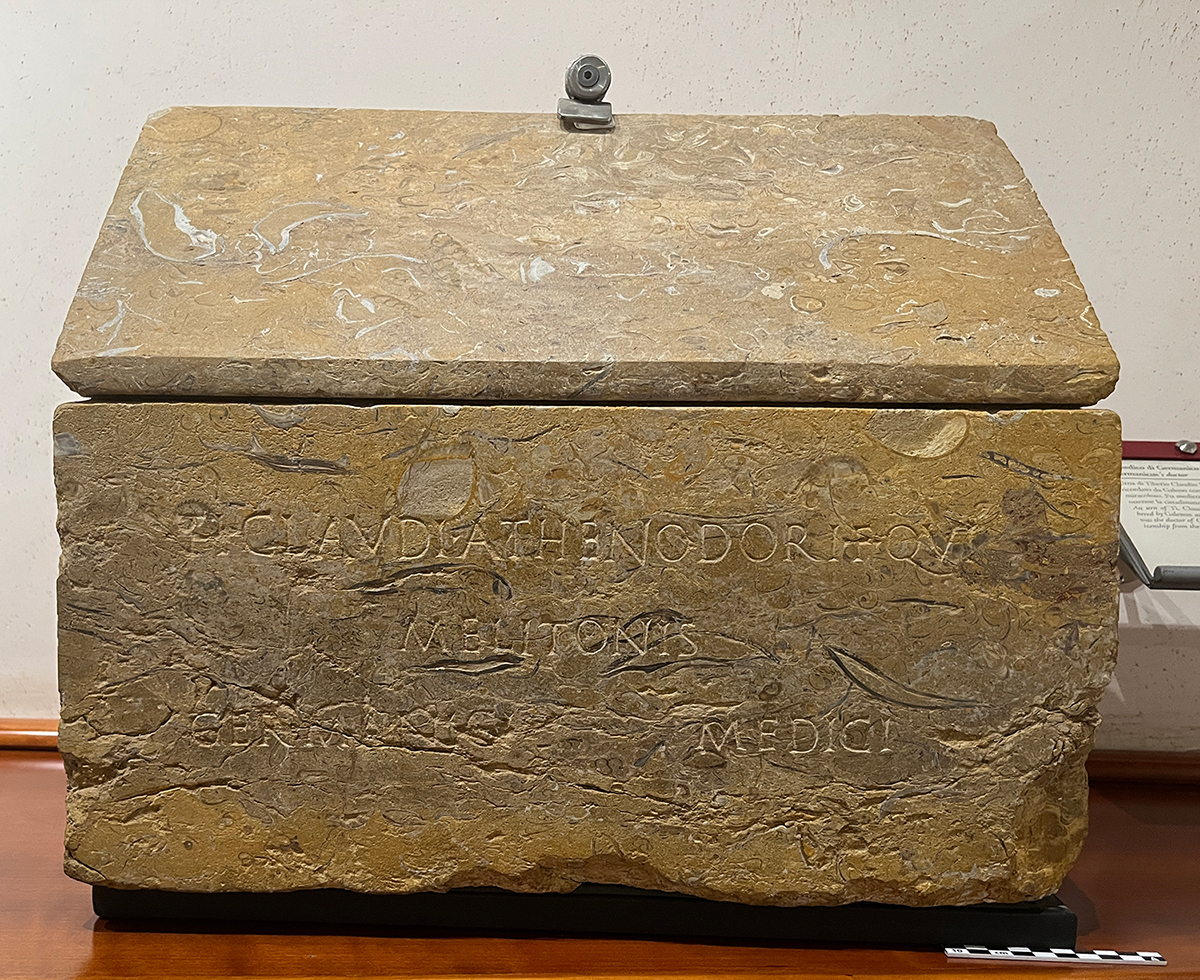
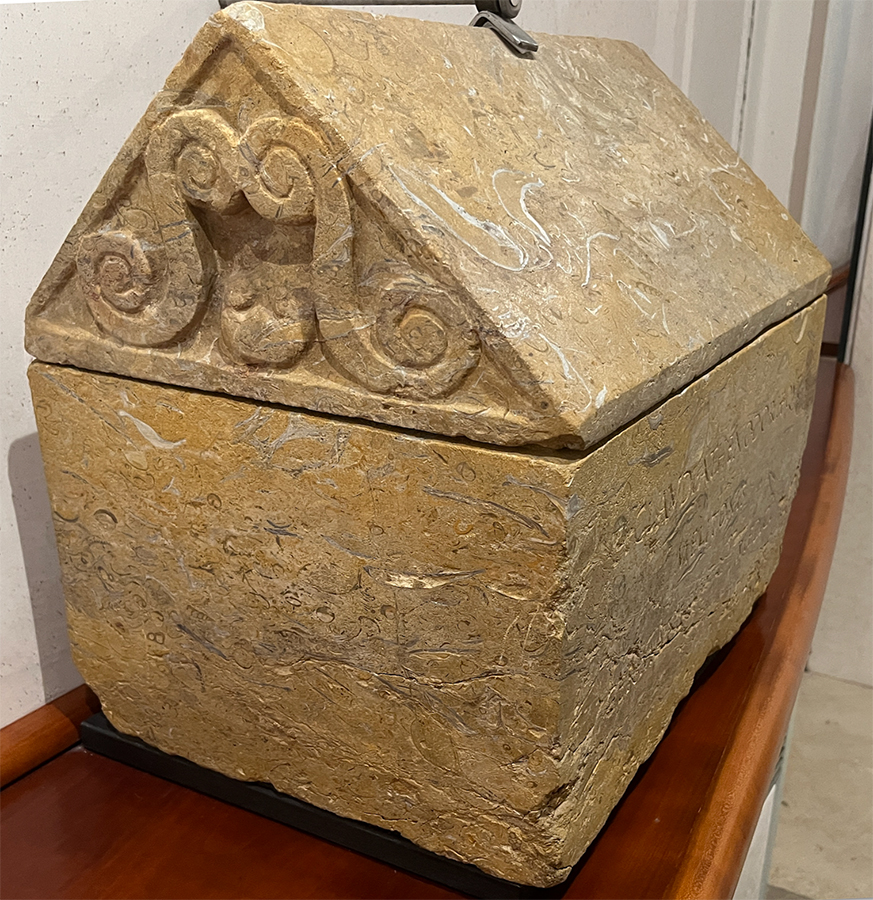
The inscription on the urn is also remarkable:
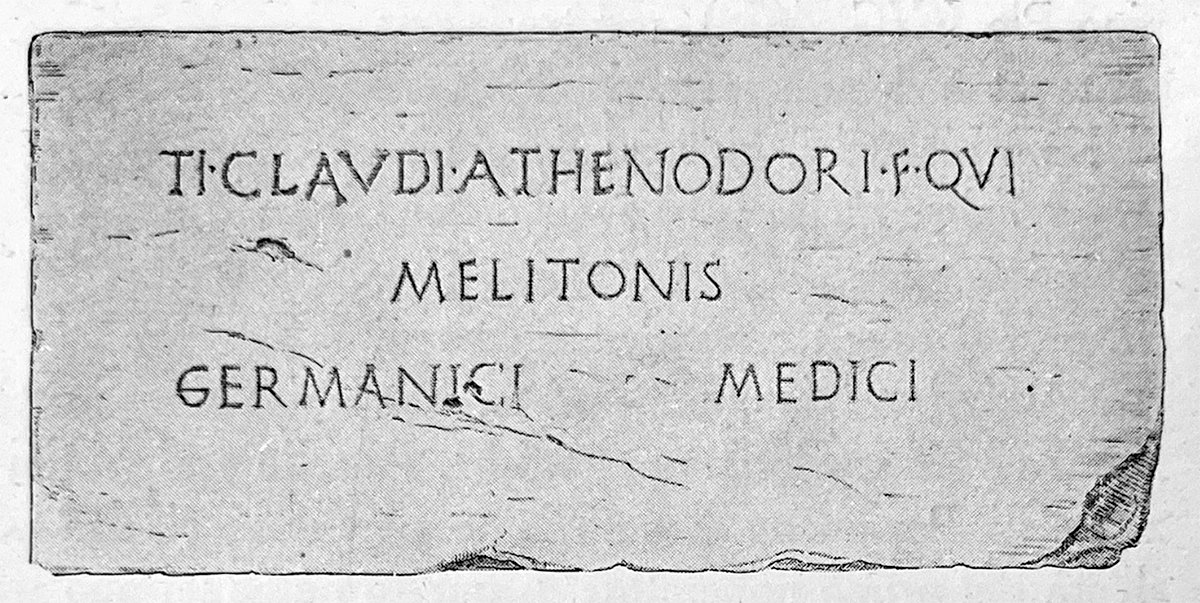
Ti(beri) Claudi Athenodori f(ilii) Qui(rina) / Melitonis / Germanici medici1
Of Tiberius Claudius Melito, son of Athenodorus, of the tribe Quirina, doctor of Germanicus
The label in the museum identifies the “Germanicus” of the inscription as the general Germanicus (15 BCE–19 CE), father of Caligula, which seems reasonable (though Herbert Bloch seems to have understood the title to refer to the emperor Claudius, i.e. Tiberius Claudius Caesar Augustus Germanicus, 10 BCE–54 CE2). The label also connects the physician Claudius Melito to a reference in Galen, which seems a bit less certain to me. Galen just briefly mentions a “Melito” who was said to be the author of a medical recipe (ξηρὸν σηπτὸν τὸ Μελίτωνος, De compositione medicamentorum per genera, Kühn xiii 843).
The inscription was found in 1934 along the Via Praenestina (200 meters beyond the 8 km mark). The original publication also mentions another inscription found together with the urn of Claudius Melito. This piece is also now on display in the Baths of Diocletian but in the didactic area near the entrance:
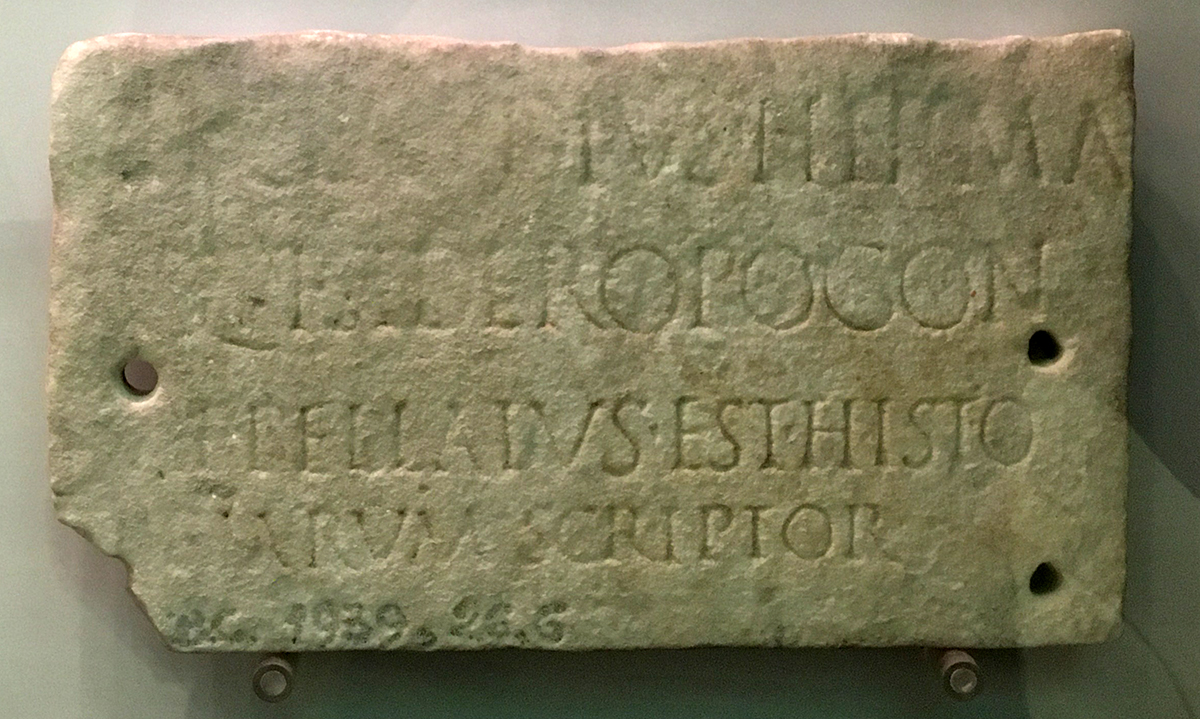
The inscription is a bit more legible in the drawing published in the original edition:
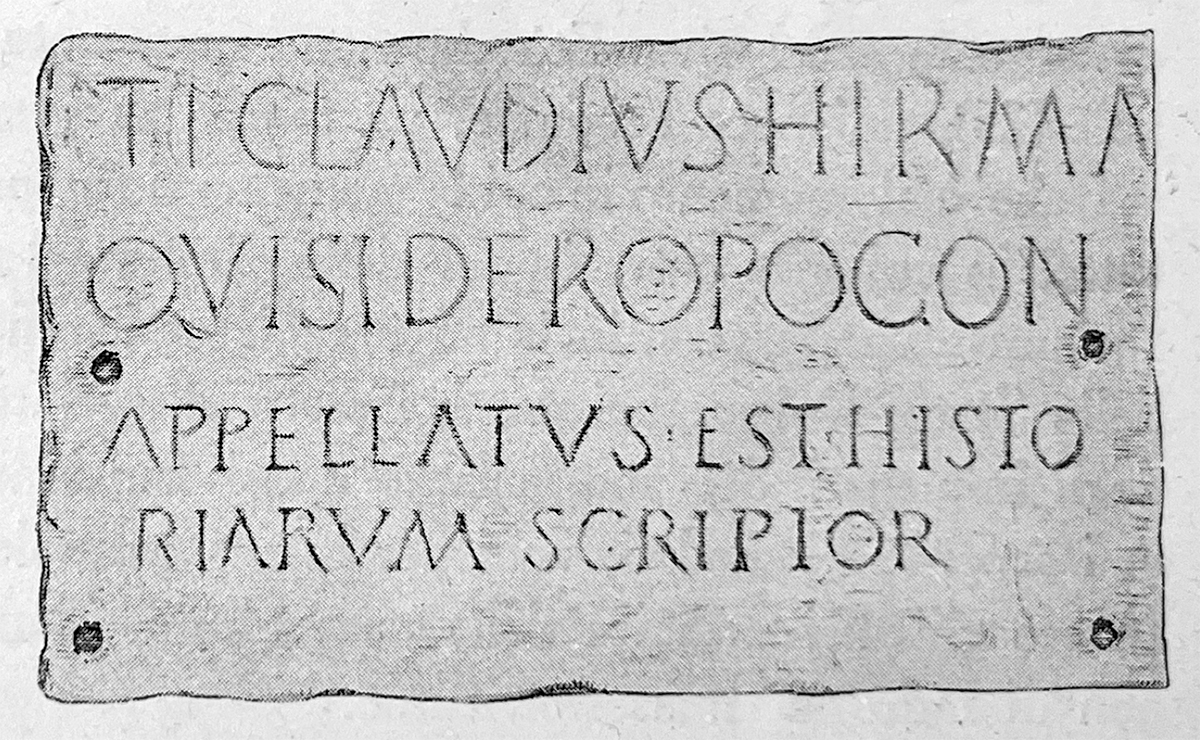
Ti(berius) Claudius Herma / qui Sideropogon / appelatus est histo/riarum scriptor
So, this is the funerary stele of the Claudius Herma, a writer of histories who is called “Iron beard” (a latinization of what must have been a Greek name, σιδηροπώγων, but which is, as far as I know, not attested).
It is interesting to see these two Tiberii Claudii found together, a medicus and a scriptor historiarum, two people of learned professions probably buried in the same tomb.
- G. Iacopi, “Nuove iscrizioni di Roma e del suburbio,” Bulletino della Commissione archeologica del Governatorato di Roma 67 (1939) 13-26. This is the original edition of the inscriptions and also the source of the two drawings in this post. ↩︎
- H. Bloch, review of L’Année Épigraphique: Année 1940 in American Journal of Archaeology 49 (1945) 627-629. ↩︎


 Variant Readings
Fascinating! You might find John Rich’s entry in Cornell (ed.) Fragments of the Roman Historians interesting on Herma. I infer from that that there is a sort of daisy-chain of identifications which makes Herma a freedman of the emperor Claudius and then puts Melito at the same date by association.
Thank you for the reference! I find there also a reference to the museum catalog, which I also should have checked. There I see that the stone of Melito’s urn identified as “astracane dorato” or castracane, a north African stone that is said to be rarely used in Rome (“di uso rarissimo a Roma”).