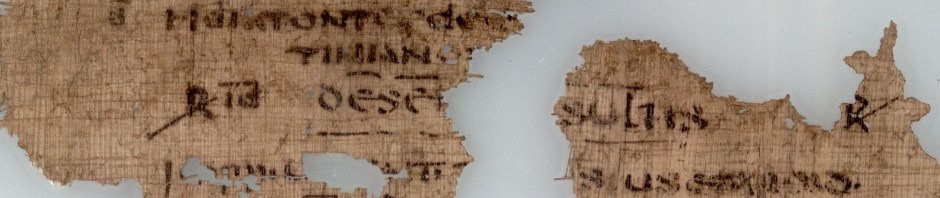
One of the frustrating things about working with the earliest codices and codex fragments is the lack of securely dated examples. Palaeography can give a general range, and archaeological context or reuse can sometimes give us a decent terminus ante quem or terminus post quem, but before the era of the dated colophon, there is really not much in the way of securely dated material. One exception to this generalization is P.Oxy. 15 1814, a codex with a very narrow window of production.
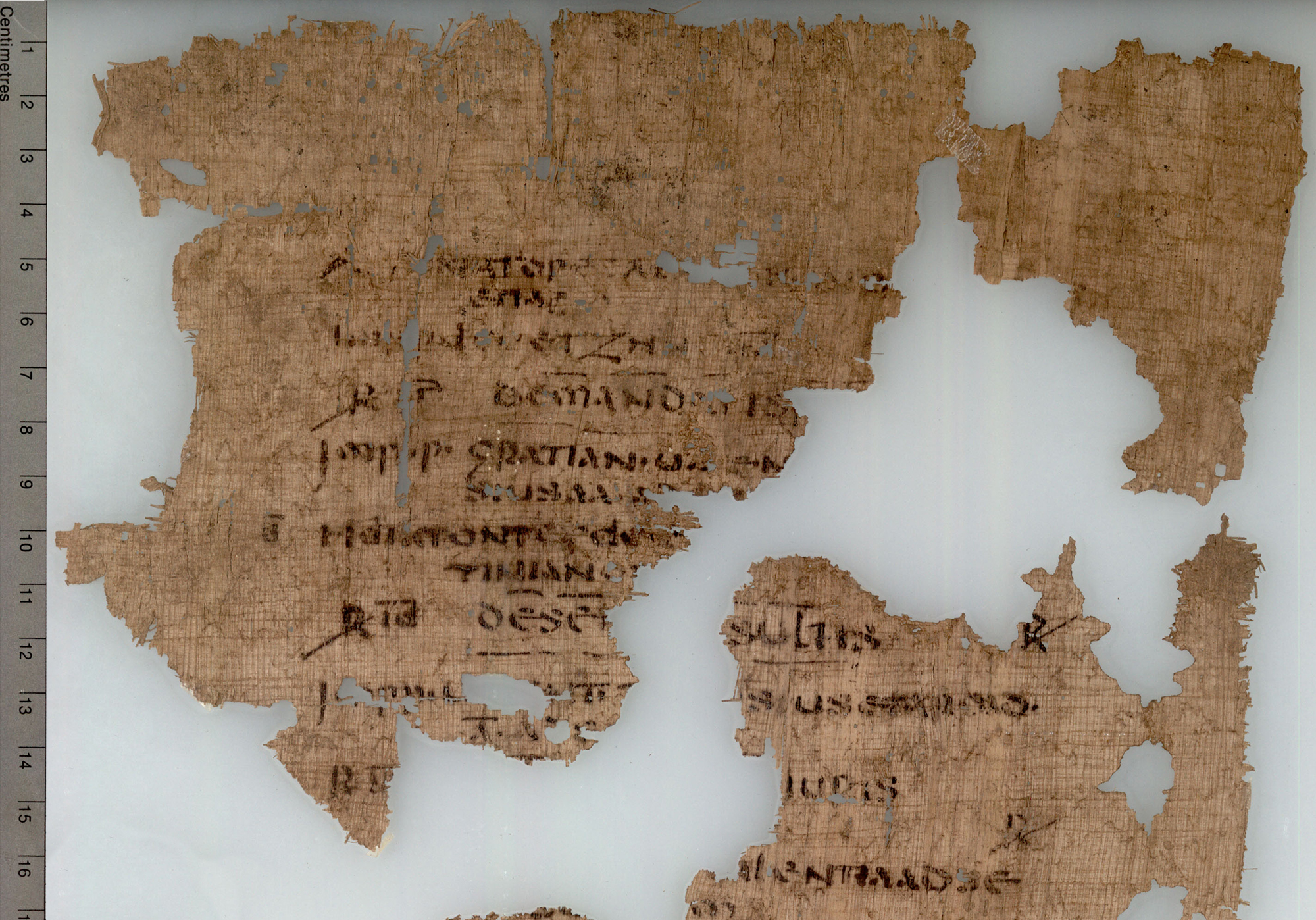
This fragmentary folium was once part of a large papyrus codex that contained the Justinian Code. The portion preserved here is a part of a table of contents or index of the main headings from Book One. What makes it special is that it comes from the first edition of the code, which was produced in 529 before being replaced by a revised edition late in the year 534. The text on the papyrus lacks the imperial pronouncements from the years 530-534 that characterize this portion of the second edition. What is more, the preface to the edition of 534 specified that only the revised edition should henceforth be copied and distributed: “it alone shall be consulted in all courts as of December 29…We permit no one hereafter to cite anything…from the first edition (ex prima editione) of the Codex of Justinian.” So the window when the Oxyrhynchus codex was produced is small, basically 529-534 CE.
Thus, the script of the papyrus can serve as a relatively fixed point of comparison for the Latin uncial (the so-called “B-R uncial”).
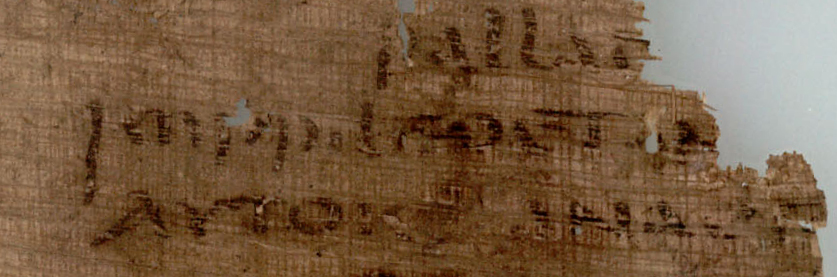
It’s a pity that most of the Greek writing on the page is lost or obscured by damage, as in the example above.
The papyrus is also interesting from a codicological standpoint. It’s quite big. It is fragmentary, but its full dimensions seem to be preserved: The page was about 23 cm wide and 33 cm high, very roughly on par with the Louvre Cyril (about 21.5 cm wide and 35.5 cm high), or the Milan Josephus, (about 24 cm wide and 34 cm high), both also usually assigned to the sixth century. All in all, a very fortuitous survival.


 Variant Readings
Can this be used a another means to verify or falsify the dates of other manuscripts?
I don’t usually think about it in terms of verifying or falsifying the dates of other manuscripts. Rather, this precisely dated manuscript can serve as one anchor point for estimating the dates of other manuscripts written in a similar script.