
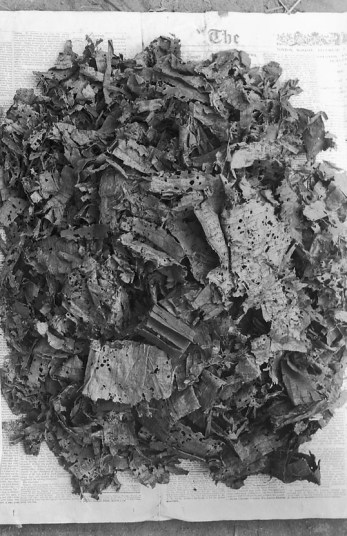
Excavated papyri; image source: Egypt Exploration Society
My book on early Christian manuscripts contains a chapter on the Christian material that has so far emerged from the excavations of Grenfell and Hunt at Oxyrhynchus. One of the questions I was unable to answer during my research was to what degree the Christian literary material that has been published in the Oxyrhynchus Papyri series is representative of the total amount of Christian literary material that was collected by Grenfell and Hunt. To phrase it another way, can we know whether the 160 or so Christian books (codices and rolls) so far published in the P.Oxy. series represent 5%, or 20%, or 50%, or 60%, etc. of the total number of Christian fragments collected in the Oxyrhynchus excavations.
You may recall that, in light of the odd circumstances surrounding the identification and publication of P.Oxy. 83.5345 (the papyrus formerly known as “first-century Mark”), the Egypt Exploration Society announced that in the spring of 2016, “the EES decided to review what NT fragments had been identified in its collection but not yet published.” Now the EES has made available the results of that summary (in the form of rough numbers): Continue reading
 As I compiled stories of discoveries of early Christian manuscripts for my book,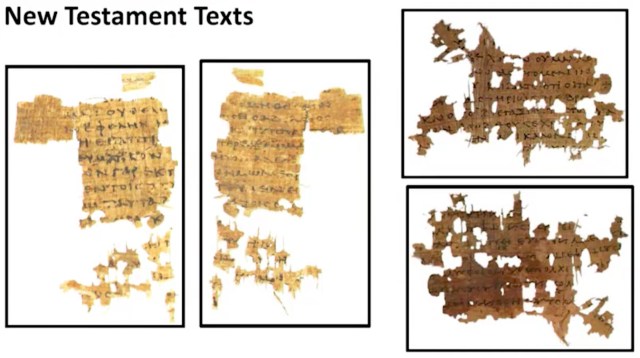
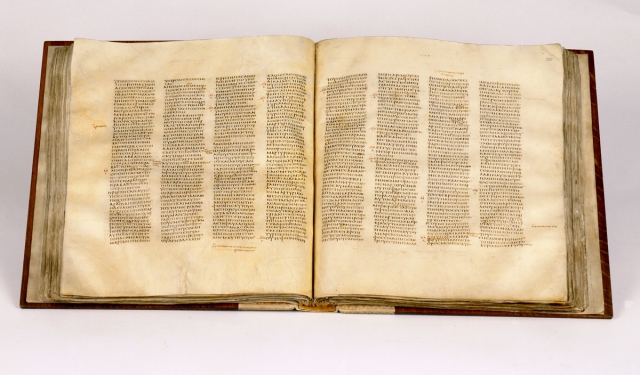
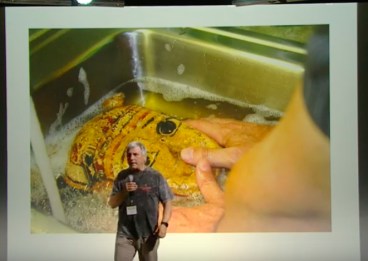 For some time now, I’ve been trying to make progress in ascertaining the previous ownership of both the manuscripts and the cartonnage (from mummies and other sources) that ended up in the Green Collection. This post will focus on the mummy masks. For the record, there are several mummy masks that have been associated with the Green Collection over the years.
  Thanks to Alin Suciu and Tommy Wasserman for pointing out that some of the


 Variant Readings