Thanks to Alexander Schick for the tip: Earlier this year, Christie’s offered on auction several pieces from the collection of Martin Schøyen. Among the pieces sold was the so-called Crosby-Schøyen codex. Still no word on who bought the book or where it now resides. Now it looks like other pieces are for sale through an online rare book dealer:
Included are parchment folia from Coptic Psalters. All three have the same slightly odd statement of provenance:
“In the collection of Maurice Nahman (1868-1948), French collector-dealer, and Head Cashier at the Crédit Foncier d’Egypte in Cairo, who used this position to establish himself as the foremost antiquity dealer of Cairo in the 1920s and 1930s. A sale of part of his collection was held by Christie’s, London, on 2 March 1937. After his death his son kept the business going until 1953, and then the remaining stock was offered at Hotel Drouot, Paris, on 26-27 February and 5 June 1953, with the remainder apparently passing to Erik von Scherling.”
It’s not clear from this statement whether these particular pieces are being claimed as part of the 1937 sale, the 1953 sales, or as a part of Nahman’s collection that “apparently passed” to Erik von Scherling. Or whether they are just being assigned in general terms to “the collection of Maurice Nahman.” A somewhat frustratingly vague statement.
Since the publication of Before Religion in 2013, I have not really returned to the topic of conceptual problems in the study of religion. My attention shifted to early Christian manuscripts and, more recently, the development of the codex. But questions about the concept of religion still interest me, and back in 2022, I was invited by colleagues at Lund University to a dialogue with Kevin Schilbrack. For those who don’t know, Schilbrack is a prolific philosopher of religion who has written some classic articles in the field. See–for starters–the following:
The idea for the meeting in Lund was for me to respond to Schilbrack’s criticisms of Before Religion. But it also served as an opportunity for the two of us to meet for the first time, which was very enjoyable. Even if we come to quite different conclusions, it was an honor and a pleasure to mix it up with Kevin.
Disagreement about the trans-cultural applicability of the concept of religion has been a feature of the academic study of religion for decades. In a series of recent essays, Kevin Schilbrack has powerfully reframed these discussions as a debate between realist and antirealist philosophical orientations. Aligning himself with Critical Realism, Schilbrack argues that religion is a transcultural and transhistorical reality and that those who deny this are antirealists. As my own work is among his targets, this article engages Schilbrack’s critique. The first part of the article challenges some of Schilbrack’s readings of Before Religion. The second part queries Schilbrack’s use of examples from the physical sciences as analogies for the relationship between concepts and the real things they are said to designate. The third part models an alternative use of examples from the natural sciences to think about historiography, concluding that the realist/antirealist dichotomy is not a useful tool. The physics of the last 150 years has shown that our most fundamental ideas about the universe – what we think the “real” character of the world might be – can change radically in short intervals of time. Historians should take heed and approach their own engagement with the traces of the past with due humility.
I very much enjoyed digging into some topics in the history of science, especially the paths not taken, like phlogiston theory and vortex atoms. I think we have a lot to learn about method from these failed theories.
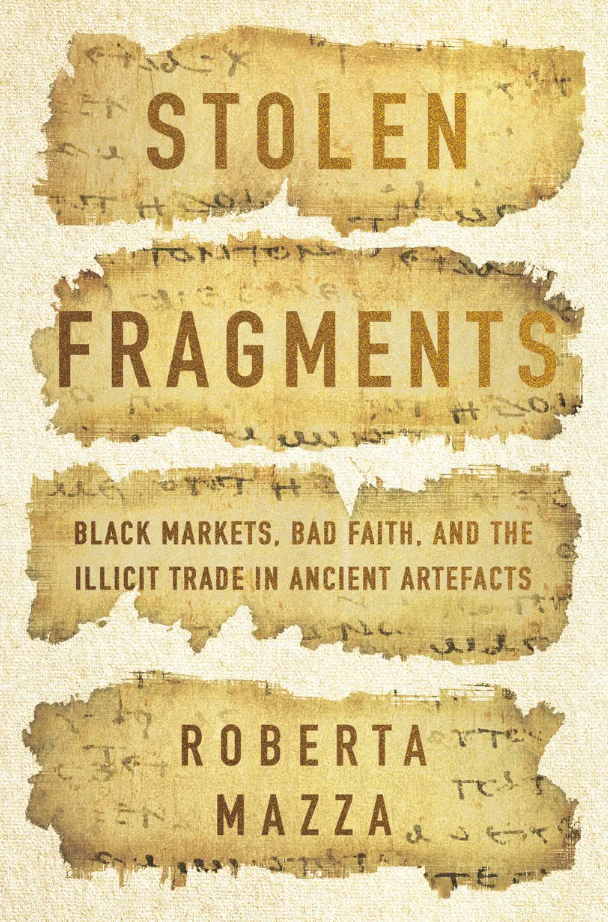
This is a well organized and highly readable book. It tells a story–equal parts entertaining and disturbing–about a cluster of related topics: the collection of manuscripts and artifacts gathered by Hobby Lobby and the Museum of the Bible, Professor Dirk Obbink’s publication of an unprovenanced papyrus of Sappho, the sale and publication of dozens of so-called Dead Sea Scrolls that turned out to be forgeries, and the theft of over a hundred Oxyrhynchus Papyri from the collections of the Egypt Exploration Society held at the University of Oxford.
For those who may not have followed these stories, Roberta Mazza has been one of the main critical voices within the field of papyrology calling for increased vigilance about issues of provenance, and she has been relentless in focusing the discipline’s attention on the damaging role of the illicit antiquities market. Her blog, Faces & Voices, was a driving force in uncovering many of the scandals discussed in this book. Yet, there was a stretch of time between 2015 and 2021 when she was a trustee of the Egypt Exploration Society, which meant, as she explains, “I had to refrain from public comments (which was a true pain for me).” So it’s now quite eye-opening to have her account of what was going on behind the scenes during that time.
There has been some solid journalism on these topics over the years: The first broad overview was by Candida Moss and Joel Baden in their book, Bible Nation (2017). Then as the story developed, there were two very important long-form investigative articles: Charlotte Higgins’ piece in The Guardian (January 2020) and Ariel Sabar’s article in The Atlantic (June 2020). Mazza’s Stolen Fragments builds on all these earlier works, fills in gaps, and presents the most thorough and up-to-date treatment of the whole messy affair, with an epilogue that brings readers up to the spring of 2024.
In the course of narrating the intertwined stories of Hobby Lobby, the Sappho papyrus, the fake Dead Sea Scrolls, and the stolen Oxyrhynchus papyri, Mazza makes a larger case that scholars who work with manuscripts have too often been complicit in the illegal trade in antiquities by publishing unprovenanced artifacts. So, while it is interesting to see Mazza trace out the network of dealers, collectors, and yes, scholars, whose names appear repeatedly in connection with the trade of forgeries and/or stolen items (Lee Biondi, James Charlesworth, Bruce Ferrini, Craig Lampe, Dirk Obbink, Andrew Stimer, and others), Mazza’s aim goes beyond these infamous big names to the larger academic field of papyrology and the questionable practices it continues to tolerate.
There is a palpable urgency in Mazza’s writing, and for good reason. Mazza documents the ongoing problem of looting in Egypt, and her narrative highlights the connections between looting, the trade in unprovenanced artifacts, and academics who work on unprovenanced pieces. Stolen Fragments will become a a key reference point in these discussions.
The book is written in a way that will be accessible to a wide readership (I’ll be assigning it to students), but she also includes details that will also be useful to specialists (the notes at the end of the book lead to many interesting pathways). I’ve followed all these stories pretty closely over the years, and there were surprises even for me. I won’t give them all away, but here are two that jumped out at me.
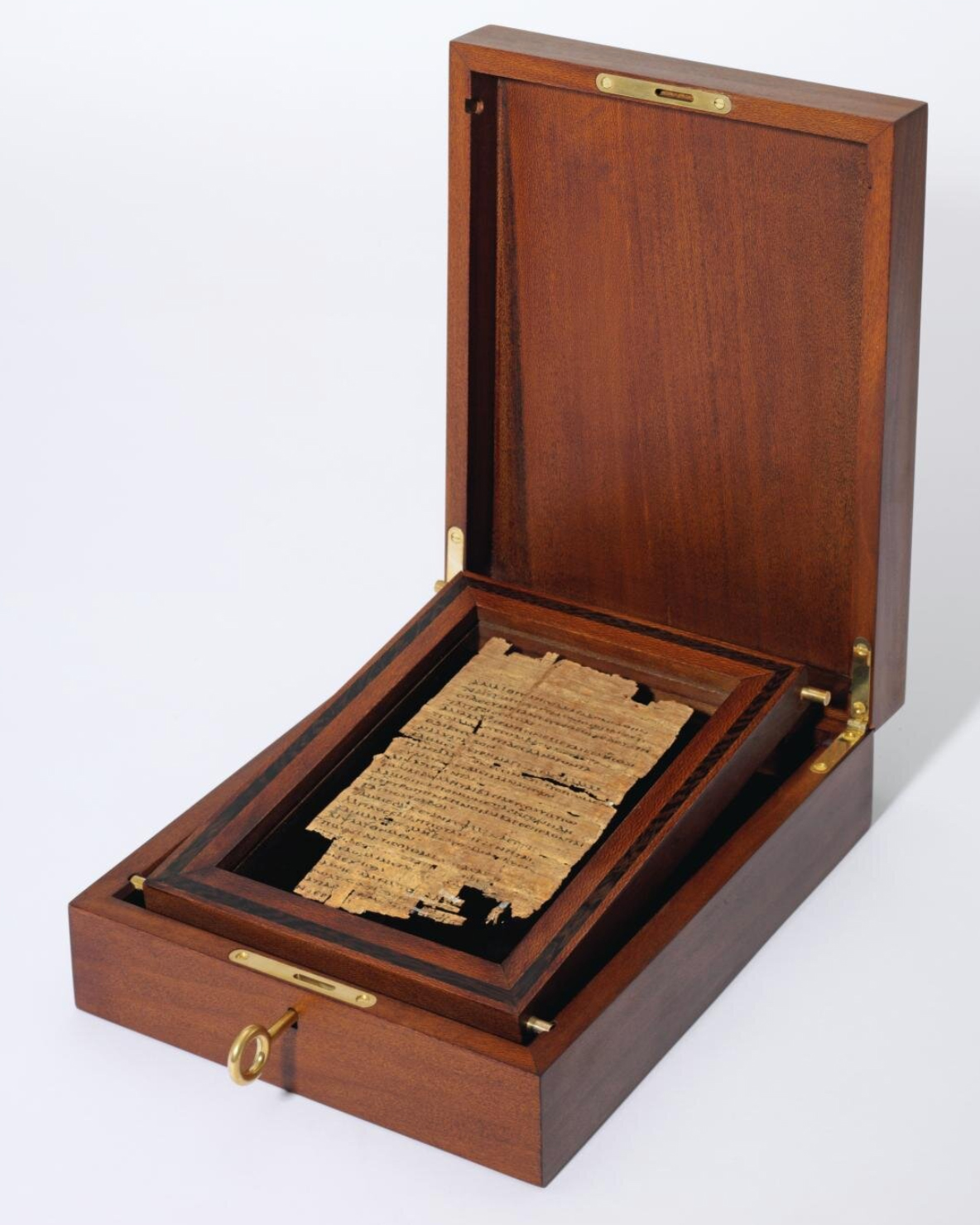
“P.Sapph. Obbink” in a wooden presentation box by Salopian
Throughout this episode, there has been a question about the location of the larger “P.Sapph. Obbink” fragment. It made an appearance in a television program with Prof. Obbink in 2015 and then disappeared from public view completely, as far I knew. In a 2020 article, Michael Sampson revealed that Christie’s had attempted to arrange a private treaty sale of the papyrus in 2015, but no further news about the papyrus was forthcoming. Mazza now reports that the papyrus was still at Christie’s in London when it was “seized by police in 2022” (p. 205). Readers will be relieved to learn that “Christie’s kept the papyrus’s expensive wooden box.”
Mazza also reports (p. 179) that all the pieces stolen from the Egypt Exploration Society have been recovered. This is very good news, but it’s surprising to me. The last EES announcement I recall on this topic came in 2021 (though it’s possible I missed later announcements). Anyway, in 2021, the editorial team in Oxford had identified about 120 missing pieces, of which 40 had been located in the collections of the Museum of the Bible and Andrew Stimer. One wonders if it was the ongoing police investigation into Prof. Obbink (now in its fifth year) that turned up some or all of these missing pieces.
There are, of course, still unanswered questions, as Mazza notes. At least some of these questions could be answered with fuller cooperation from other parties. From the side of Hobby Lobby and the Museum of the Bible: Now that they have repatriated most of their papyrus and parchment manuscripts, it would ideal if they made public all of their acquisition records relating to papyri, mummy masks, and other related artifacts, so that scholars can get a better sense of the shape of the antiquities trade in the US in those years when the collection was being built up (ca. 2009-2015). I would be curious, for instance, to learn more about the full extent of Prof. Obbink’s sales of antiquities to Hobby Lobby.
There is much more that could be said about this rich and exciting book. Fortunately, there will be a panel on it at the Annual Meeting of the Society of Biblical Literature in November in San Diego, with a great lineup of reviewers: Michael Holmes, Melissa Sellew, Sofia Torallas Tovar, and Liv Ingeborg Lied, with a response by Roberta Mazza.
I’ve been thinking a lot lately about miniaturization in the ancient Roman world, especially as it applies to books. For instance, according to Pliny the Elder, “Cicero records that a parchment copy of Homer’s poem The Iliad was enclosed in a nutshell” (Natural History 7.85).
While nothing quite like that survives from the Roman era, it’s still worth noting that Pliny was interested enough in the idea to repeat the story. There are, however, some surprising instances of Roman artifacts with writing so small that it is challenging to read with the naked eye. Some of the so-called Tabulae Iliacae fall into this category. These thin slabs are inscribed with text and images related to the Iliad and other mythological or historical themes. The writing in the inscriptions is sometimes incredibly small. There are a number of fascinating things about these artifacts, but at the moment I’m most interested in the tiny writing.
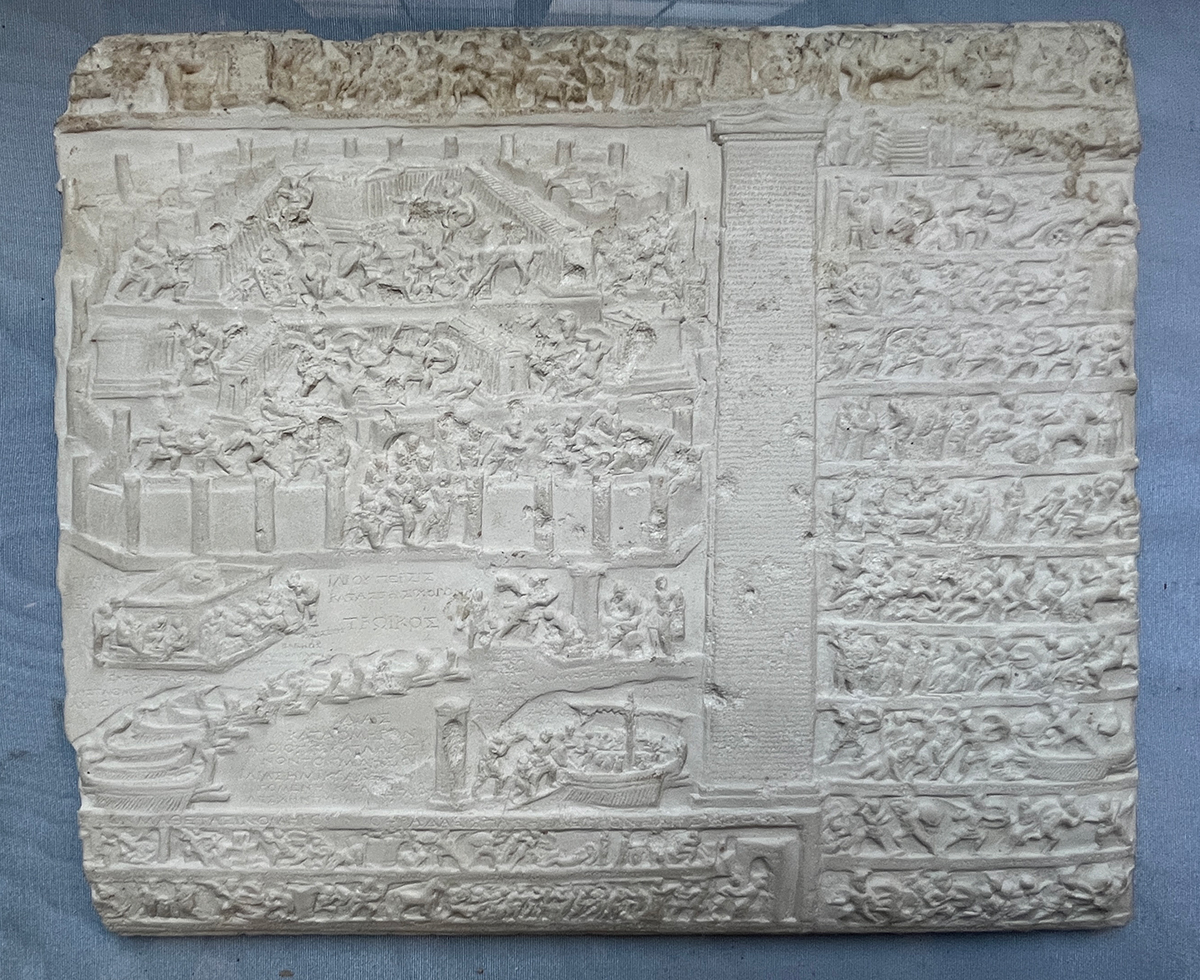
There is a very nice example in the Capitoline Museums. It has been away on traveling exhibitions recently, but when I visited a couple weeks ago, it was back in its case. The plaque illustrates the Iliad and events at Troy after the end of the Iliad. The small size and the reflection of the glass case make photographs a bit tricky, but these pictures give a sense of the piece.
The Capitoline Tabula Iliaca Capitoline Museums, inv. MC0316; image source: Brent Nongbri 2024
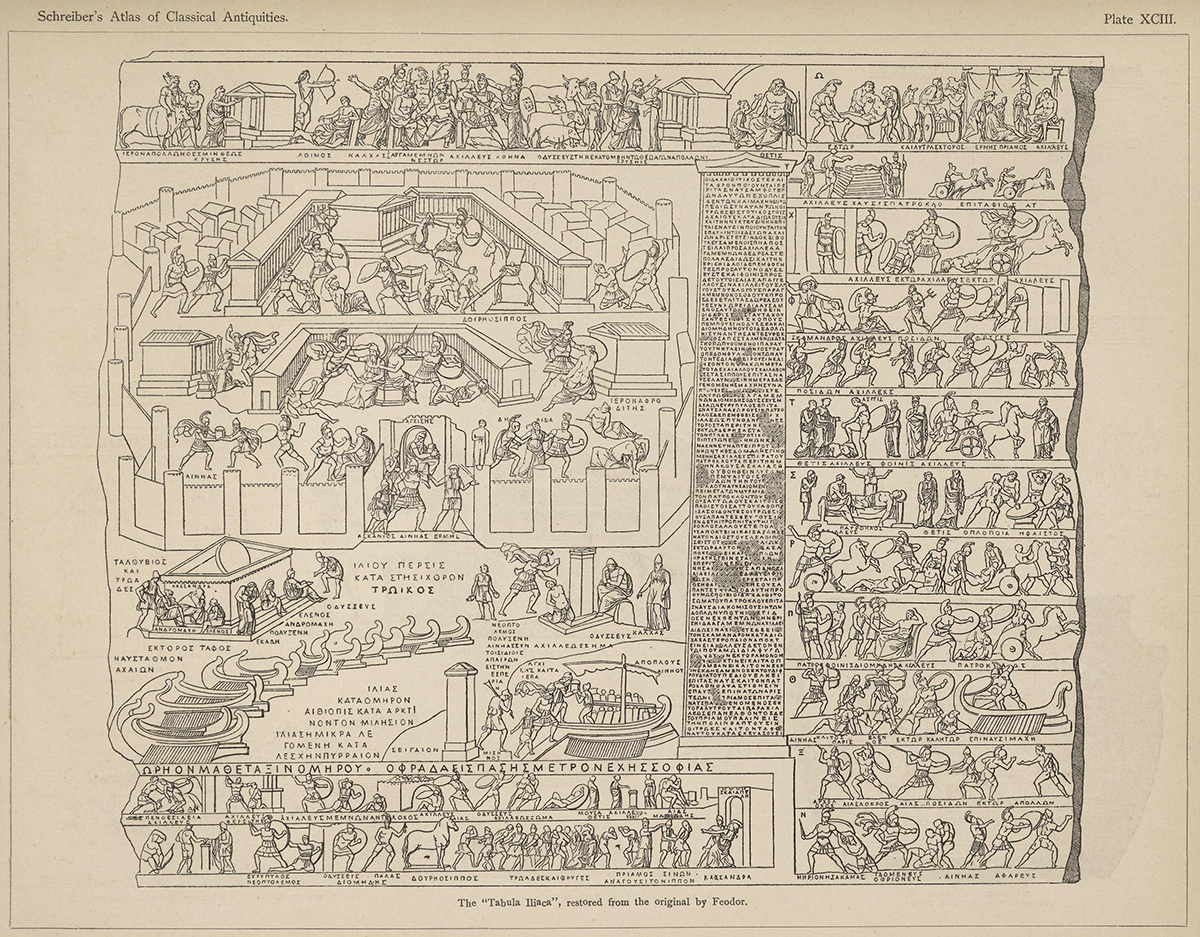
There is greater detail in a drawing made in the late nineteenth century:
Line drawing of the Capitoline Tabula Iliaca in Theodor Schreiber and W.C.F. Anderson, Atlas of Classical Antiquities (Macmillan, 1895); image source: Heidelberg Historic Literature
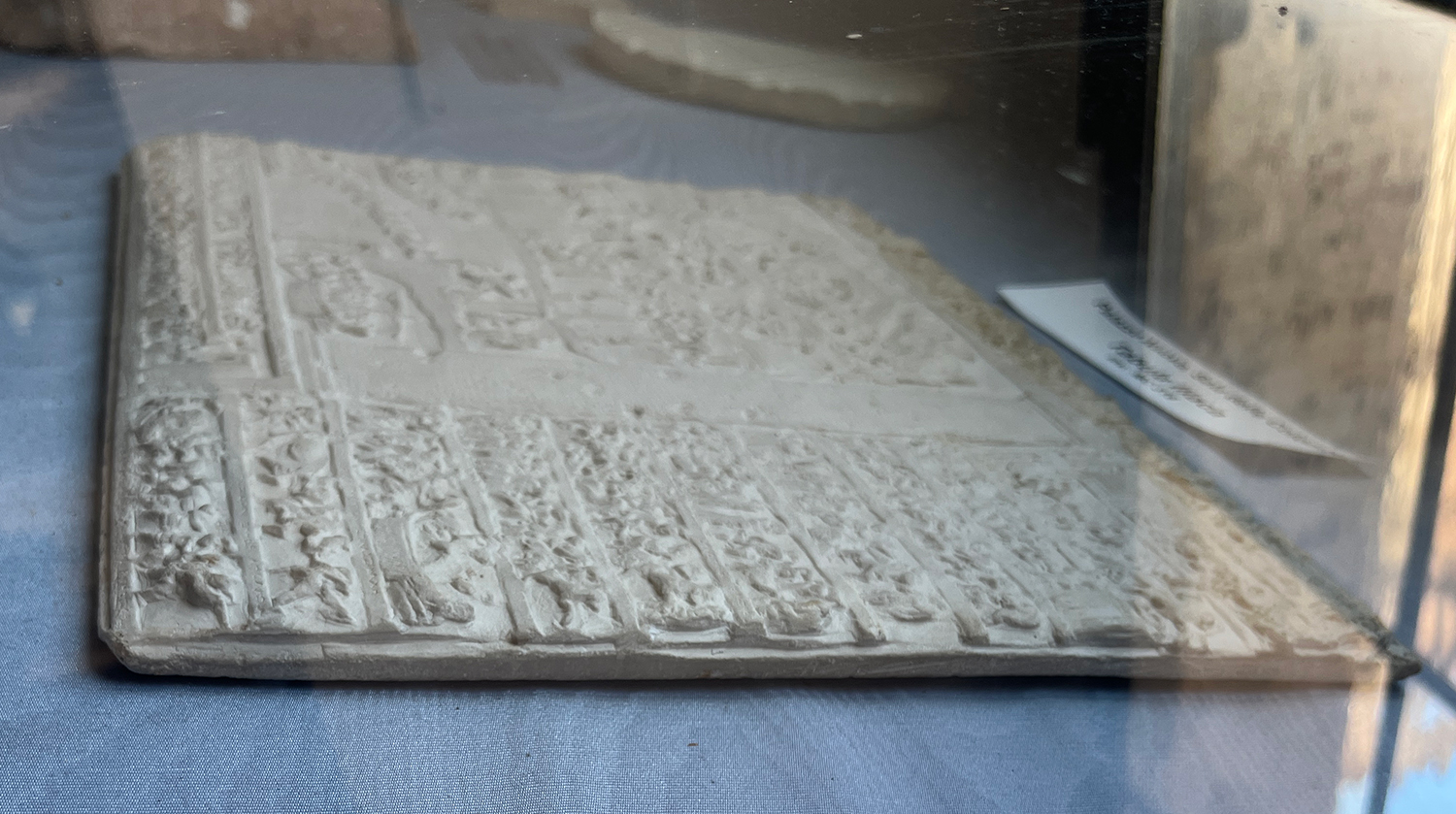
The calcite plaque is quite thin and the reliefs (necessarily!) quite shallow. The thickness of the plaque is usually given as 1.5 cm:
The Capitoline Tabula Iliaca, profile view Capitoline Museums, inv. MC0316; image source: Brent Nongbri 2024
This particular example is said to have been found in the seventeenth century to the southeast of Rome along the Via Appia just past the area where the Ciampino Airport is today. It is thought to have been produced in Rome in the first century CE. The most remarkable thing to me is the prose summary of the Iliad that occupies the pilaster on the right. Because the plaque is in a case, it was not possible to get an image with a scale, but the dimensions of the surviving portion of the tablet are usually given as 29 or 28 cm wide and 25 cm high.
If that’s the case, then when we digitally add a scale, we can get a better idea of just how small the lettering is.
The Capitoline Tabula Iliaca with a scale added digitally Capitoline Museums, inv. MC0316; image source: Brent Nongbri 2024
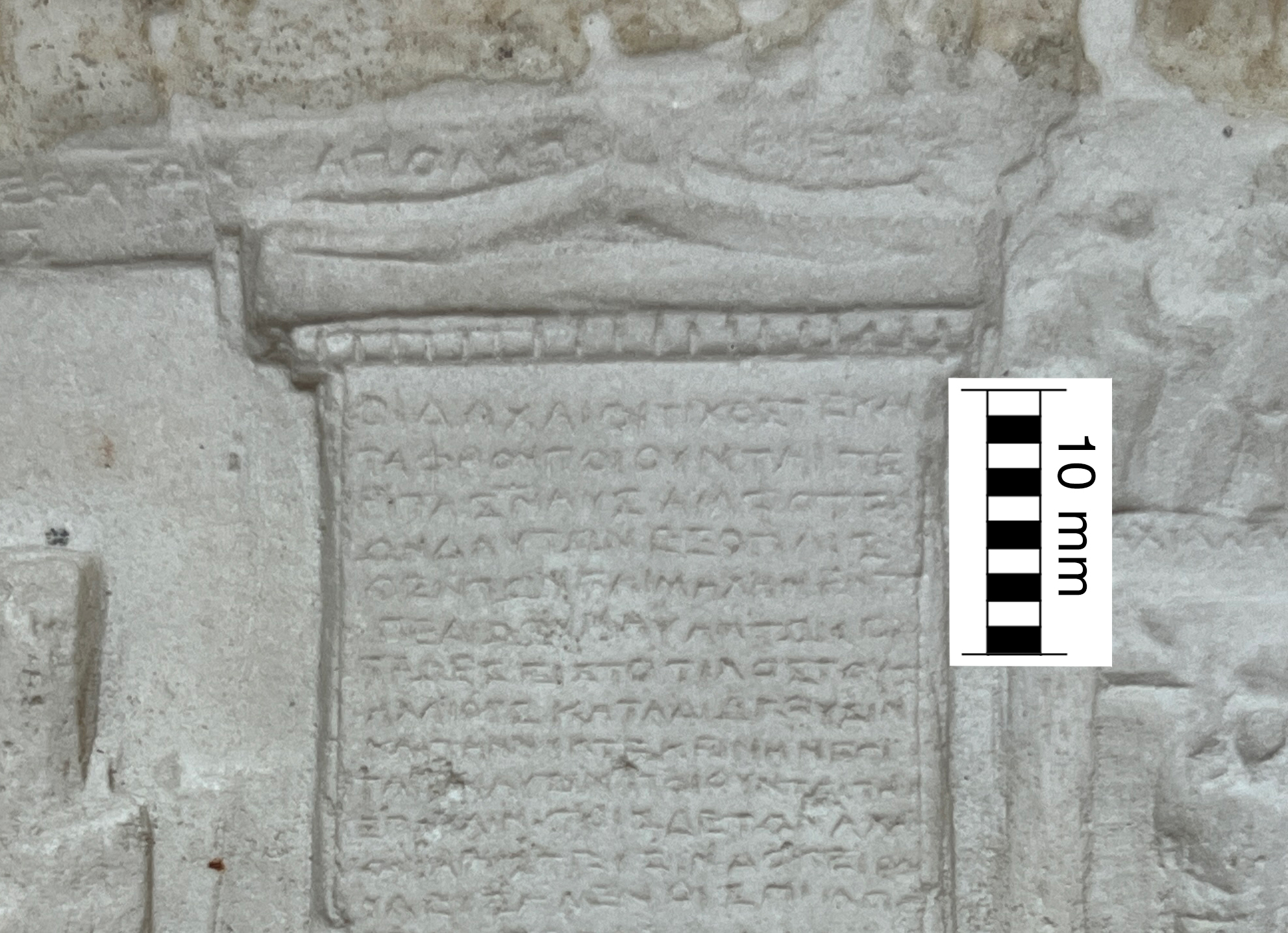
If we set a scale next to the inscription on the pilaster, we can see that there are about 6 lines for each centimeter. Most letters are about 1 millimeter high.
The Capitoline Tabula Iliaca, detail of pilaster with scale added digitally Capitoline Museums, inv. MC0316; image source: Brent Nongbri 2024
The text in the pilaster picks up in Book 7 (there was almost certainly another pilaster on the left side of the plaque that contained a summary of the earlier books). The summary is pretty dry. Here are the first few lines from the picture above (for the whole Greek text, see the edition of IG XIV 1284 at PHI):
So, who would use an object like this and in what kind of setting? The tabulae have sometimes been understood as educational aids (Nicholas Horsfall has argued that this and other similar plaques served as a means of “elementary adult education” for the nouveau riche: “Above all, the Tabulae belong chez Trimalchio.”)1 But given the difficulty of actually reading the writing, an educational purpose seems unlikely. Use as a conversation piece seems a bit more plausible.
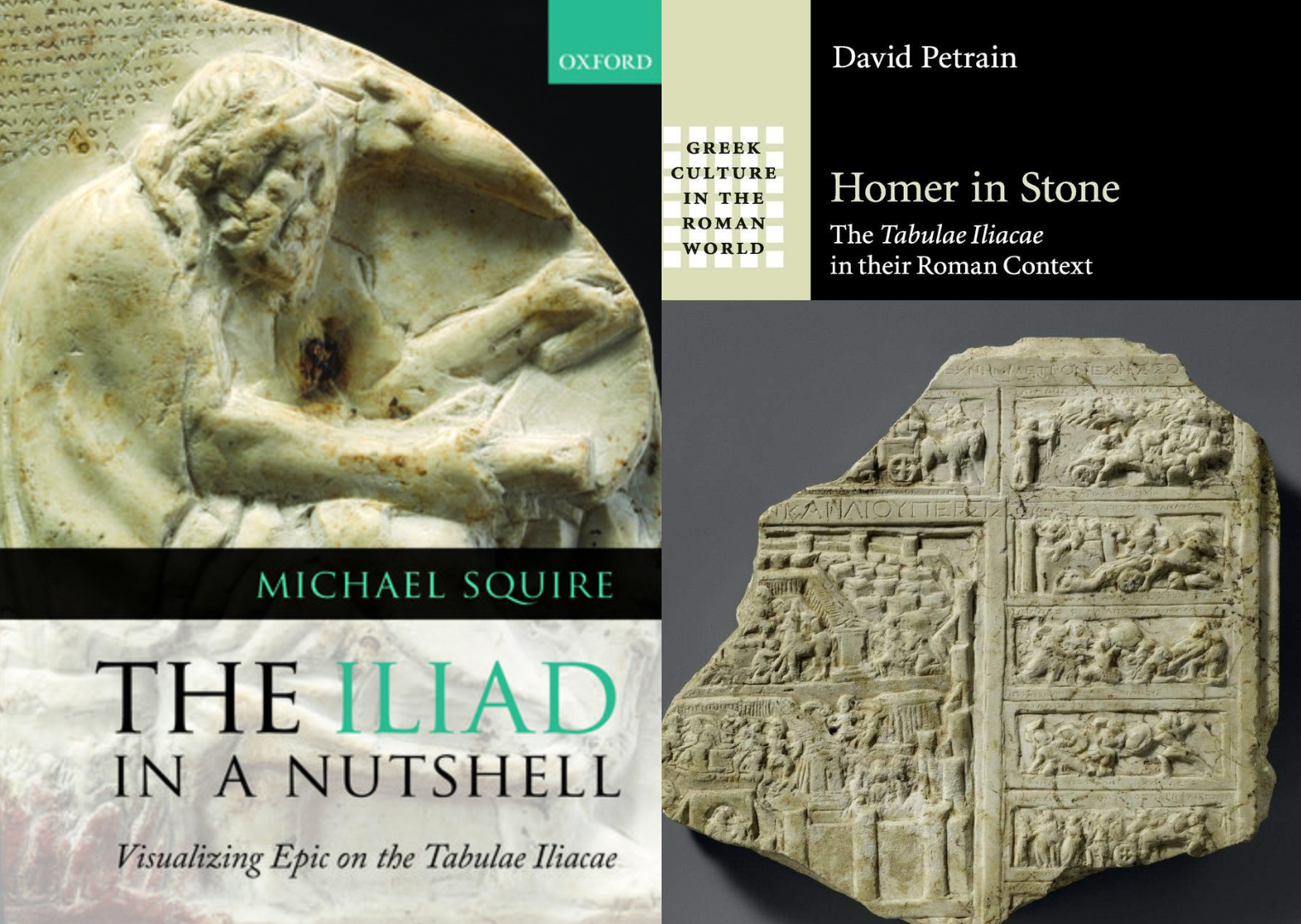
Two recent books have provided good treatments of the larger group of artifacts to which the Capitoline example belongs:
The archived museum record for the Capitoline Tabula Iliaca is here. This very useful online catalog seems to have disappeared from the web and been replaced by a page where one can purchase a (backwards) photograph of the plaque. Unfortunate.
Nicholas Horsfall, “Stesichorus at Bovillae?” Journal of Hellenic Studies 99 (1979) 26-48. ↩︎
When I was writing God’s Library, I did a good bit of reading on the Shroud of Turin. I used it as an example for which radiocarbon dating was ideally suited, namely a situation in which the date of an object is disputed by a matter of centuries. In the case of the Shroud, samples analyzed at three different labs agreed in determining that the Shroud was a product of the thirteenth or fourteenth century and not the first century.1
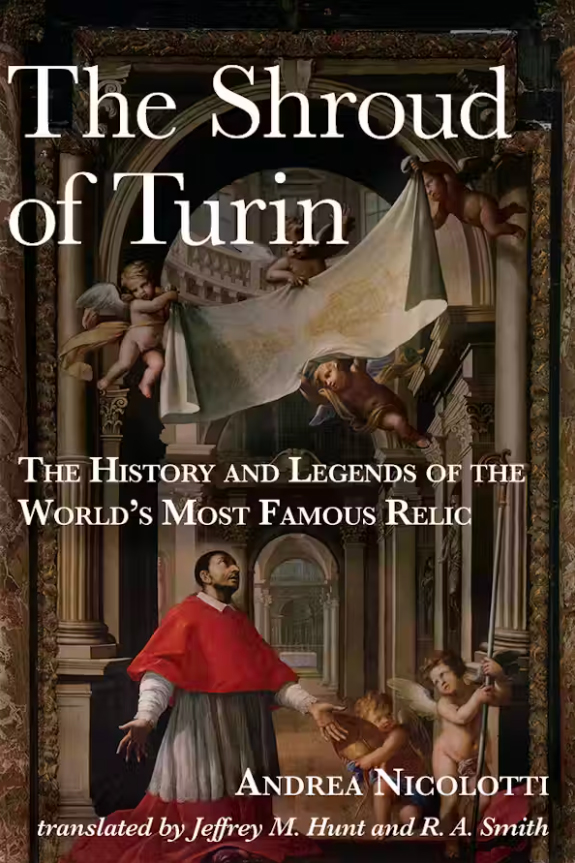
But I had to wade through quite a few publications of widely varying quality to find reliable information about the Shroud. Toward the end of my research I was lucky to be directed to Andrea Nicolotti’s Sindone: Storia e leggende di una reliquia controversa (Turin, 2015). This book is the most comprehensive overview of the historical sources and scientific work on the Shroud of Turin, and it has since been translated into English as The Shroud of Turin: The History and Legends of the World’s Most Famous Relic (Baylor University Press, 2020). I highly recommend it as a starting point for people interested in the Shroud.
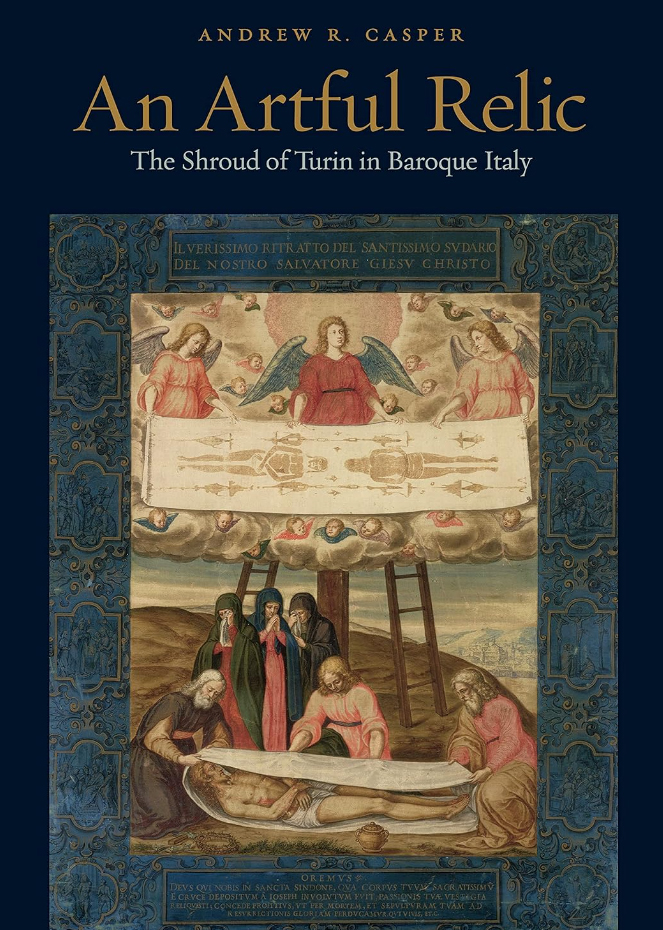
A more recent book that takes a deeper dive into what we might call the early reception history of the Shroud is Andrew R. Casper, An Artful Relic: The Shroud of Turin in Baroque Italy (Penn State University Press, 2021).
Casper’s book focuses on the way in which people understood the Shroud in the sixteenth and seventeenth centuries (chiefly as “as an artful relic crafted by God…a divine painting attributed to God’s artistry”).
These two books provide rich and helpful discussions of the Shroud.
See P.E. Damon, D.J. Donahue, B.H. Gore et al., “Radiocarbon Dating of the Shroud of Turin,” Nature 337 (1989) 611–615 and H.E. Gove, “Dating the Turin Shroud—An Assessment,” Radiocarbon 32 (1990) 87–92. ↩︎
In an earlier post, I mentioned that the museum at Ostia Antica has recently reopened after a long period of closure (I can’t recall now how many years it has been closed). I had a chance to visit last week, and the renovations are very impressive.
The first upgrade, which was especially noticeable on a hot August day, is air conditioning. So the museum is a nice break from the heat if you are visiting Ostia in the summer.
Many of the pieces on display are the same ones that were present before the renovations, but the presentation and the didactics are much improved.
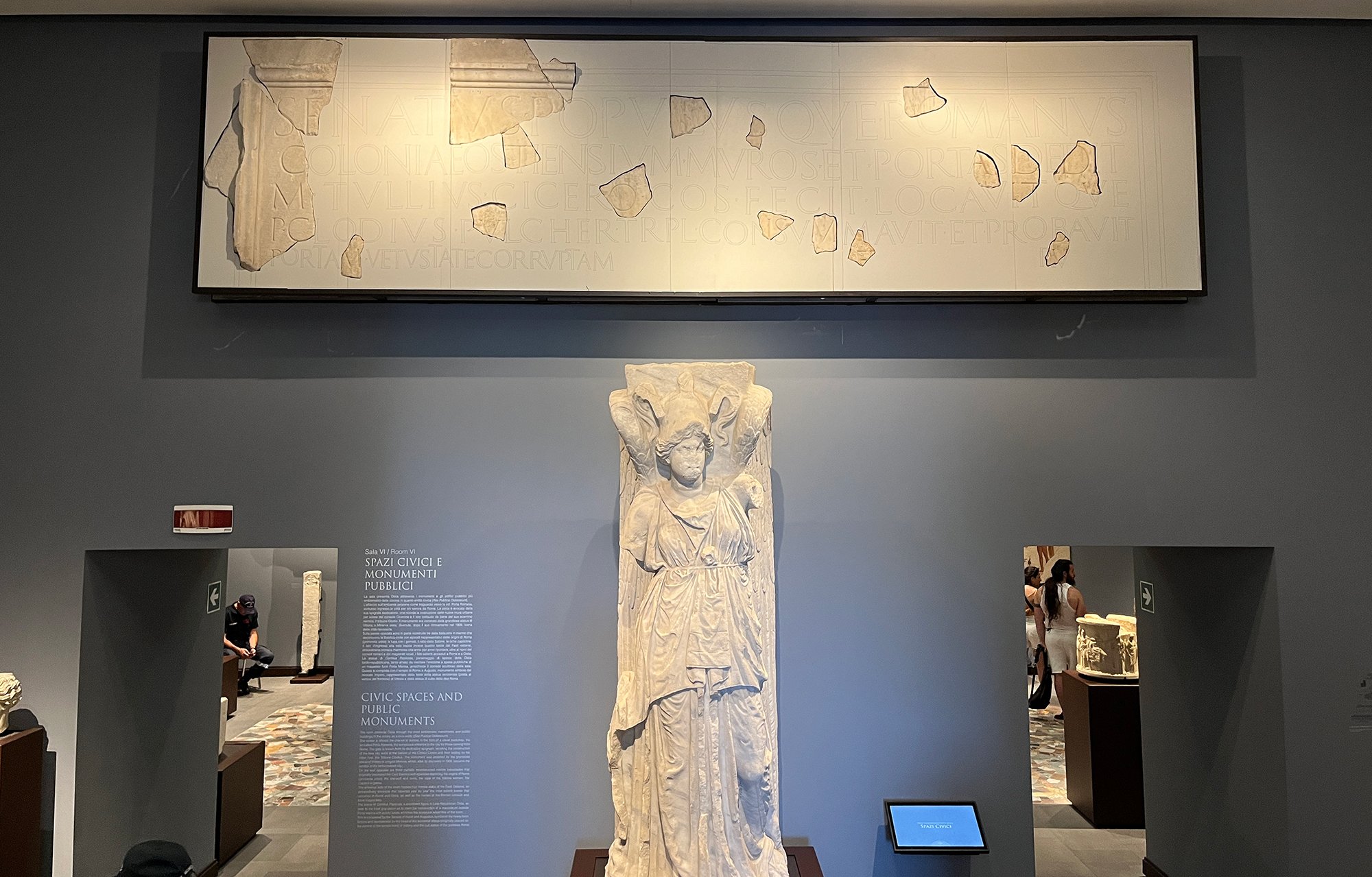
The view from the entrance is dominated by a bold presentation of the remains of the inscription from the city gate (the Porta Romana).
As the image shows, the inscription is highly fragmentary. The supplied text into which the fragments are fitted is based on the reconstruction of Fausto Zevi, who supplies the name “Cicero” as the authority behind the construction of the city walls of Ostia. The use of Zevi’s reconstruction in the display is somewhat unfortunate because its speculative elements are impossible to verify, as Mary Jane Cuyler has argued.
This room (Civic Spaces) contains some of Ostia’s “greatest hits,” including the Winged Victory from the city gate, the statue dedicated by Gaius Cartilius Poplicola at the temple of Hercules (off to the right, out of the picture, neatly placed in front of a wall with an image of Poplicola’s funerary monument), and the remains of the Fasti Ostienses (also not in the picture), which provide lists of local magistrates and important events from 49 BCE to 175 CE.
The rooms are arranged in different ways. Some are chronological (The Republican Age), but most are thematic (e.g., Imperial Power, Religions and Cults, Funerary Contexts, etc.). The pieces selected for exhibition are on the whole excellent, although I did not see anything from the synagogue at Ostia, which was a little disappointing, since the building has yielded some fascinating finds.
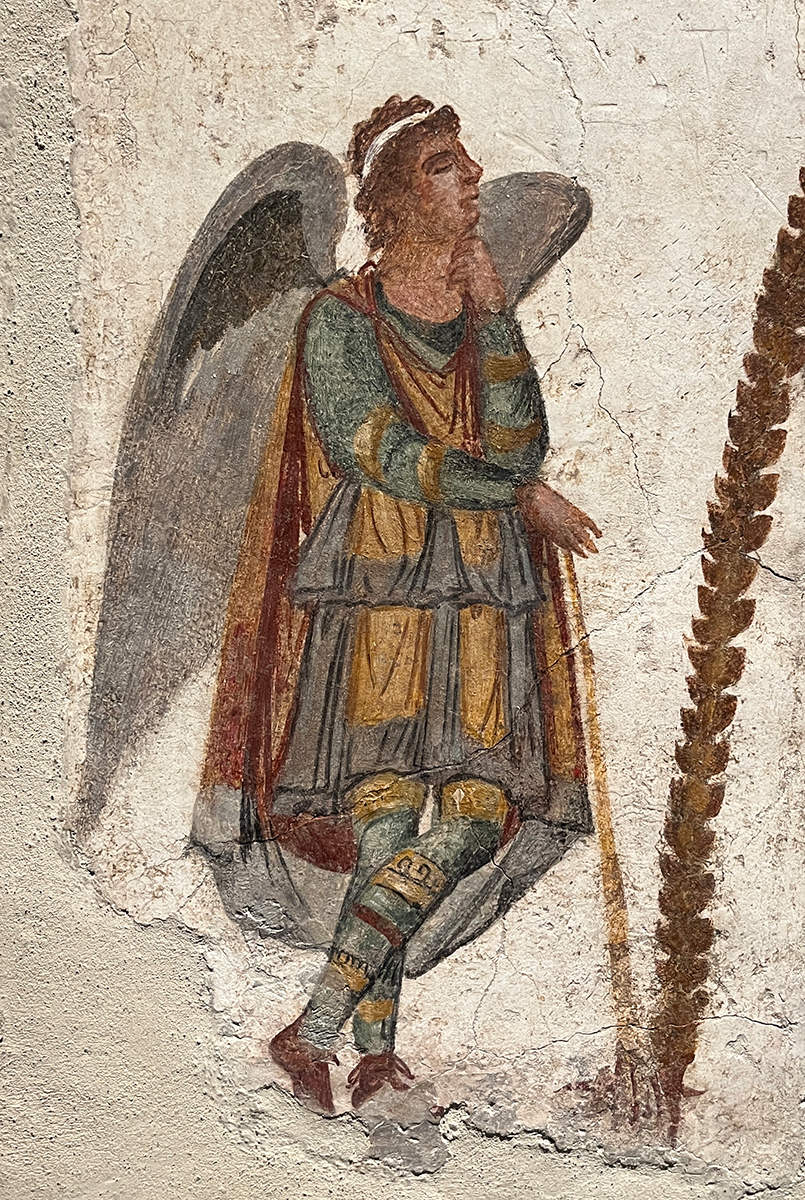
One thing that stood out across several rooms was the quantity and quality of wall paintings. I tend to associate well preserved frescos with sites other than Ostia, but there are some fine examples on display at the museum with lots of detail and vibrant color preserved (although I don’t know how much conservation/restoration has taken place). A couple examples are below.
The label in the museum display describes this figure as Thanatos, but given the pretty obviously sleepy facial expression, I might opt for Hypnos. But who knows? Homer said they were twins (Iliad 16.672, διδυμάοσιν).
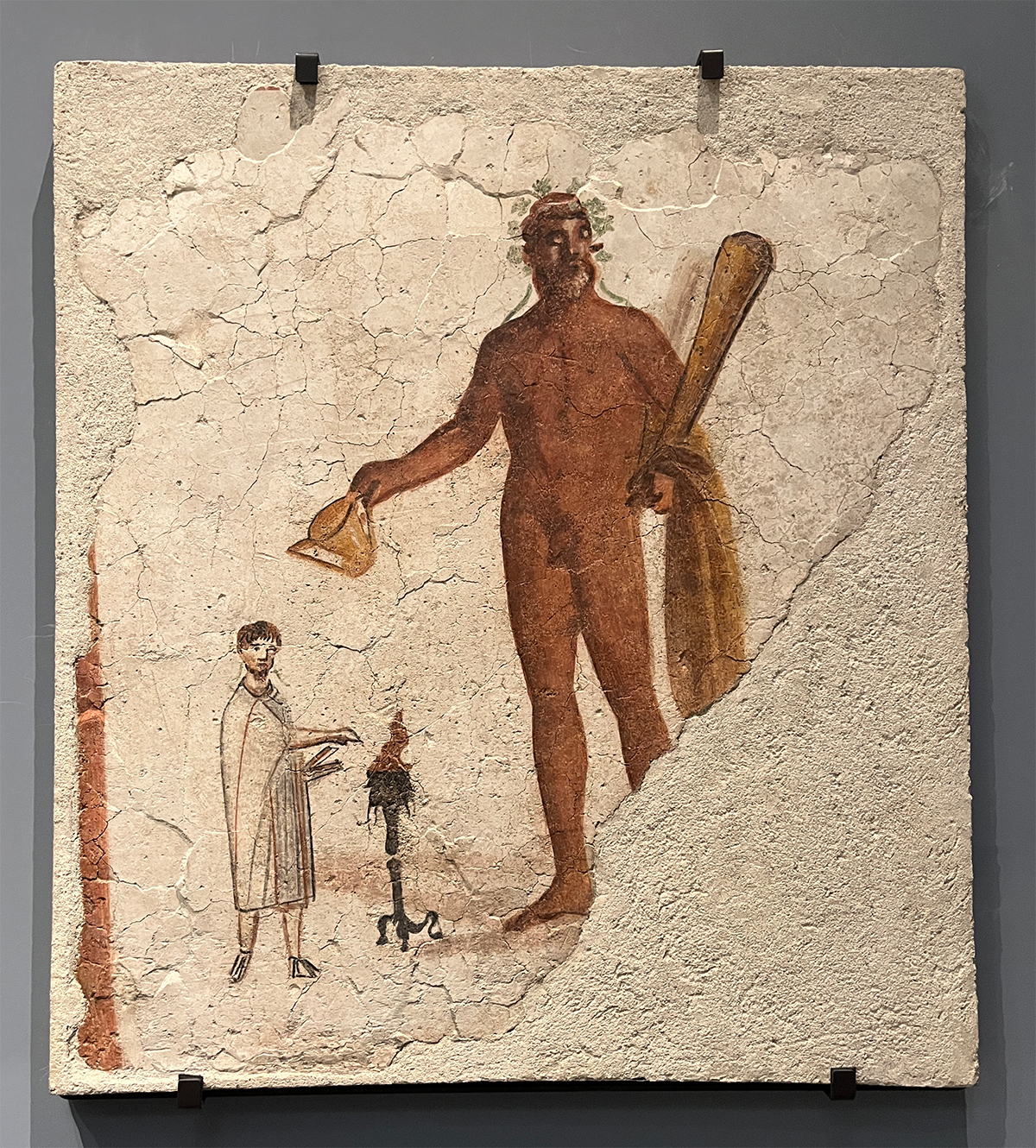
Another striking example is a fresco showing a man who appears to be sprinkling incense on a fire in front of a larger-than-life Hercules:
Fresco depicting an offering to Hercules, Via Laurentina Necropolis, tomb 27 (Museo Ostiense, inv. 155); image: Brent Nongbri 2024
I was probably most impressed with the material from Isola Sacra. The exhibits show many interesting pieces, including the terracotta plaques that displayed various professions and were posted on the outsides of tombs:
Terracotta relief showing a midwife at work, Isola Sacra Necropolis, tomb 100 (Museo Ostiense, inv. 5203); image: Brent Nongbri 2024
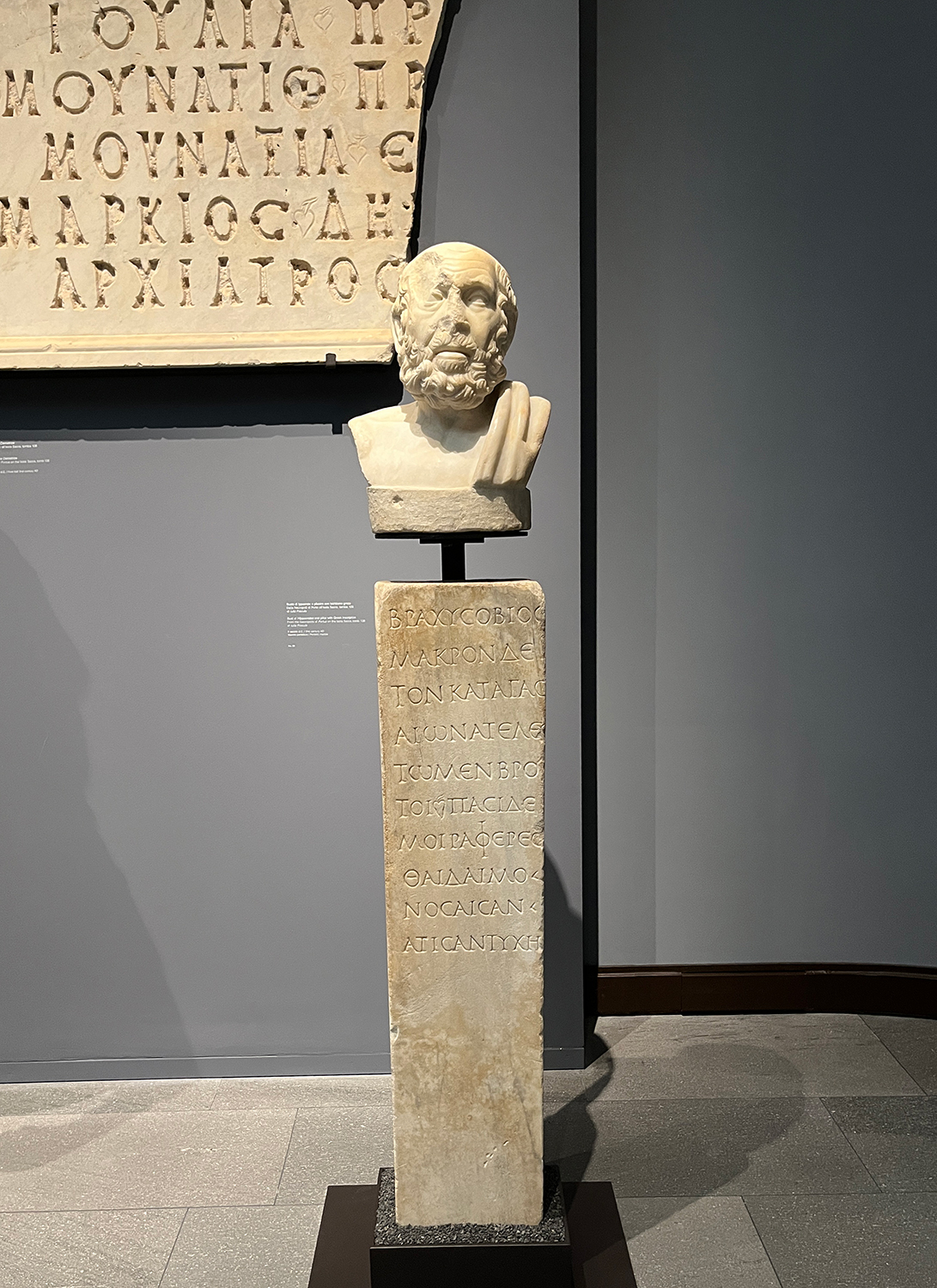
There is also a very nice display of the material from the tomb of Julia Procula, who seems to have come from a family of physicians. The tomb contained a large statue of Julia Procula, as well as inscriptions and other sculpture. The image below shows a bust of Hippocrates atop an inscribed pillar (notice the last line of the inscription in the background: ἀρχιατρός).
Bust of Hippocrates on a pillar inscribed in Greek, Isola Sacra Necropolis, tomb 106 (Museo Ostiense, inv. 98); image: Brent Nongbri 2024
“Life is short, but we mortals lie dead underground for a long time. It’s the fate of all to endure god’s dispensation whenever it overtakes us.”
The opening words recall the first of the aphorisms attributed to Hippocrates: Ὁ βίος βραχύς, ἡ δὲ τέχνη μακρή… (“Life is short, the craft is long…”).
Also in the Isola Sacra room is the so-called Sarcophagus of the Muses, which will get its own post in due course.
I could go on; there are many fascinating artifacts on display. It’s always worthwhile to visit Ostia if you’re in Rome, and the new museum is just one more thing to look forward to when you come.
There is also a newly produced guide to the museum for sale in the bookstore. It’s quite small, but it has color photos and reproduces a good portion of the didactic materials in the museum (in Italian and English).
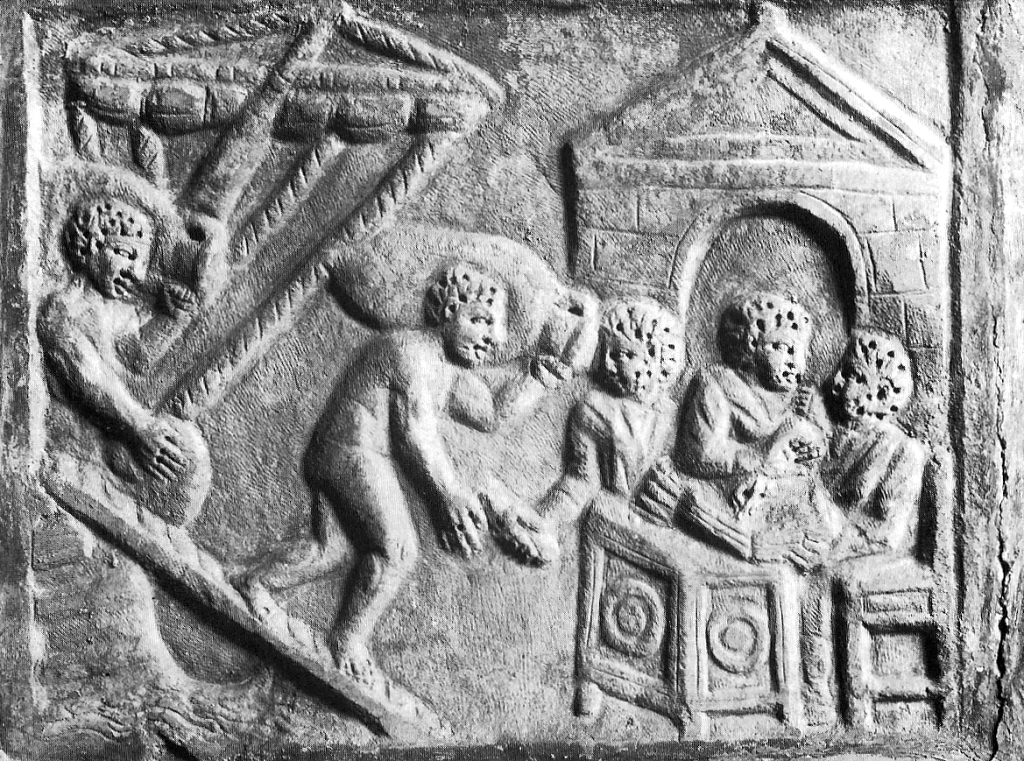
Following up on my post about a relief showing writers at desks at Ostia, I should also mention a second artifact found in the same region. It is a relief uncovered in the nineteenth century at Portus (just north of Ostia) and now in the Torlonia Collection.
Relief from Portus showing the offloading of a ship at port (Torlonia Collection inv. 428); image source: ostia-antica.org
The relief shows two people unloading cargo from a ship, while workers at the dock or warehouse keep records. One worker is seated on a chair at a desk with either tablets or a codex, apparently writing with the right hand.1
This relief is, to the best of my knowledge, not securely dated. The catalog of the Torlonia collection describes the date in very loose terms: “The present sculpture seems to date back to the 3rd century CE.”2
I don’t know the exact circumstances of its discovery, and I haven’t had the chance to see the relief in person. It would be nice to be able to establish a more precise date for this piece. If it is in fact from the third century, it would constitute quite early visual evidence for the use of desks for writing.
This is the description of Russell Meiggs, Roman Ostia, 2nd ed. (Oxford: Clarendon, 1973), plate XXVI: “Relief in Greek marble (m. 0.43 x 0.33), found at Porto, now in the Torlonia Museum. Visconti, Catalogo, n. 338. Wine is being unloaded from a merchantman. The three seated figures may be a tabularius with two adiutores, recording the cargo on wax tablets in the form of a book. The leading porter receives a ? tally as he passes. Perhaps a customs scene.” Meiggs uses the catalog number from Visconti’s catalog of 1880. The relief is number 336 in Pietro Ercole Visconti, Catalogo del Museo Torlonia di scuture antiche (Rome, 1876), p. 170. ↩︎
Carlo Lodovico Visconti, I monumenti del Museo Torlonia (Rome: 1885), p. 304: “Sembra doversi riferire la presente scultura al III. secolo dell’era volgare.” ↩︎
The museum at the archaeological park at Ostia Antica has reopened after many years of closure for renovations. The results are quite impressive, and I hope to have a chance to post some reflections about the museum itself soon, but I thought I would highlight a piece that has interested me for some time and which I was quite excited to see in person. It is a relatively small marble relief that is roughly square (51 cm wide, 49 cm high):
The relief was reportedly found at the Aula della Are in 1938. Its date of production is not clear. It is typically assigned to the late fourth century (as it is described in the current museum didactic material). Eric Turner, however, described it in the following way: “The date is not earlier than late ii A.D., and may be iv-v A.D.”1
What is being depicted in the relief is also open to debate. There have been a number of different suggestions: A lecture at a philosophical school, a Christian speaker whose words are being recorded by scribes, a courtroom or other scene with stenographers (shorthand writers), or an auction. The function of the relief is also unknown. Guido Calza suggested that it was the shop sign of a professional copyist. No interpretation commands wide assent.
Among all these unknowns, one thing that is clear is that the two figures in the lower left and the lower right corners are seated at tables or desks, and they are writing in what look like large sets of bound wooden tablets (although parchment or papyrus codices are also possible interpretations).
Ostia Antiquarium, inv. 130, detail showing a writer at work while seated at a table or desk; image source: Brent Nongbri, 2024
This piece is thus generally acknowledged as one of the earliest depictions of writers at work at desks. It is commonly believed that writers did not regularly use desks, tables, or stands before this period. Theodor Birt’s statement is typical: “In antiquity, people did not write on desks.”2 I am skeptical of this view for a variety of reasons, but it is the consensus.
The classic treatment of the question is Bruce Metzger, “When Did Scribes Begin to Use Desks?”3 At the time Metzger raised the issue (the late 1950s), the common knolwedge was that writers did not use desks until rather late in the medieval period. Metzger gathered data (including this relief) to show that the use of desks by writers in the premodern Mediterranean went back as least as early as the fourth century, and his broader conclusion is surely correct: “In seeking to discover when it was that scribes began to use a writing desk, one must not imagine that the habits of all scribes changed suddenly. The transition from the custom of writing on one’s lap to the custom of using a desk or table must have taken place gradually.”
It is good to be able to have a close look at this interesting relief, which is an important piece of evidence in connection to this question.
Eric G. Turner, Greek Manuscripts of the Ancient World, 2nd rev. ed. (London: Institute of Classical Studies, 1987), p. 6, note 17. The exact archaeological context in which the relief was found does not appear to have been discussed in print in any detail. ↩︎
Theodor Birt, Die Buchrolle in der Kunst (Leipzig: Teubner, 1907), p. 209: “Im Altertum schrieb man nicht auf Pulten.” ↩︎
I cite from the chapter published in Bruce M. Metzger, Historical and Literary Studies: Pagan, Jewish, and Christian (Leiden: Brill, 1968), 123-137, but Metzger notes that the chapter is drawn from material originally published in different outlets in the late 1950s. ↩︎
I’ve had occasion recently to do a bit of work on a couple of Cicero’s letters to Atticus. Both the old text of Tyrrell and Purser and the more recent text of Shackleton Bailey are wonderful resources, but there are a couple of places where I wanted to check the manuscripts. About half of the most important manuscripts are available online. A set of links seems like it would be useful. Among the primary witnesses, there are:
W= a set of dispersed folia from an 11th century codex as follows:
Würzburg, Universitätsbibliothek M.p.misc.f.21, not online
Würzburg, Diözesanarchiv, Fragm. Würzburg, St. Ulrich, not online
Munich, Bayerische Staatsbibliothek Clm 29220(20, not online
Among the witnesses usually considered less important for establishing the critical text:
b = Berlin, Staatsbibliothek 168 (15th century) not online d = Florence, BML Edili 217 (15th century) not online m = Berlin Staatsbibliothk Ham. 166 (1408, copied by Poggio) s = Vatican, Urb. Lat. 322 (15th century)
If I’ve missed the proper links for any of the pieces that I’ve marked as “not online,” I would be grateful for the right links.
I’m not sure when this happened, but the surviving folia of Codex Bobiensis (or Bobbiensis, CLA 4 465) have been photographed and the images made available online here. Codex Bobiensis is a copy of the Gospel According to Mark and the Gospel According to Matthew in Latin, probably produced in North Africa at some point in the late fourth or early fifth century.
The surviving leaves of this codex present a fascinating set of early variant readings in Mark and Matthew that formed the topic of a 2021 article by Matthew Larsen.






 Variant Readings