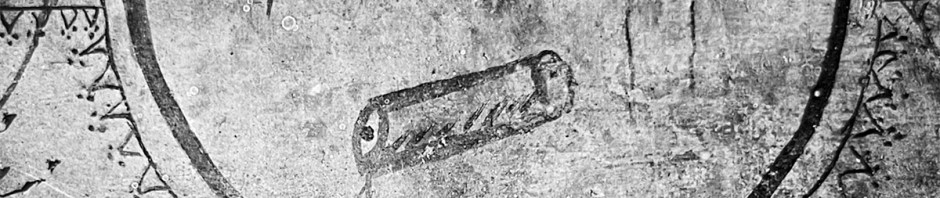
A recent visit to the Jewish catacomb at Vigna Randanini got me thinking a little more about the iconography of Jewish scrolls (–thanks to Tony Keddie and the University of Texas at Austin for making the visit possible).
The inscription is CIJ 1 221 (JIWE 2 266):
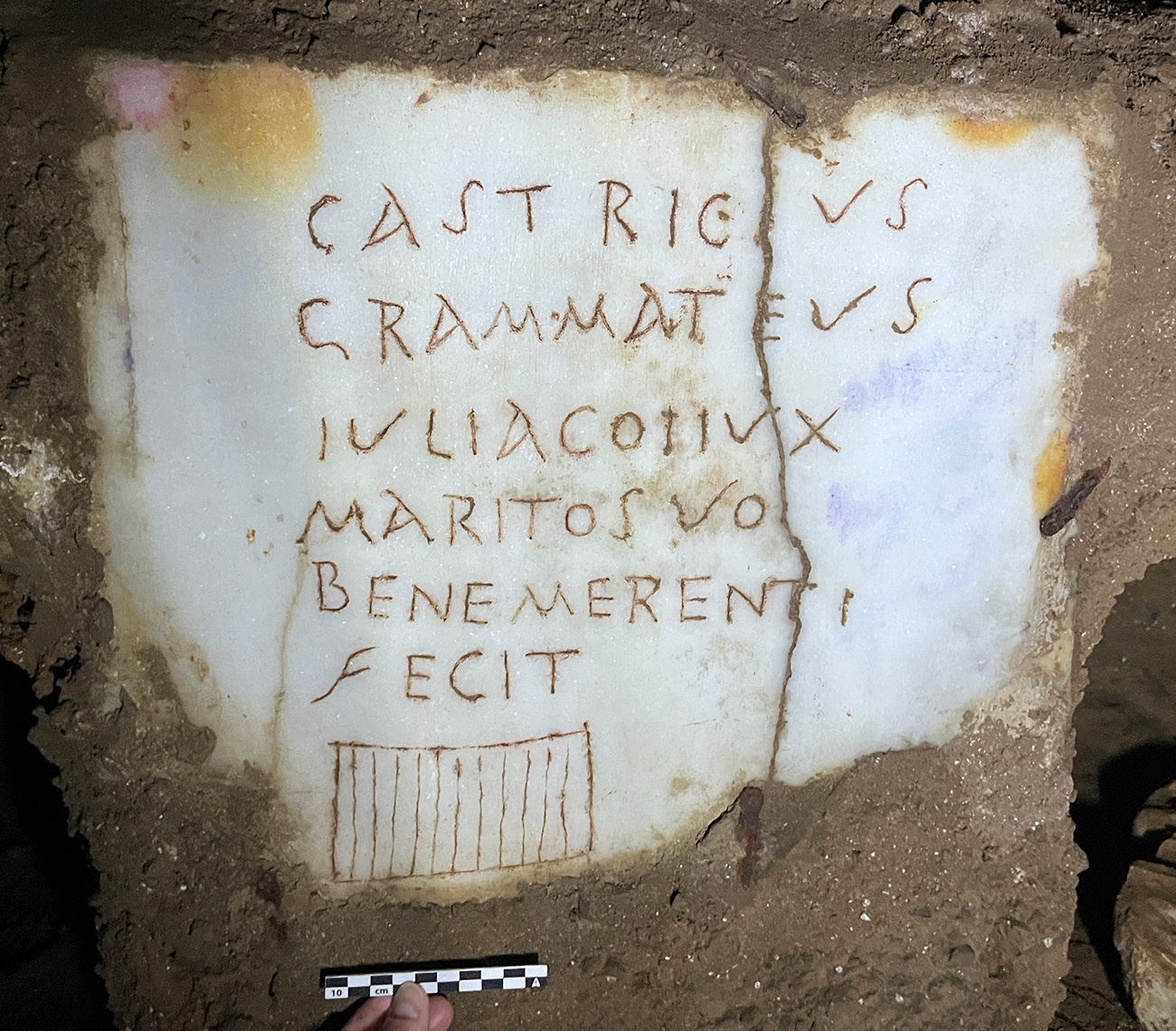
The text is straightforward:
CASTRICIUS
GRAMMATEUS
IULIA COIIUX (read CONIUNX)
MARITO SUO
BENE MERENTI
FECIT
Castricius the grammateus. Julia his spouse had this made for her well-deserving husband.
What is a little strange is the rectangular image below the writing. It has been variously interpreted (a ladder, a scroll case, a “schematic ark” for Torah scrolls), but it is now usually said to represent an unrolled scroll.1 This would be a fitting enough image for a grammateus, but it doesn’t really look very much like typical Jewish imagery of scrolls to me.
Maybe the most famous image of a scroll in a Jewish context in the Roman era comes from the decorations of the synagogue at Dura Europos:
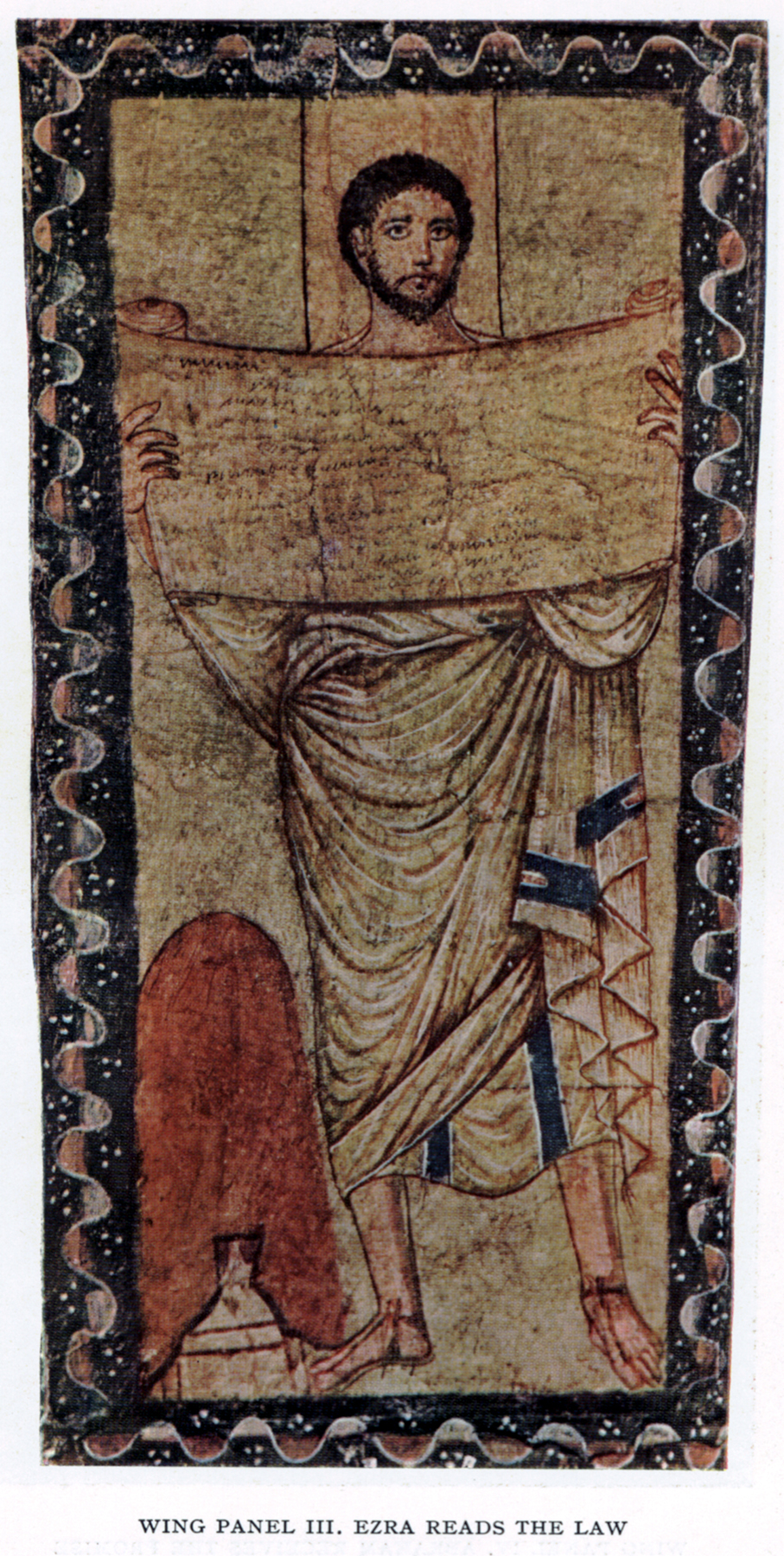
I’m aware of one inscribed image that is generally thought to represent an open scroll similar to this, a fragmentary plaque in the Vatican Museums with a menorah, below which seems to be a floating scroll with the two ends still partly rolled up:
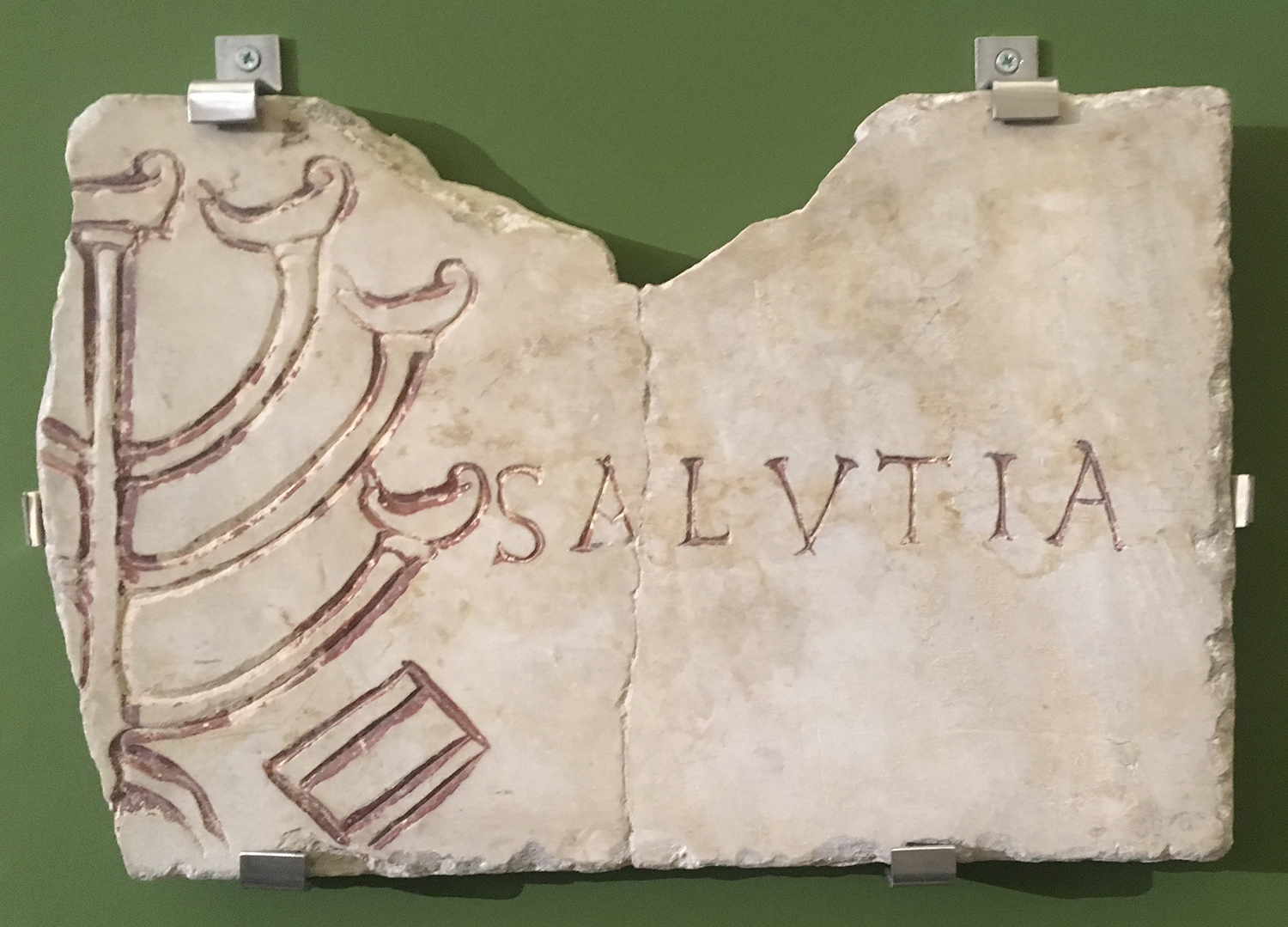
Perhaps the artist of the image in the Castricius inscription was aiming at something like this, but I’m not sure. Jewish scrolls are more commonly depicted is as part of a scene of a Torah shrine with open doors. The clearest images are probably those found on glass, which show the end (frons) of the rolls with a spiral pattern, as in this example at the Israel Museum:
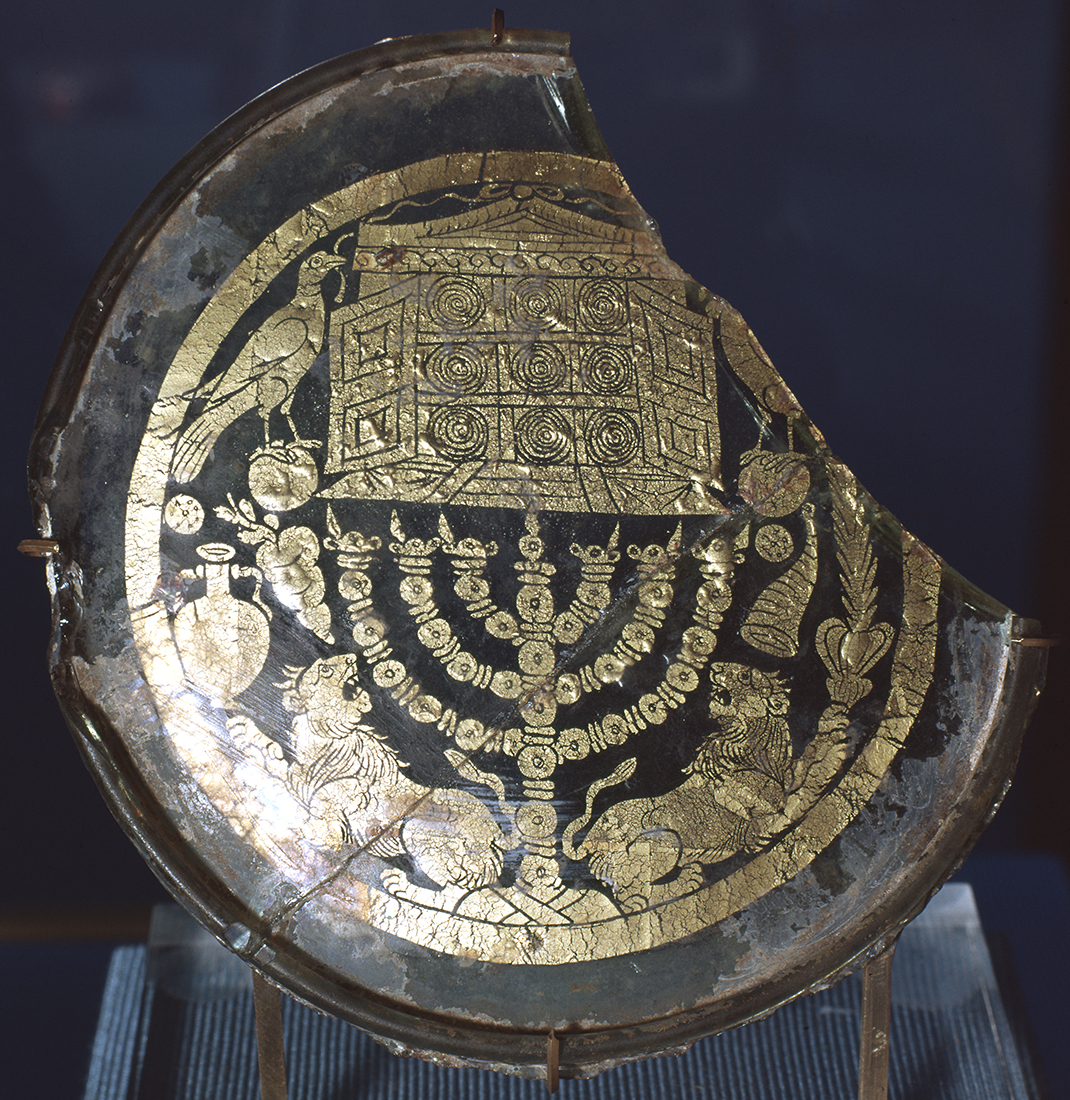
Glass base with gold decoration showing scrolls in the Torah shrine; Jerusalem, Israel Museum; image source: Fonds Françoise Foliot, preserved by Wikimédia France
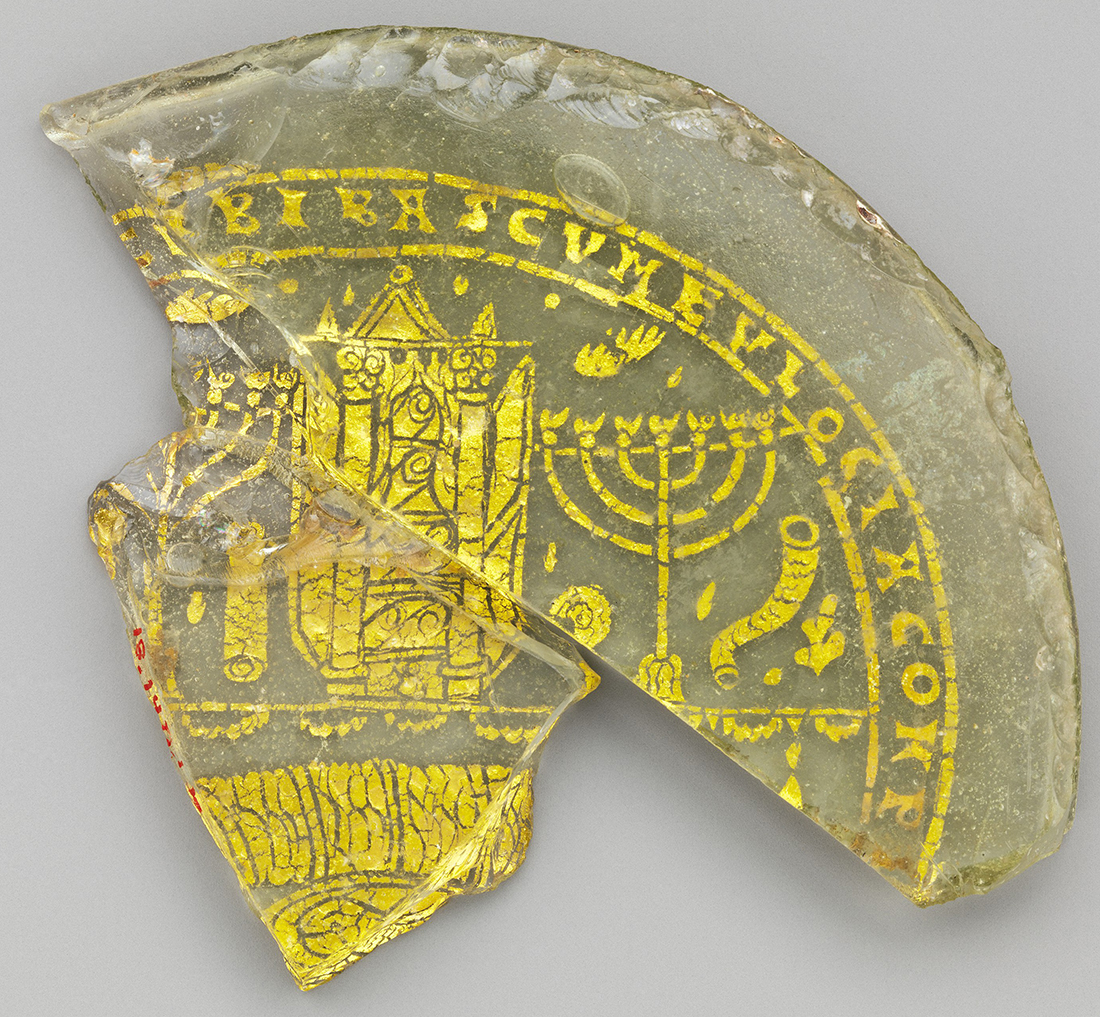
In the gold/glass medium, artists occasionally added an element of three-dimensionality to the depiction, showing the depth of the roll in addition to the frons:, as in this example at the Met in New York, which shows both a set of scrolls in the shrine and what looks like a free-standing scroll immediately to the left of the shrine:
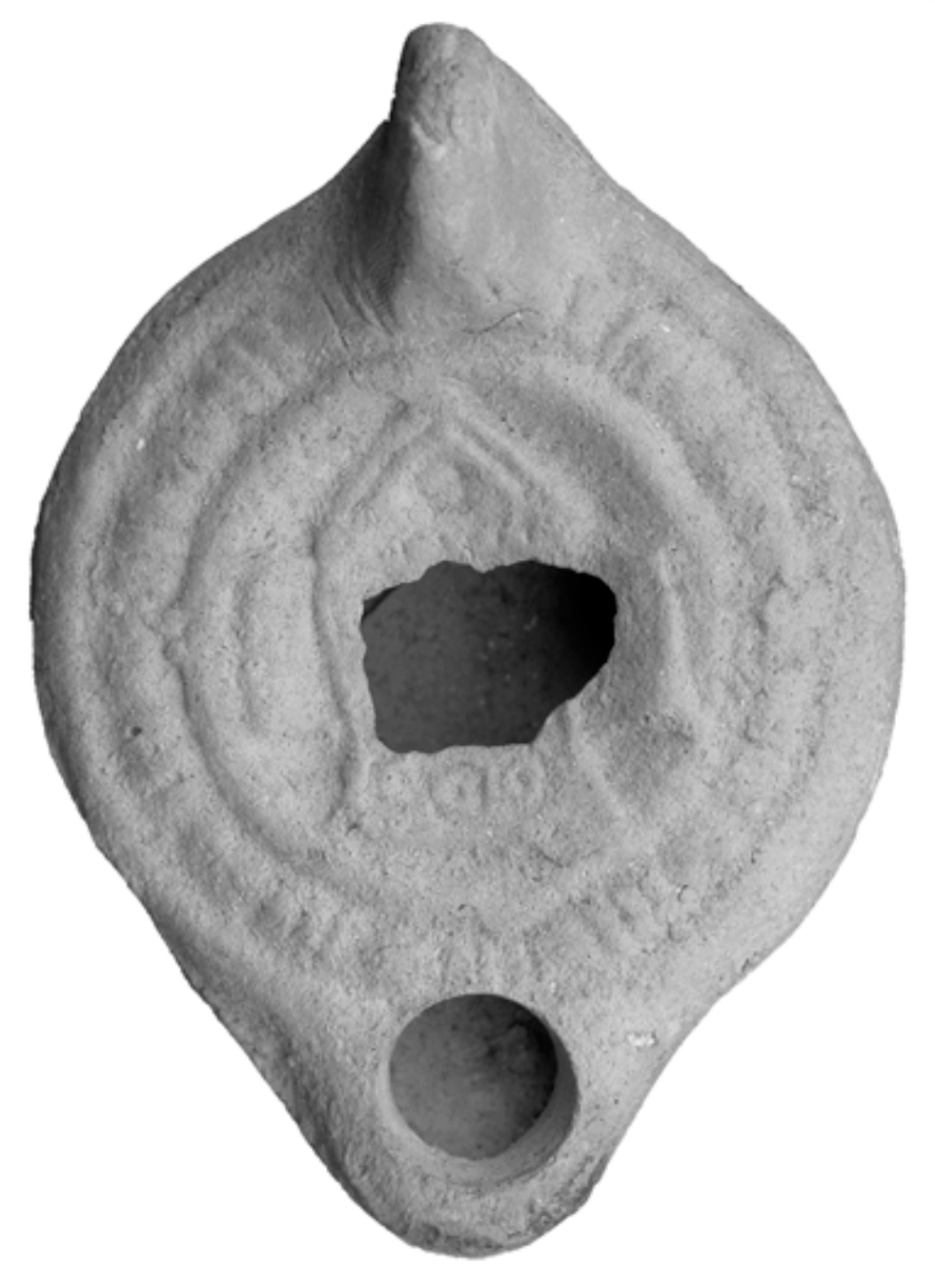
The Torah shrine motif occurs in different media, for instance, in this terracotta lamp found at the synagogue at Ostia:
We also find this type of depiction in inscriptions, like this one now in the Naples Archaeological Museum:
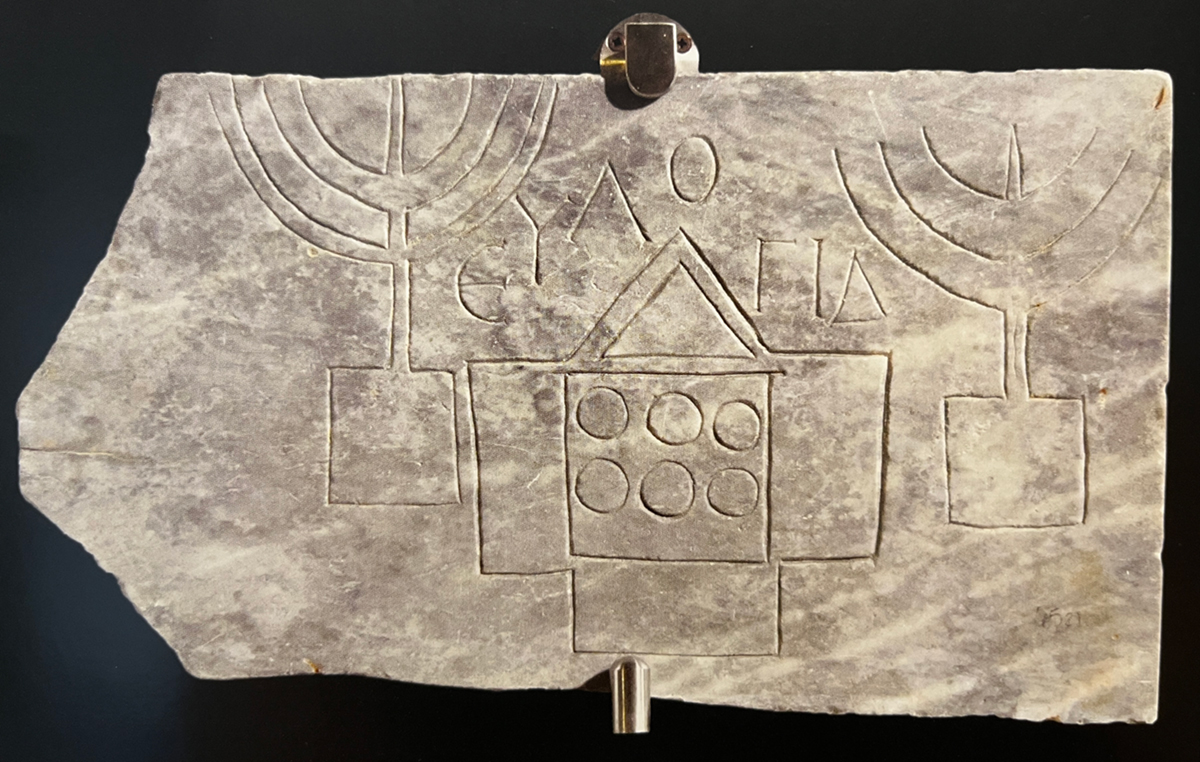
On the lamp and the inscription, the design is more schematic than in the detailed depictions on glass. The scrolls in the open cabinet are represented by simple circles (or circles with dots in their centers). The idea, however, is basically the same as the more detailed renditions in the glass bases. The depiction of rolls from other angles is less frequent (as least as far as I am aware). We already saw one instance of a freestanding partly open scroll (the Salutia inscription) and a freestanding closed scroll (the Met glass base). There is also a fresco in the Jewish catacomb at the Villa Torlonia that seems to show a roll with an index tag:
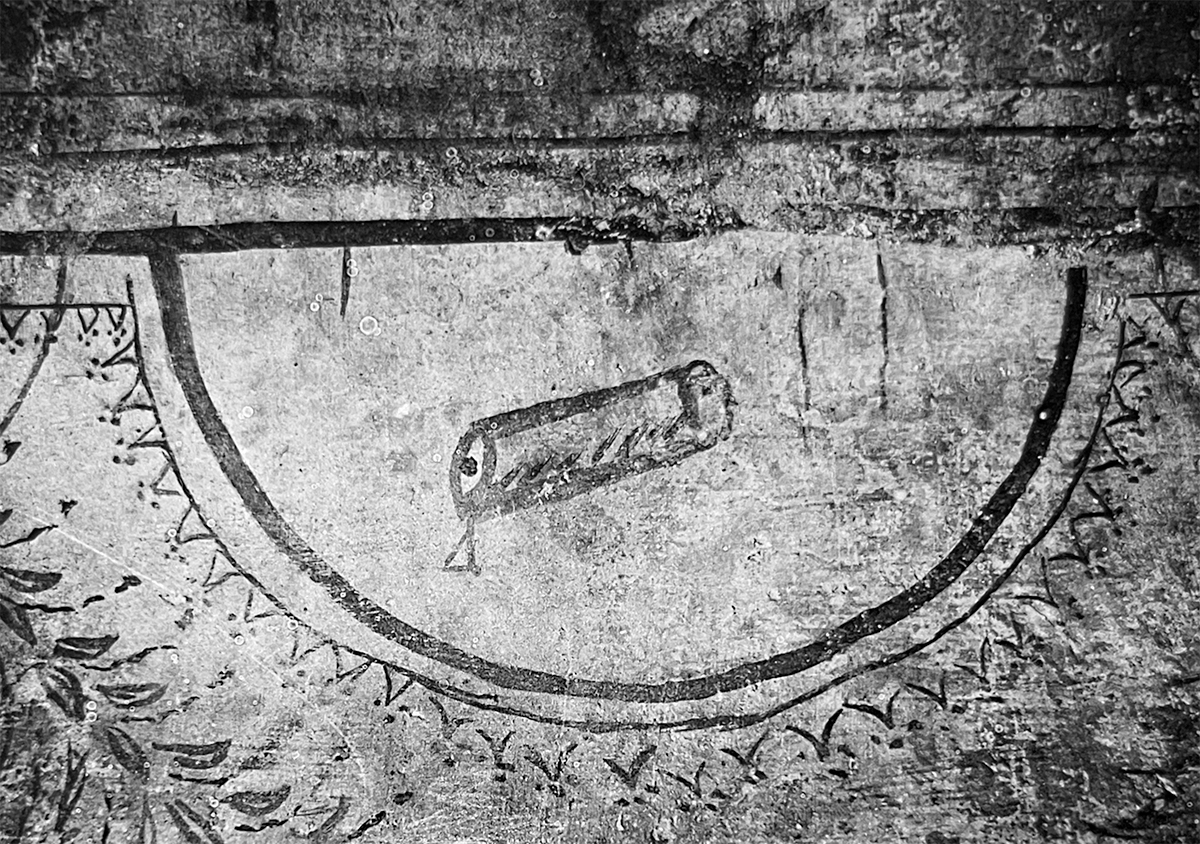
As far as I know, that is about the extent of the visual range of depictions of scrolls in Jewish sources: a spiral showing the frons or end, the closed roll showing the height of the scroll and perhaps some perspective with one or both of the ends depicted as well, and the partly open scroll shown in the Dura Europos image and the Salutia inscription.
What about other images in Jewish inscriptions that may more closely resemble the Castricius rectangle? The nearest parallel might be a rectangular object that is patterned with both vertical and horizontal lines that appears on another inscription in the Vatican Museums, inv. 30824:
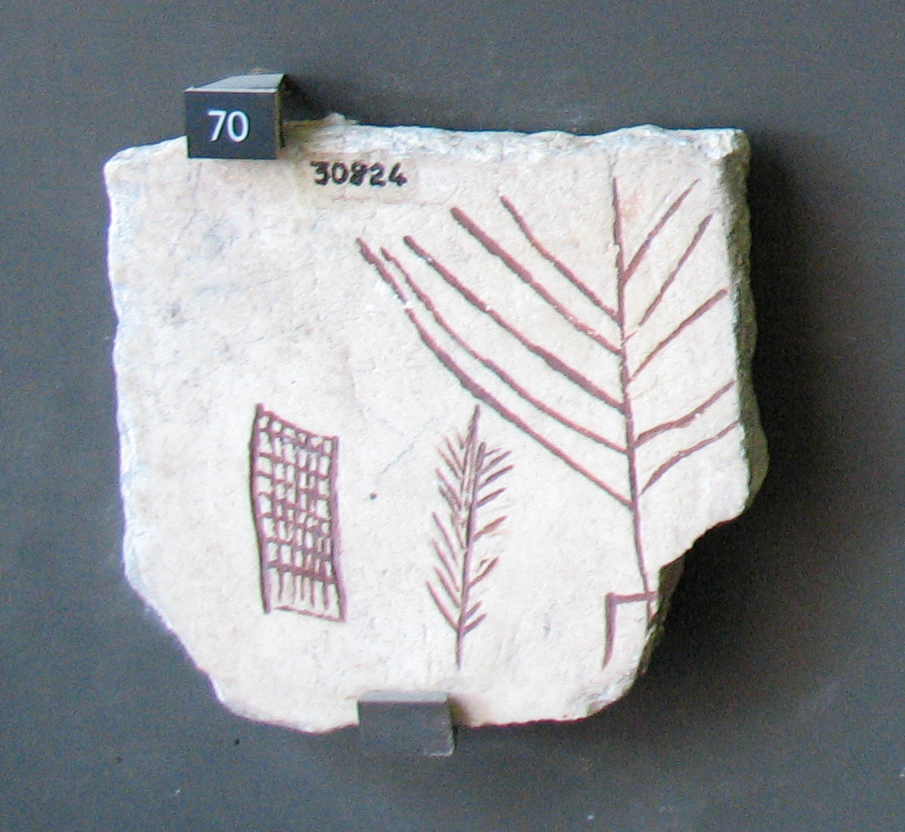
Of course, this image is also difficult to interpret. The most recent analysis wisely leaves it at “una griglia rettangolare.”2 So, given the lack of decent parallels for the image in the Castricius inscription, I am inclined to regard the image as an unidentified object until better comparative evidence is forthcoming.
- On the various interpretations, see the relevant entry in David Noy, Jewish Inscriptions of Western Europe, Volume 2: The City of Rome (Cambridge University Press, 1995), 232-233 and Rachel Hachlili, Ancient Jewish Art and Archaeology in the Diaspora (Brill, 1998), 368-369. ↩︎
- Alessandra Negroni, “Le Iscrizioni,” in La catacomba ebraica di Monteverde: vecchi dati e nuove scoperte (Rotoform, s.r.l., 2013), 155-318, at 312. ↩︎


 Variant Readings