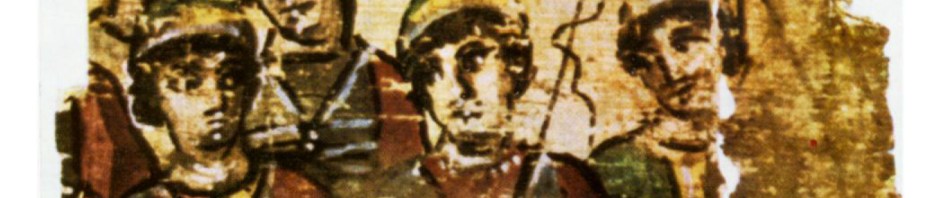
One of the most famous illustrated papyri is a scrap that was found in a garbage heap in the Egyptian city of Antinoopolis. The papyrus contains a painting of a group of charioteers wearing brightly colored racing outfits.
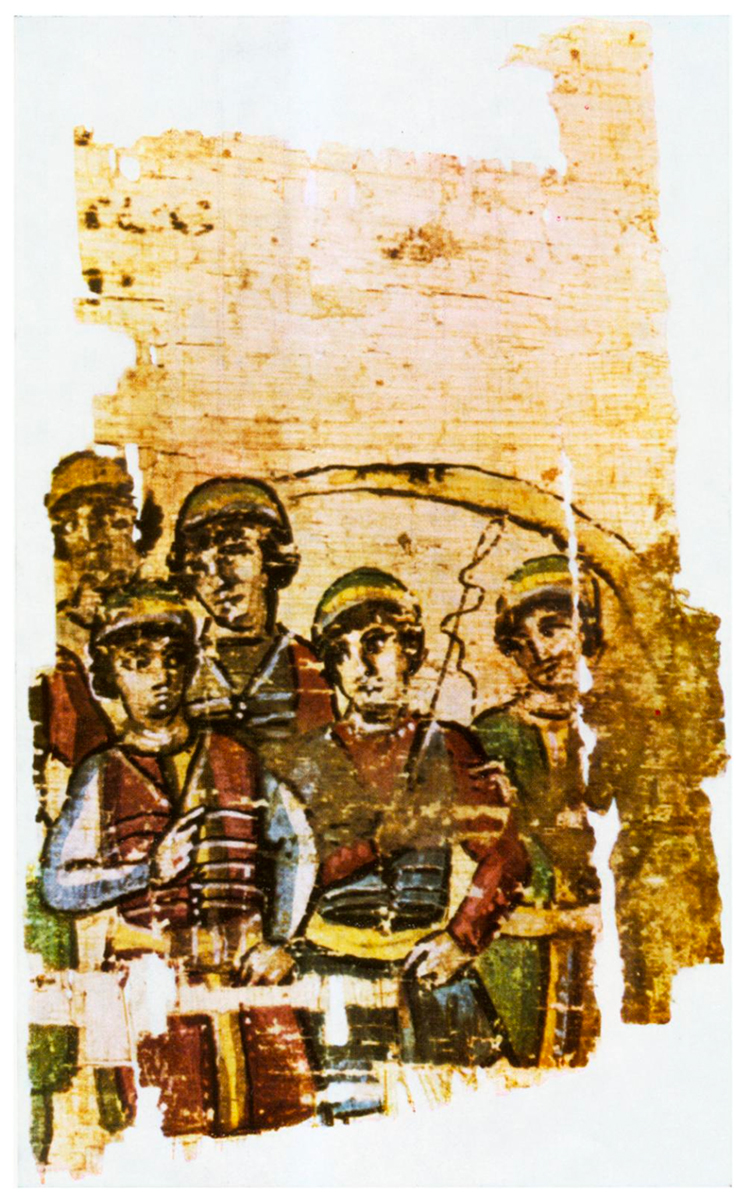
The papyrus was discovered during excavations sponsored by the Egypt Exploration Fund in 1914.1 The illustrated side of the papyrus was published in 1931.2 But it wasn’t until 1973 that Eric Turner pointed out that there was text on the other side of the fragment.3
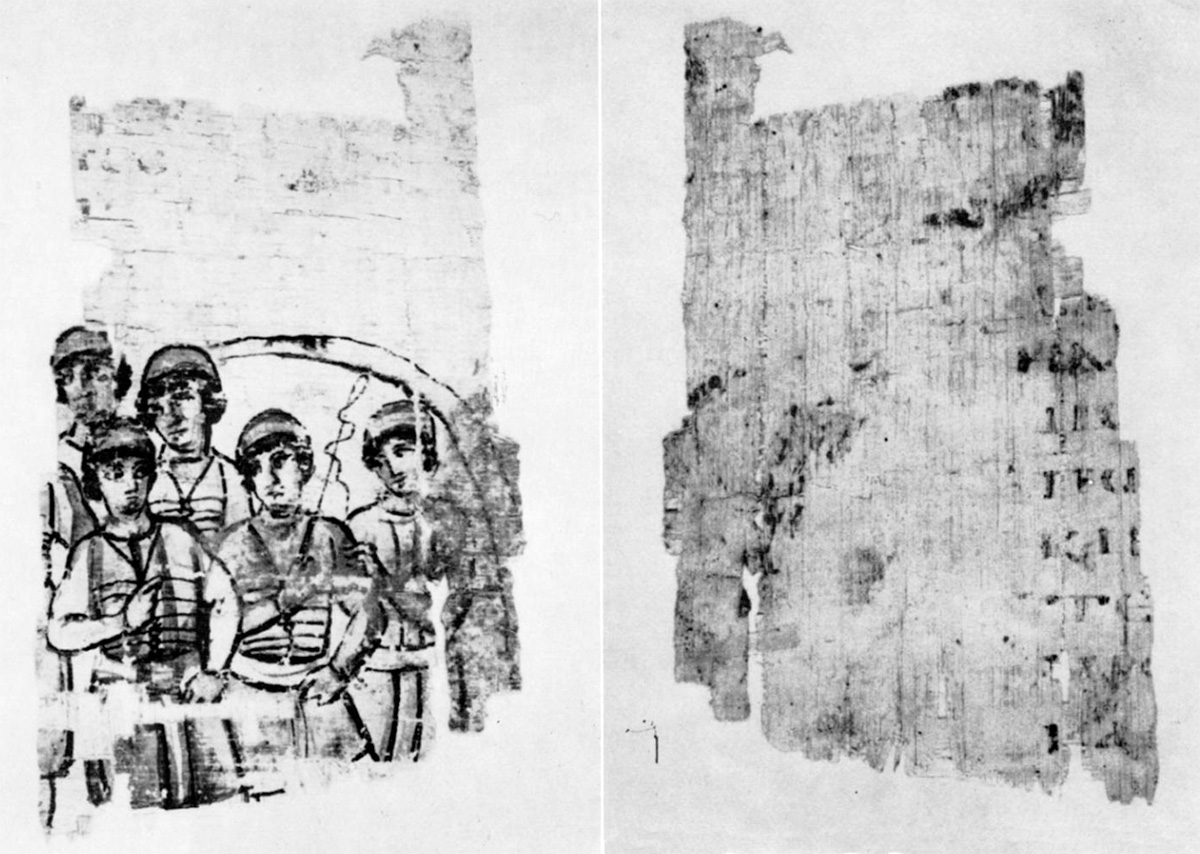
We can see traces of the beginnings of several lines of Greek text. So, we have here a folium from what was once an illustrated codex. But what is the text that accompanied this image?
In an article that just came out in Classical Quarterly, I try to solve this problem:
“The Antinoopolis Charioteers Papyrus: A Leaf from an Illustrated Codex of the Alexander Romance,” Classical Quarterly 76 (2026)
I make the case that this papyrus is a leaf from a codex that contained the Alexander Romance, an ancient novel about the life and adventures of Alexander the Great. It was a very popular work in Late Antiquity and the Middle Ages. It existed in multiple Greek recensions and was translated into many other languages (including Latin, Syriac, Armenian, Persian, Arabic, and the European vernaculars). Some editions were illustrated, occasionally quite lavishly. In some versions of this story, Alexander takes part in a chariot race, and it just so happens that the little bits of text on this papyrus can be aligned quite nicely with this chariot racing scene in a couple of the Greek recensions of the Alexander Romance.
In the narrative of the Alexander Romance, nine racers participate. In the fragment, only five figures and part of a sixth are visible, but the image clearly continued past the broken edge on the left. Stanisław Jan Gąsiorowski, the art historian who first published the papyrus, noticed a couple important details–without knowing the text that accompanied the picture. He observed that the charioteers were simply standing, meaning the scene would likely be before or after the race, and he suggested the drawing of lots for racing positions. This is in fact the point in the narrative that is preserved in the surviving text on the papyrus. Second, Gąsiorowski pointed out that the picture appears to emphasize two of the charioteers, the figure on the front left and the central figure with the whip: “These two charioteers appear to be more important than the others, not only by their position in the front line of the group, but also by their gestures.” In fact, this description would be fitting for the situation in the Alexander Romance. While the race involves nine charioteers, the focus in the narrative is clearly on the rivalry between just two–Alexander and his nemesis Nikolaos of Akarnania. Here is Ken Dowden’s English translation with the approximate surviving contents of the back of the papyrus in bold:
“…Everything for the competition was in place, including the urn, from which the lots were now drawn. Nikolaos drew first place, Xanthias second, Kimon third, Kleitomachos fourth, Aristippos of Olynthos fifth, Pieros of Phokaia sixth, Kimon of Lindos seventh, Alexander of Macedon eighth, Nikomachos of Lokroi ninth. Next they took up position for the race. The trumpet rang out the signal to begin. The starting gates on the stalls were opened up. They all leapt forward at an enormous pace— first lap, second and third and fourth. Now those at the back slackened as their horses gave out; but Alexander was driving in fourth position, and behind him was Nikolaos, not so much trying to win as to kill Alexander…”4
So the papyrus may provide us with an image of Alexander the Great, although it is difficult to know which charioteer he is. If it is an image of Alexander, he has been hiding in plain sight for almost a century. Whether or not any of these figures is meant to depict Alexander, if the identification of the text as The Alexander Romance is correct, we now have evidence for a deluxe illustrated papyrus novel in sixth-century Antinoopolis. And we push back the evidence for an illustrated edition of the Alexander Romance by seven centuries.
The article makes some educated guesses about what the rest of the illustration may have contained and some of the characteristics of the manuscript, which must have been a luxurious edition.
For those with institutional access, the full article can be accessed here.
If you don’t have institutional access, contact me, and I will send along a pdf.
The abstract for the article is below:
This essay argues that the illustrated papyrus fragment known as the “Antinoopolis charioteers” is a folium from a codex containing an episode from the Alexander Romance. The few letters on both sides of the papyrus neatly align with the text of a chariot racing episode present in some versions of the Alexander Romance. The identification of the text in turn sheds light on the lost portions of the illustration and the codicology of the manuscript from which the fragment came. The identification of this papyrus pushes back by several centuries the tradition of illustrated manuscripts of the Alexander Romance and adds new data to the challenging textual history of this cluster of stories.
- J.d.M. Johnson, “Antinoë and its Papyri: Excavation by the Graeco-Roman Branch, 1913–14,” Journal of Egyptian Archaeology 1 (1914) 168–181. ↩︎
- S.J. Gasiorowski, “A Fragment of a Greek Illustrated Papyrus from Antinoë,” Journal of Egyptian Archaeology 17 (1931) 1–9. ↩︎
- E.G. Turner, “The Charioteers from Antinoe,” Journal of Hellenic Studies 93 (1973) 192–195. The images in this post come from Turner’s article. ↩︎
- Dowden’s translation can be found in B.P. Reardon, Collected Ancient Greek Novels
(University of California Press, 1989), 650–735. ↩︎


Pingback: The Machine for Casting Lots for Positions at the Chariot Races | Variant Readings
Brent, this article was a delight to read! Many kudos for your fine detective work. 👍🙏👍
Thanks–this article was really fun to research and write. I’m glad you enjoyed it!
Pingback: Manuscripts of the Alexander Romance | Variant Readings
Pingback: Papyri Related to the Alexander Romance | Variant Readings