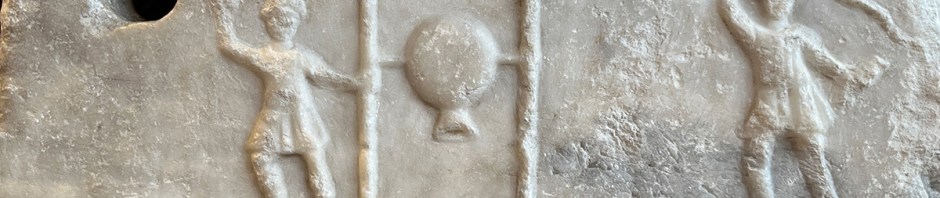
In an earlier post I noted the publication of an article in which I propose that the Antinoopolis Charioteers papyrus is a leaf from a codex containing an illustrated copy of the Alexander Romance. The illustration is broken off on the left side, and in the article I suggest that the lost portion of the painting may have contained an image of the machine used for drawing lots to determine who gets the inside track in a chariot race. The bits of text that survive on the papyrus occur just a couple lines after the moment when the lots were drawn:
“Everything for the competition was in place, including the urn, from which the lots were now drawn…” (Alexander Romance 1.19)
This machine for drawing the lots (the urn) appears in iconography associated with chariot races.
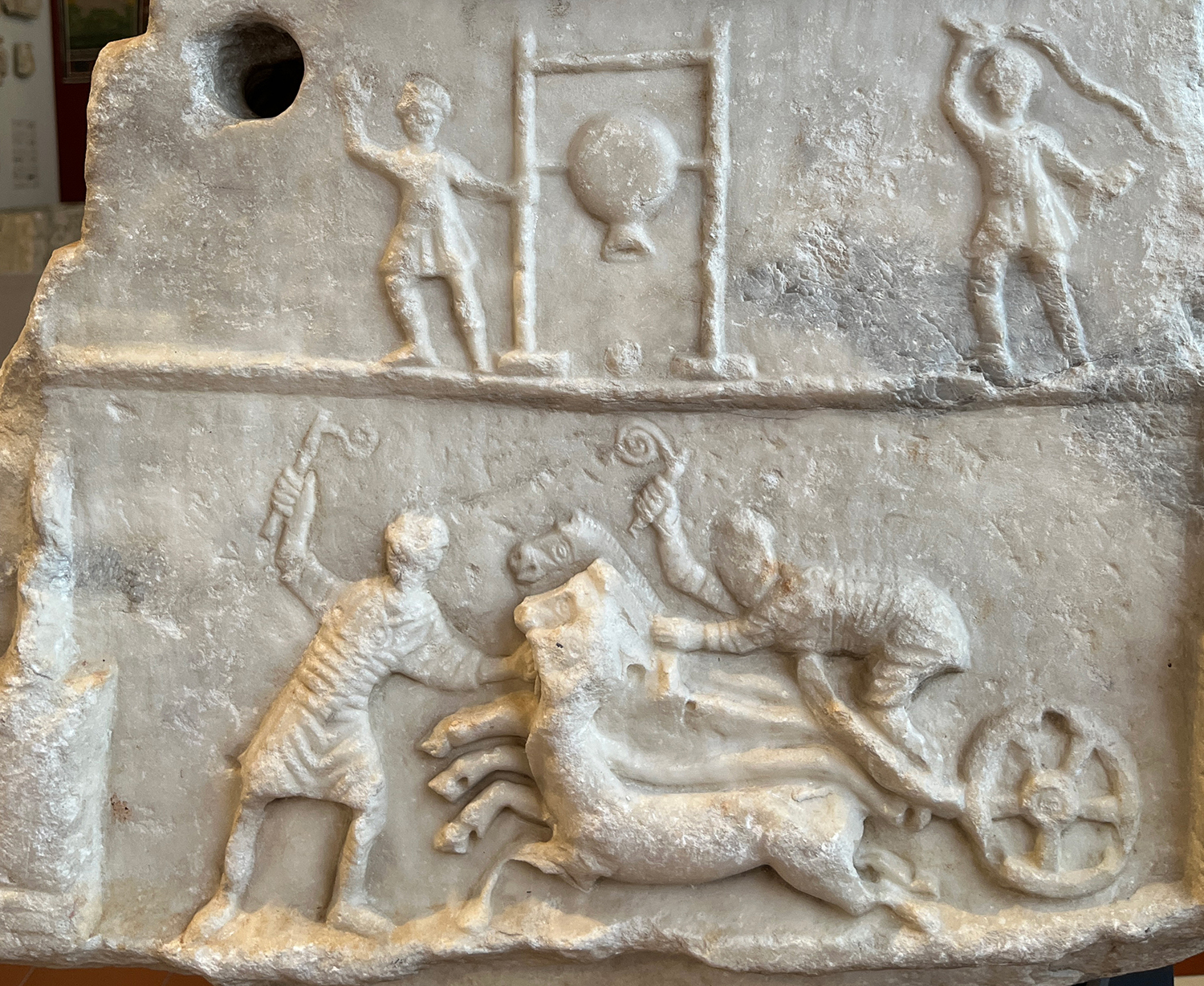
In the relief above, which is usually assigned to the fifth or sixth century, a charioteer stands to the right of the machine for drawing lots while another figure to the left of the machine seems to be operating it. A scene of racing appears in the lower register. The machine seems to have been a ceramic urn that was suspended on a rectangular frame. It could apparently be rotated by a handle on the side (which is what seems to be occurring in the relief).
We get some sense of the operation of the machine from an account in the De ceremoniis of Constantine Porphyrogennetos (a compilation of the 10th century) preserved in Leipzig, Universitätsbibliothek Rep. I 17, fol. 130 recto:

+ Concerning the Urn: How it should be Turned Over : ~
…the director (ὁ θεωρητής) takes the balls from the tray, tosses them into the urn (τὴν ὄρναν), and turns it over three times. When he opens it, a ball, whichever one, drops out. Immediately they determine the order and everyone designates the names of the teams on the inner track…
The drawing of lots before chariot races seems to have itself been part of the performance. Tertullian scoffs at crowds in the circus: “Look at the populace coming to the show—mad already! Disorderly, blind, excited already about bets! The praetor is too slow for them; all the time their eyes are on his urn, in it, as if rolling with the lots he shakes up in it…” (De spectaculis 16).
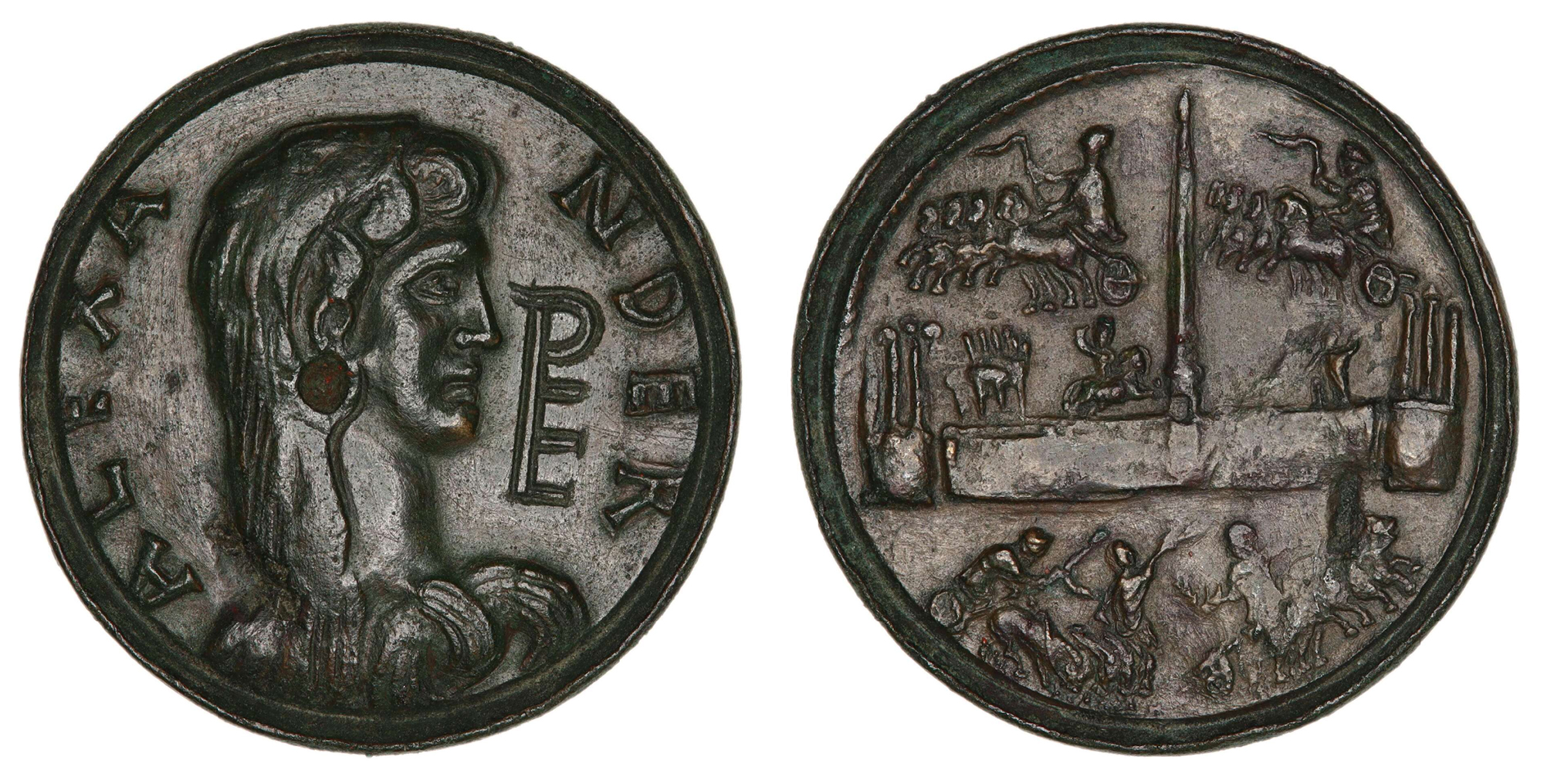
We also see imagery of the lot machine on contorniate medallions. These apparently commemorative issues were produced in the fourth and fifth centuries. Many of them feature scenes from the chariot races, and also, interestingly enough, Alexander the Great. One example is this piece at the British Museum with a head of Alexander on the obverse and a racing scene on the reverse:
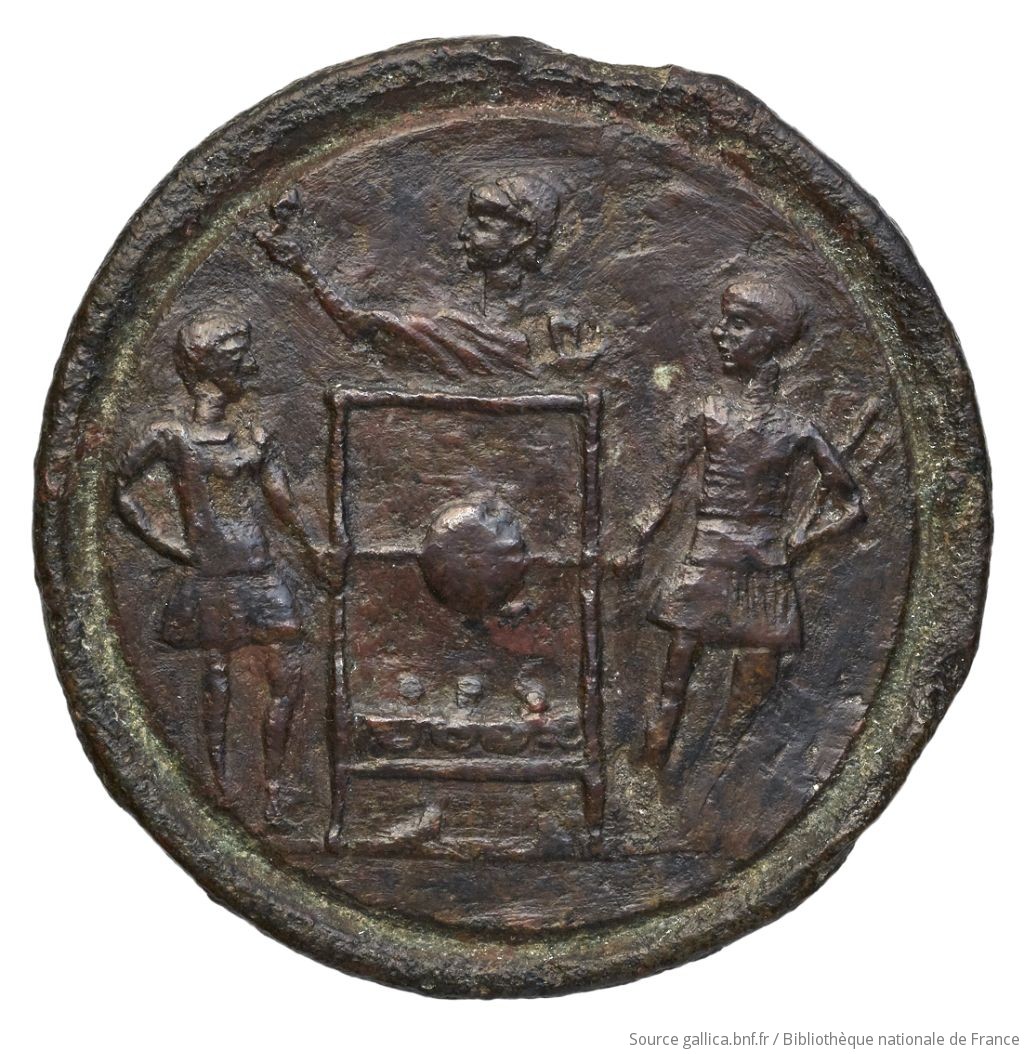
On the reverse of a couple issues of these kinds of medallions, we find the machine for casting lots. It is flanked by two figures. The one on the right is definitely a charioteer. The one on the left I am less sure how to best identify. A third figure who appears to holding up the chosen ball stands behind the machine:
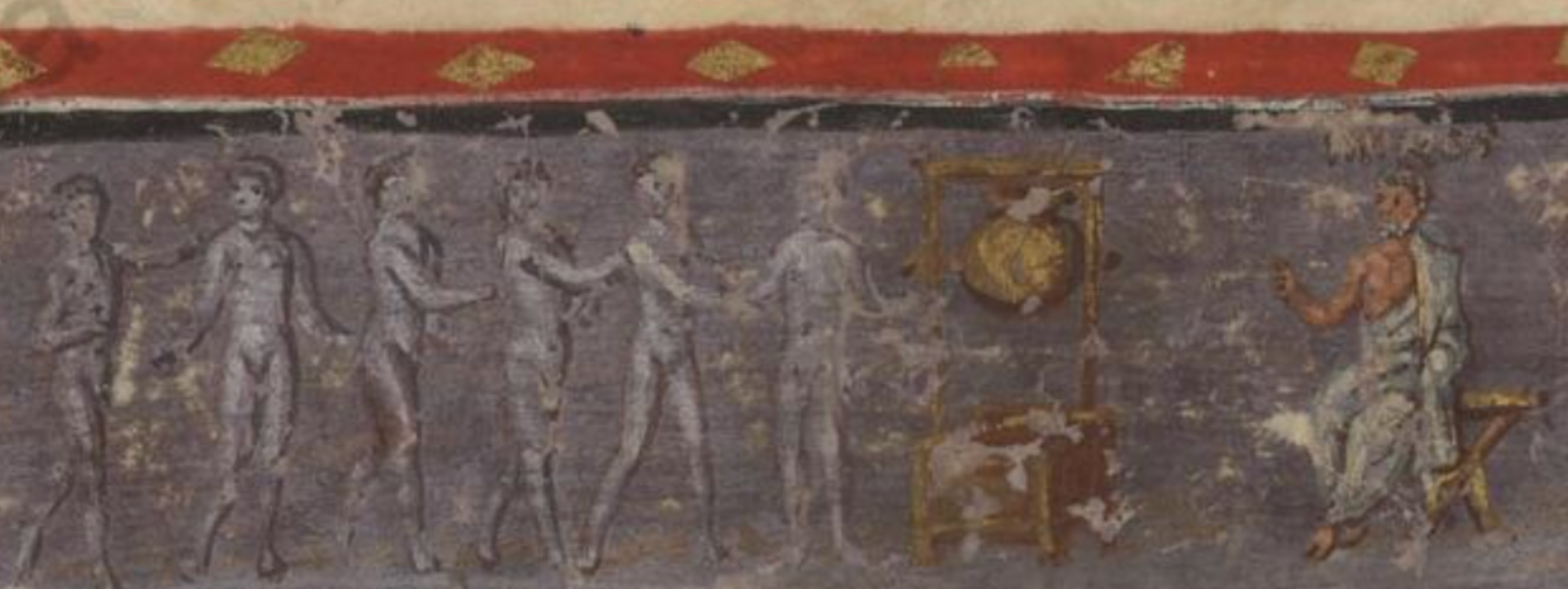
The imagery of the lot machine seems to have been part of the larger visual vocabulary of the Late Antique world. It shows up not only in connection with the chariot races, but also in the context of mythology. In the illustrations of Vergilius Vaticanus, the lot machine makes an appearance as Minos oversees the casting of lots to reconsider the fate of those wrongly condemned to death (Aeneid 6.432):
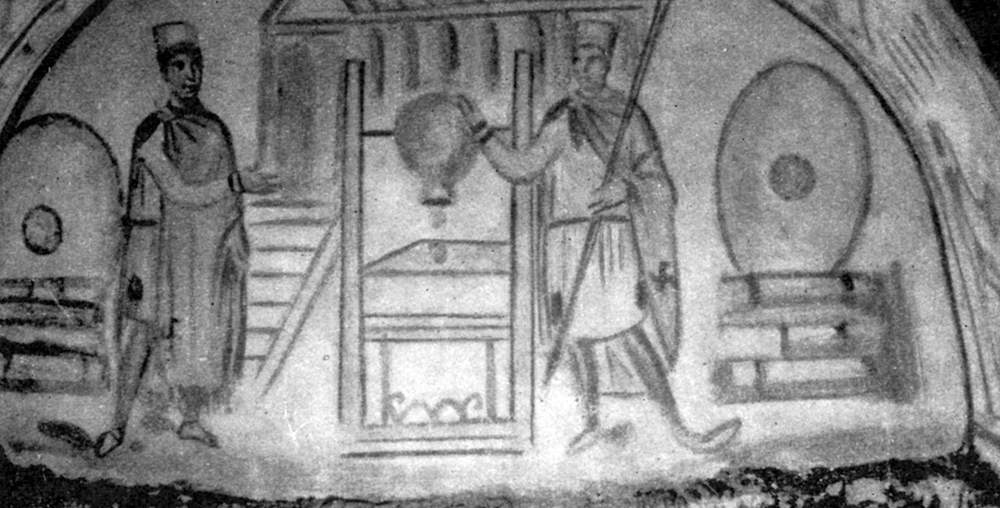
Christians also picked up on the imagery, apparently in connection to Psalm 22:18 (“They cast lots for my garment”), which became associated with the crucifixion of Jesus (Matthew 27:35, John 19:24). The machine appears in a fresco in the Via Latina catacombs (4th century?), in which two soldiers stand on either side of the machine, which is positioned in front of a building that looks like a tomb (an imagination of the tomb of Jesus?):
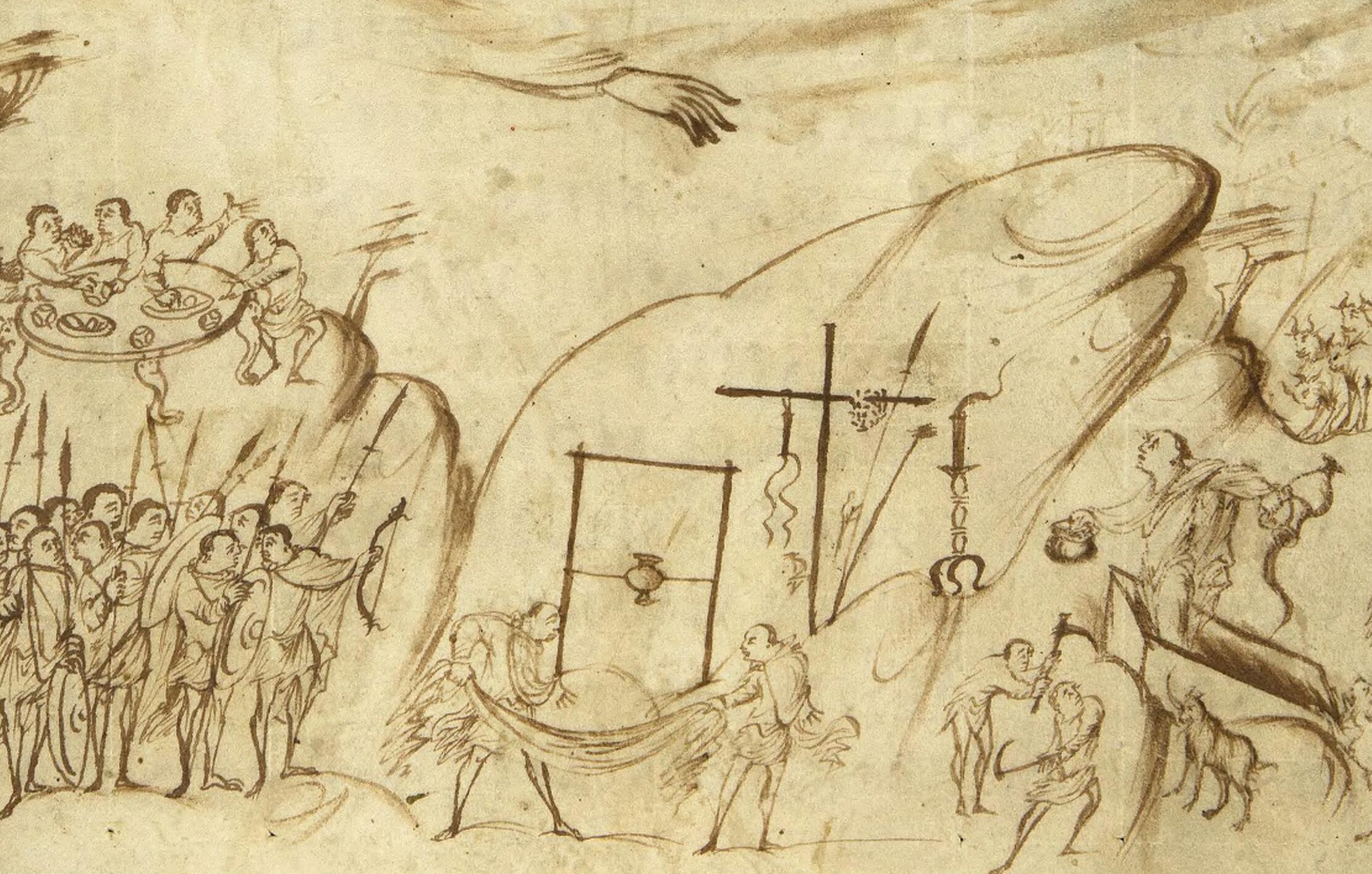
Similar imagery makes an appearance in the Utrecht Psalter (9th century) in connection with the Psalm in a more literal sense with two figures pulling on either side of a garment in front of the machine:
The device for drawing lots seems to have been a relatively recognizable item that could be used in different contexts. This is perhaps not so surprising since fate was an important concept throughout the ancient Mediterranean world.


This great! Drawing on so many media.
This is pretty cool. Fascinating to see how the contemporary culture read these lot machines back into their interpretation of biblical texts.