
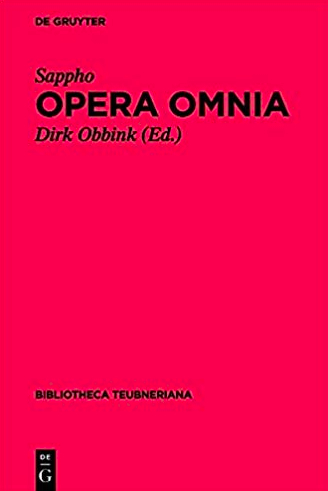
Mike Holmes of the Museum of the Bible has released some intriguing new information about the Sappho papyrus fragments owned by Hobby Lobby. I posted Mike’s statement here.
There really is a lot to unpack with this situation. I want to focus now on the timeline of events around mid-January 2012, because some pieces seem to be falling into place with regard to the early history of the Green Collection and the practices of Scott Carroll and Oxford University Professor Dirk Obbink.
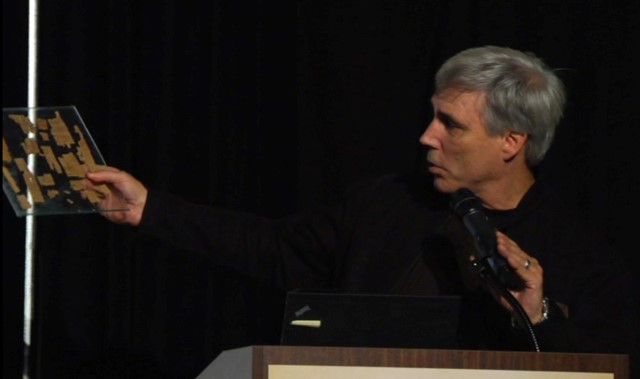
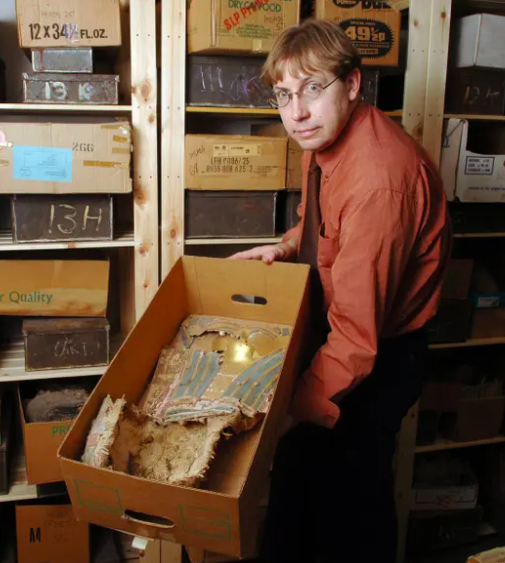
So, we can say that the Green Collection Sappho fragments appeared publicly for the first time on 16 January 2012 when Scott Carroll dismantled a mummy mask at Baylor University, an event that was recorded in the now (in)famous video that was uploaded to YouTube on 19 May 2014.
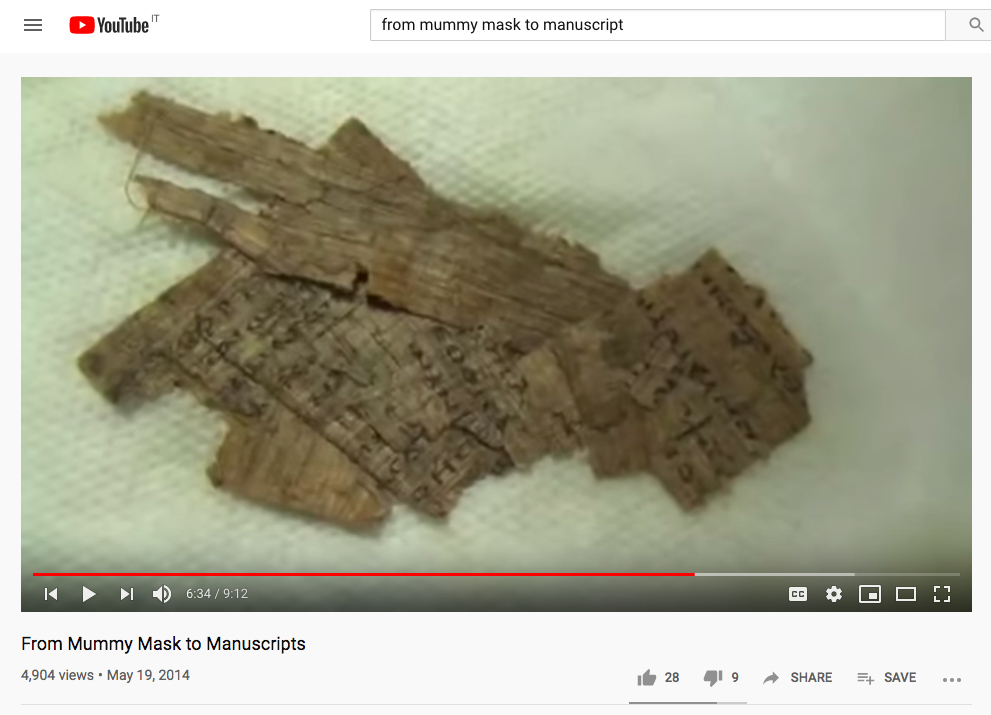
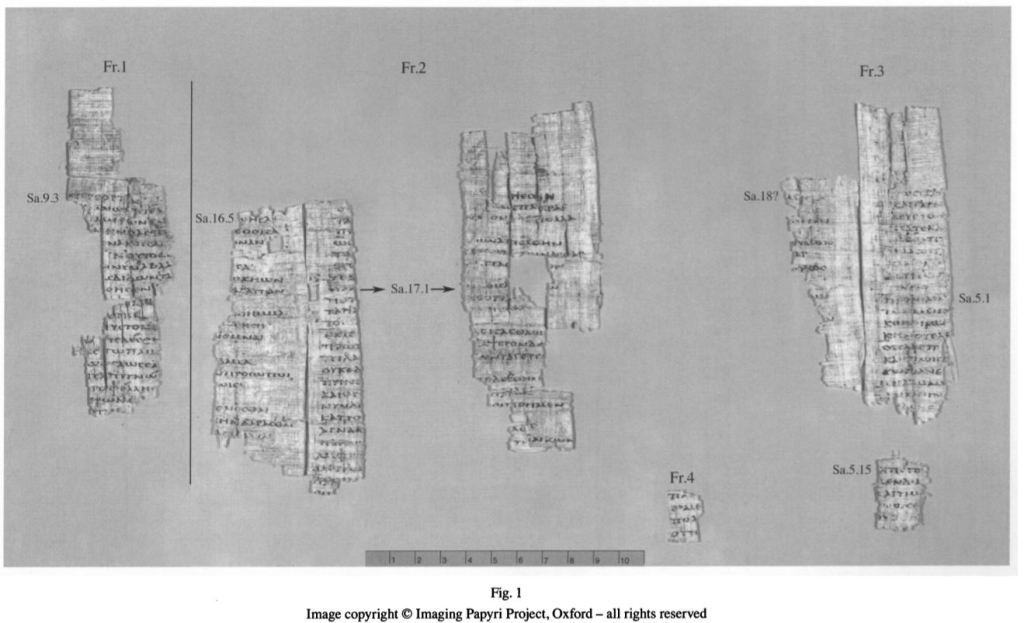
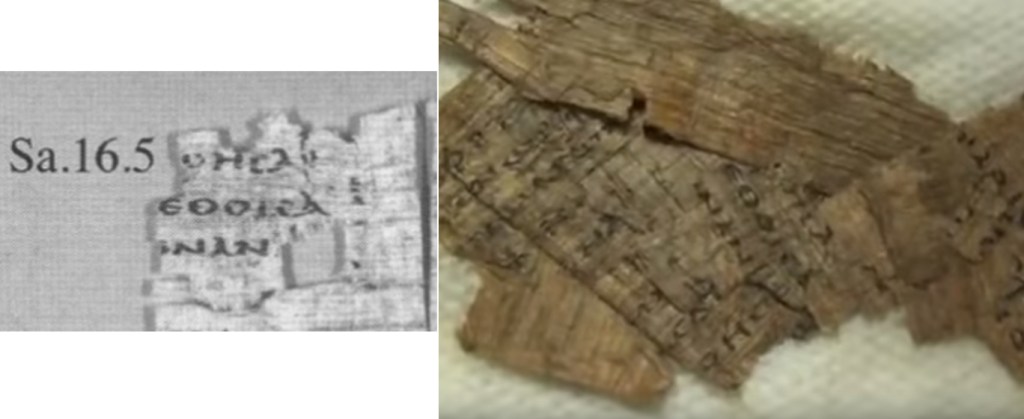
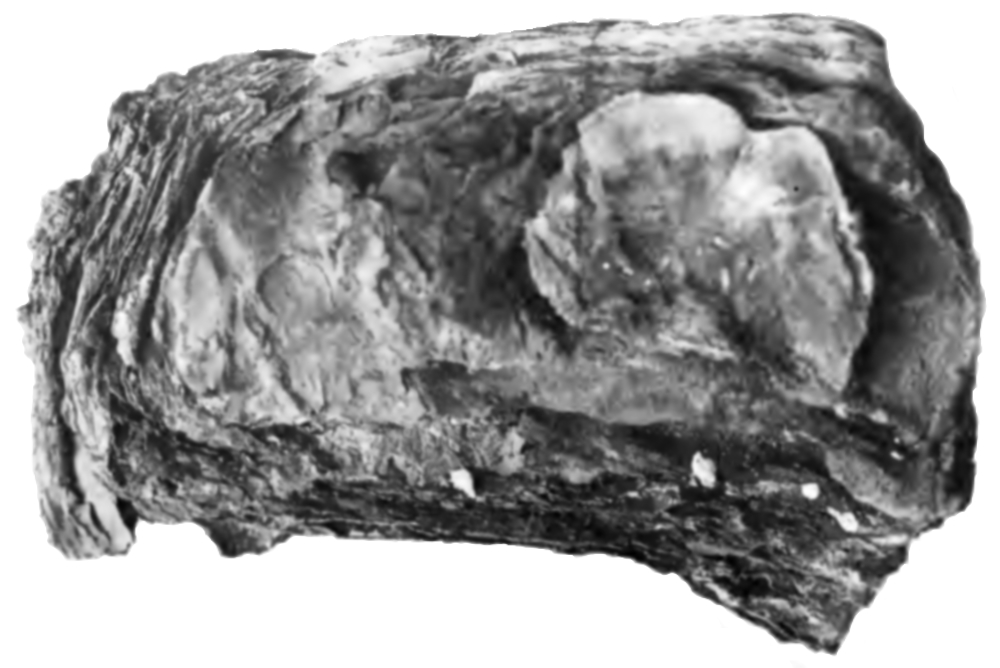
The implication for a viewer of the video is that these Sappho fragments were among those extracted from the mask, but in his statement Mike Holmes noted that this seems highly unlikely, because of the existence of a photograph (provided to MOTB by Professor Dirk Obbink) of a chunk (or perhaps “pad”?) of non-mummy-mask cartonnage apparently bought from Yakup Eksioglu (a.k.a. MixAntik) that appears to show one of the Hobby Lobby Sappho fragments also visible in the damp clump of pieces at Baylor in 2012 (the connection here between Dirk Obbink and MixAntik definitely cries out for further elucidation, but that is not my goal here [[Update 30 January 2020: See Paul Barford’s reflections here.]]).
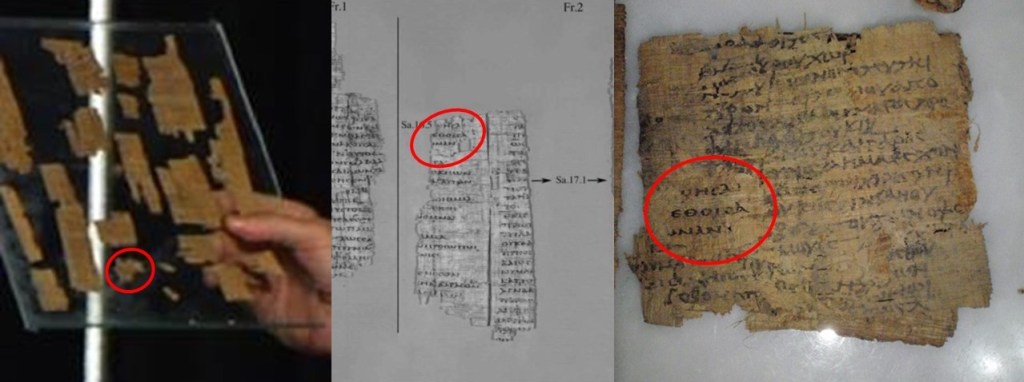
As I said, this piece of cartonnage does not appear to be part of a mummy mask. Furthermore, the bulk of the visible material extracted by Scott Carroll from the mask on 16 January 2012 looks at first glance to be considerably older–late Ptolemaic or very early Roman–than these Sappho fragments, which are assigned to the 2nd or 3rd century CE.

It is possible that more than one piece of cartonnage was dissolved that day at Baylor, but I don’t see any strong evidence of that in the video. As I said, the editor of this video seemingly wants to give the impression that the Sappho fragments came from the mummy mask.
But there is more. First, I need to thank Candida Moss for having the foresight to create a record of Scott Carroll’s facebook posts from 2012 relating to his collecting activities and for sharing these with me. Here are two sequential posts from early 2012:

So, freshly back from a trip to Oxford in early January 2012, Scott Carroll comes to Baylor on 16 January 2012 with a mummy mask that he dissolves. Two days later, 18 January, he strongly implies that he recovered papyrus fragments of Homer, Euripides, Thucydides, along with “the earliest-known text of Romans” and “numerous large sections of the most-illusive and valuable of all Greek works–the lyricist SAPPHO!!” from that mask.
18 January 2012 also just happens to be the same day that Steve Green went on CNN and claimed to own a newly discovered papyrus fragment Romans that was the earliest surviving copy of the letter (a fragment that we now know was stolen from the Oxyrhynchus collection):
“This [fragment] has just been discovered within the last 48 hours. Ah, Dr. Scott Carroll, who is a Bible expert that we have been working with was at Baylor and discovered this.” When the surprised CNN host asked him, “How…how did you get this?” Mr. Green responded:
“Well, um, this is in part of the acquisitions that we have, that we have, ah, uh, in uncovering layers of papyrus and as we’re pulling layers away, all different kinds of texts show up, and this happens to be, is, as Dr. Scott Carroll has identified it, the oldest portion of the book of Romans known, dating to middle second century.”
Mr. Green’s statement and Carroll’s FB post strongly imply that the Romans papyrus was extracted from a mummy mask, at Baylor, within 48 hours of 18 January. It is hard to escape the conclusion that Mr. Green thought this fragment of Romans was extracted from the mummy mask in the YouTube video.
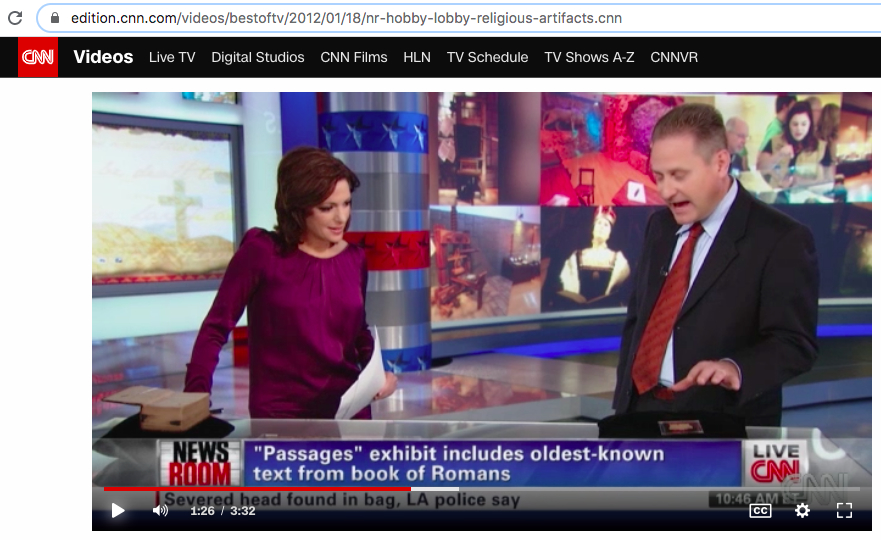
But we now know that this fragment did not come from cartonnage and in fact was stolen from the Oxyrhynchus collection and is alleged to have been sold to Hobby Lobby by Professor Dirk Obbink. Yet, Carroll seems to have presented the fragment as having been obtained from the mummy mask at Baylor.
From his Tweet, it seems that Scott Carroll makes the same claim for the papyrus fragments of Sappho, some of which appear as a wet clump in the Baylor video from 16 January. Did the stolen Oxyrhynchus Romans papyrus also make an appearance that day?
Back in 2012, just after Steve Green’s interview on CNN aired, the Evangelical Textual Criticism blog made a post about the new Romans fragment (thanks to the commenter Aractus for drawing my attention to this). In the comments section, there were several posts that were somewhat skeptical of the story Mr. Green presented and some posts that were wary of the travelling “Passages” exhibit and the need to pay to see the Green Collection manuscripts. But one commenter, posting anonymously on 22 January 2012, offered the following defense of Mr. Green:
“Well, I was there when we ‘harvested.’ For people who are on a blog that says to be ‘evangelical’ I must say that the responses are saddening. It was something for the general public. The BBC has actually filmed a similar ‘event.’ And, yes, publications will follow. No need for demeaning people or spouting about ‘having to pay.’ The public comes with hundreds of thousands at the time. There actually will be a showing in the Vatican for several weeks (with the pope seeing it on Feb 29). Just let it be. Isn’t the whole point that the Word is made attractive to the world? Why make it a ‘liberal thing.’ Never forget your goal.”
So, it seems that at least one person claims to have seen the stolen Oxyrhynchus Romans papyrus “harvested” from a mask. (Sidenote: This is the second reference to a mummy mask dismantling filmed by the BBC in early 2012: Does anyone know where to get this footage?)
We are left to ask: How is it that the Romans papyrus (likely datable to the 3rd or 4th century CE) and the Sappho fragments (usually assigned to the 2nd or 3rd century CE) are said to have come out of a mummy mask that seems to be Ptolemaic? It would be great if Scott Carroll or one of the several people present that day at Baylor could speak up and shed some light on what exactly transpired. It was troubling before the latest revelations. Now it is even moreso.
And we shouldn’t forget that Professor Obbink’s “anonymous London owner” of the larger Sappho fragments seems to have been dissolving them at just about the same time in January 2012. Busy month.

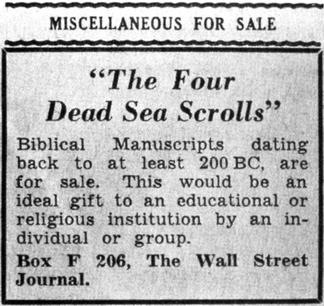 Pretty much everyone with a passing knowledge of the Dead Sea Scrolls will recognize the famous ad in The Wall Street Journal (1 June 1954) placed at the request of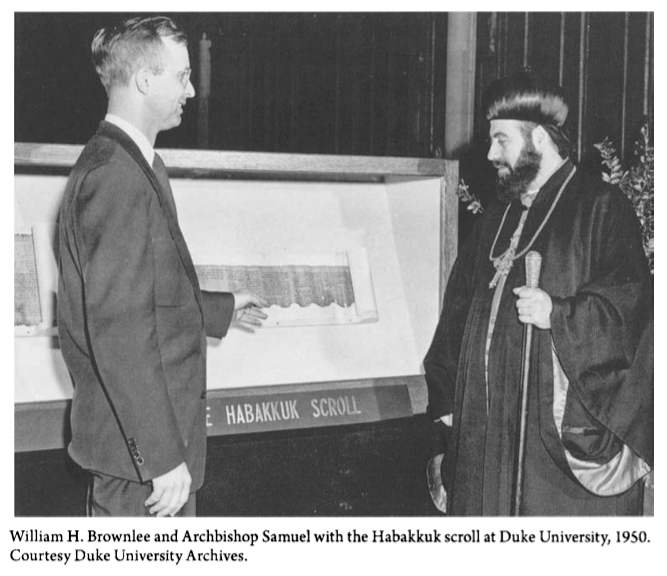






 Variant Readings
