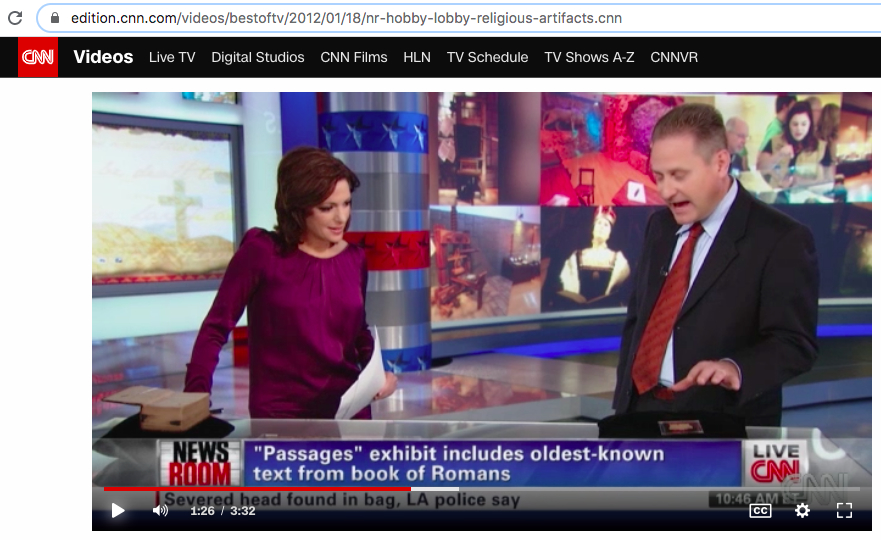
In my last post on the new information regarding the origin of Hobby Lobby’s Sappho papyrus fragments, I noted some parallels with the claimed mummy mask origins of a papyrus fragment of Paul’s letter to the Romans (now known to have been stolen from the Oxyrhynchus collection). Recall again Steve Green’s description of the fragment from the CNN interview on 18 January 2012:
“This [fragment] has just been discovered within the last 48 hours. Ah, Dr. Scott Carroll, who is a Bible expert that we have been working with was at Baylor and discovered this…This is in part of the acquisitions that we have, that we have, ah, uh, in uncovering layers of papyrus and as we’re pulling layers away, all different kinds of texts show up, and this happens to be, is, as Dr. Scott Carroll has identified it, the oldest portion of the book of Romans known, dating to middle second century.”
As I said, Mr. Green’s statement and one of Scott Carroll’s FB posts very much give the (false) impression that that the Romans papyrus was extracted from a mummy mask at Baylor probably on 16 January. I thus wondered whether the stolen Oxyrhynchus Romans made an appearance that day at Baylor.
I now notice something that I should have noticed earlier. The Oxyrhynchus Romans papyrus does indeed appear to have been among those present at the Baylor event on 16 January 2012. The papyrus shows up in a sequence of photographs of the event presented by the Christian apologist Josh McDowell in one of his talks shortly after the Baylor event (a video of McDowell’s talk was first flagged by Brice Jones in 2014). In the course of giving a list of items discovered at Baylor that day (at about the 30:50 mark in the video), McDowell mentions “Sapphos [sic], some you know the great writer Sapphos [sic]” (were the Sappho fragments identified as such on the spot at the event?) and then displays a series of images on the screen. At the 31:11 mark (slide 59), a partial picture of a fragmentary papyrus appears briefly. Despite the poor quality of the still image from McDowell’s video, I feel safe in saying that it is certainly the same papyrus as the stolen Oxyrhynchus fragment Steve Green showed on CNN:
Screenshot of the Stolen Oxyrhynchus Romans papyrus displayed by Steve Green on CNN on 18 January 2012 (left); the same papyrus in Josh McDowell’s sequence of photos from the Baylor mummy mask dismantling on 16 January 2012 (right)
It looks like there is a little glare coming off the papyrus in McDowell’s photo, which suggests that the Romans papyrus was already mounted between glass plates at the Baylor event and not wet like the Sappho fragments. There were several other mounted pieces at the event, including a stolen Oxyrhynchus fragment of 1 Corinthians and what may well be an unidentified work of Aristotle.
If the Romans fragment was indeed already between glass panes at the event, it’s unclear how exactly it was supposed to be “discovered” on that day. But it’s also not totally clear how many steps of the extraction “process” took place at the event. At one point, McDowell describes what was going on, saying, (31:00) “…and you just peel away. And then of course we put ’em, we put ’em in between paper towels; you dry it, and then we put ’em into glass to protect ’em.” Were “extracted” items also mounted that day at Baylor?
In addition, some of Scott Carroll’s comments at the beginning of the video of that Baylor session now take on a rather different significance (at about the 1:30 mark in the video). As he holds the mask that will be dismantled, Carroll says:
“This will have, because this dates, and we know from artistic evidence and all, um, to the early Christian period, and we know it comes from the region where they use papyri, we also are very certain that there’s Greek papyri that’s in here. And I’ve done some probing, um, as well, to, to see, and we work with different things to try to do this without destroying the mask, and I can tell you, that, uh, we’re in for some interesting things today.”
Indeed.
[[Update 13 May 2020: In an article in The Atlantic, Ariel Sabar demonstrates that yes, the Sappho was identified on the spot at Baylor, and yes, Scott Carroll did in fact plant the stolen Romans fragment to make it appear as if it came from the mummy mask.]]
Mike Holmes of the Museum of the Bible has released some intriguing new information about the Sappho papyrus fragments owned by Hobby Lobby. I posted Mike’s statement here.
There really is a lot to unpack with this situation. I want to focus now on the timeline of events around mid-January 2012, because some pieces seem to be falling into place with regard to the early history of the Green Collection and the practices of Scott Carroll and Oxford University Professor Dirk Obbink.
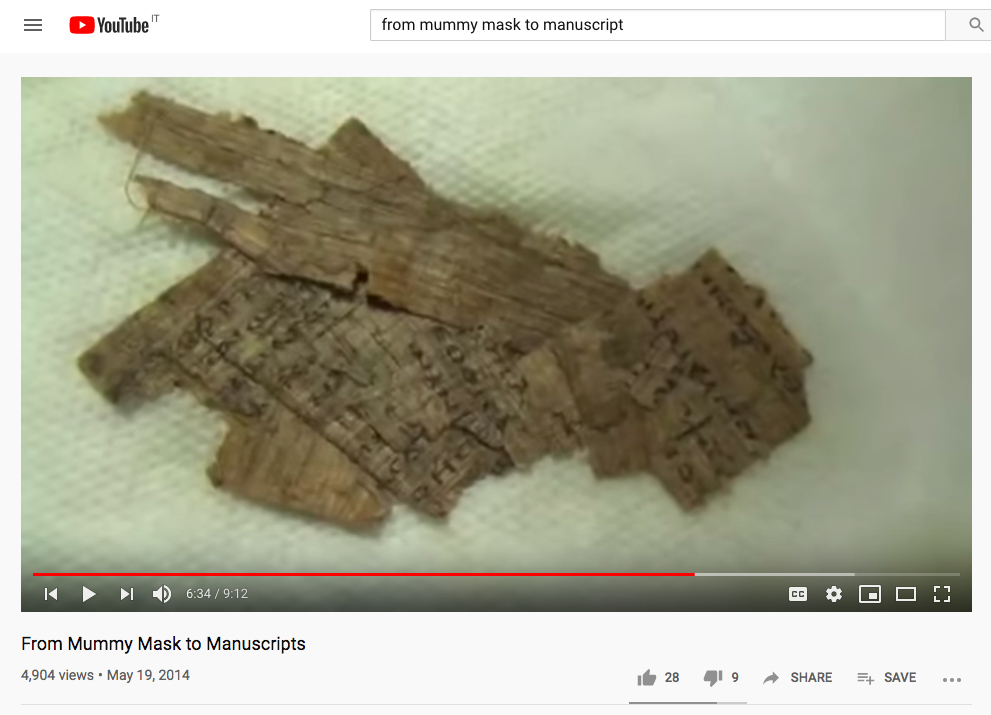
So, we can say that the Green Collection Sappho fragments appeared publicly for the first time on 16 January 2012 when Scott Carroll dismantled a mummy mask at Baylor University, an event that was recorded in the now (in)famous video that was uploaded to YouTube on 19 May 2014.
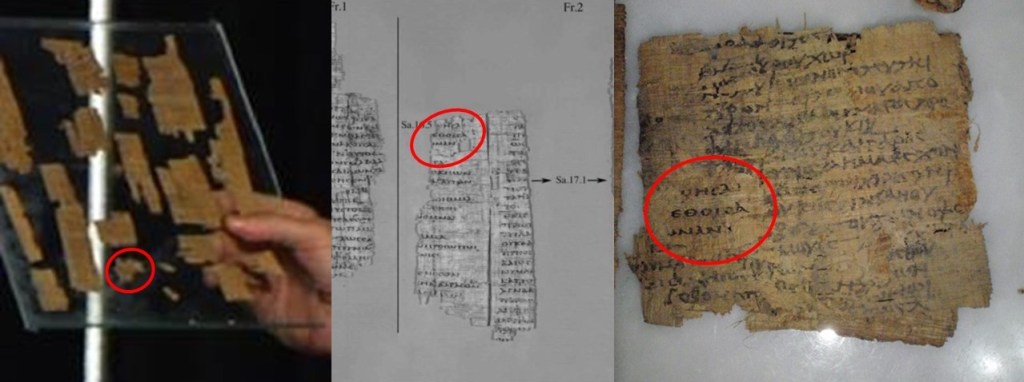
The implication for a viewer of the video is that these Sappho fragments were among those extracted from the mask, but in his statement Mike Holmes noted that this seems highly unlikely, because of the existence of a photograph (provided to MOTB by Professor Dirk Obbink) of a chunk (or perhaps “pad”?) of non-mummy-mask cartonnage apparently bought from Yakup Eksioglu (a.k.a. MixAntik) that appears to show one of the Hobby Lobby Sappho fragments also visible in the damp clump of pieces at Baylor in 2012 (the connection here between Dirk Obbink and MixAntik definitely cries out for further elucidation, but that is not my goal here [[Update 30 January 2020: See Paul Barford’s reflections here.]]).
Scott Carroll holding a frame containing the Green Collection Sappho fragments on 7 February 2012 (left); the published Green Collection Sappho fragments (middle); a piece of “cartonnage” apparently showing one of the Green Collection Sappho fragments (right); image provided by Mike Holmes, Museum of the Bible
As I said, this piece of cartonnage does not appear to be part of a mummy mask. Furthermore, the bulk of the visible material extracted by Scott Carroll from the mask on 16 January 2012 looks at first glance to be considerably older–late Ptolemaic or very early Roman–than these Sappho fragments, which are assigned to the 2nd or 3rd century CE.
It is possible that more than one piece of cartonnage was dissolved that day at Baylor, but I don’t see any strong evidence of that in the video. As I said, the editor of this video seemingly wants to give the impression that the Sappho fragments came from the mummy mask.
But there is more. First, I need to thank Candida Moss for having the foresight to create a record of Scott Carroll’s facebook posts from 2012 relating to his collecting activities and for sharing these with me. Here are two sequential posts from early 2012:
So, freshly back from a trip to Oxford in early January 2012, Scott Carroll comes to Baylor on 16 January 2012 with a mummy mask that he dissolves. Two days later, 18 January, he strongly implies that he recovered papyrus fragments of Homer, Euripides, Thucydides, along with “the earliest-known text of Romans” and “numerous large sections of the most-illusive and valuable of all Greek works–the lyricist SAPPHO!!” from that mask.
“This [fragment] has just been discovered within the last 48 hours. Ah, Dr. Scott Carroll, who is a Bible expert that we have been working with was at Baylor and discovered this.” When the surprised CNN host asked him, “How…how did you get this?” Mr. Green responded:
“Well, um, this is in part of the acquisitions that we have, that we have, ah, uh, in uncovering layers of papyrus and as we’re pulling layers away, all different kinds of texts show up, and this happens to be, is, as Dr. Scott Carroll has identified it, the oldest portion of the book of Romans known, dating to middle second century.”
Mr. Green’s statement and Carroll’s FB post strongly imply that the Romans papyrus was extracted from a mummy mask, at Baylor, within 48 hours of 18 January. It is hard to escape the conclusion that Mr. Green thought this fragment of Romans was extracted from the mummy mask in the YouTube video.
But we now know that this fragment did not come from cartonnage and in fact was stolen from the Oxyrhynchus collection and is alleged to have been sold to Hobby Lobby by Professor Dirk Obbink. Yet, Carroll seems to have presented the fragment as having been obtained from the mummy mask at Baylor.
From his Tweet, it seems that Scott Carroll makes the same claim for the papyrus fragments of Sappho, some of which appear as a wet clump in the Baylor video from 16 January. Did the stolen Oxyrhynchus Romans papyrus also make an appearance that day?
Back in 2012, just after Steve Green’s interview on CNN aired, the Evangelical Textual Criticism blog made a post about the new Romans fragment (thanks to the commenter Aractus for drawing my attention to this). In the comments section, there were several posts that were somewhat skeptical of the story Mr. Green presented and some posts that were wary of the travelling “Passages” exhibit and the need to pay to see the Green Collection manuscripts. But one commenter, posting anonymously on 22 January 2012, offered the following defense of Mr. Green:
“Well, I was there when we ‘harvested.’ For people who are on a blog that says to be ‘evangelical’ I must say that the responses are saddening. It was something for the general public. The BBC has actually filmed a similar ‘event.’ And, yes, publications will follow. No need for demeaning people or spouting about ‘having to pay.’ The public comes with hundreds of thousands at the time. There actually will be a showing in the Vatican for several weeks (with the pope seeing it on Feb 29). Just let it be. Isn’t the whole point that the Word is made attractive to the world? Why make it a ‘liberal thing.’ Never forget your goal.”
So, it seems that at least one person claims to have seen the stolen Oxyrhynchus Romans papyrus “harvested” from a mask. (Sidenote: This is the second reference to a mummy mask dismantling filmed by the BBC in early 2012: Does anyone know where to get this footage?)
We are left to ask: How is it that the Romans papyrus (likely datable to the 3rd or 4th century CE) and the Sappho fragments (usually assigned to the 2nd or 3rd century CE) are said to have come out of a mummy mask that seems to be Ptolemaic? It would be great if Scott Carroll or one of the several people present that day at Baylor could speak up and shed some light on what exactly transpired. It was troubling before the latest revelations. Now it is even moreso.
Mike Holmes of the Museum of the Bible has just released some new discoveries from the Museum’s ongoing provenance research to me and several other people via e-mail. There are several important revelations. Especially important are 1) a stunningly sharp observation by MOTB curator Brian Hyland and 2) the news that Yakup Eksioglu (“Mixantik”) appears to be the source of the Hobby Lobby Sappho fragments. I post Mike’s text below:
The Hobby Lobby Sappho fragments: some additional information
Michael Holmes, MOTB
Last summer, in response to a question from Roberta Mazza, I informed her that Sappho material was not listed as a specific item on any invoice in museum records, and that it was not at that time possible to identify the seller of the Sappho fragments in the Green Collection. Since then, MOTB curators, in keeping with the Museum’s commitment to research and make available provenance information on artifacts in the Museum Collection and in collections curated by the Museum (see: https://www.museumofthebible.org/collections/provenance), have continued to research the HL Sappho fragments. In recent months, it has been possible to verify some additional information about them. Working in reverse chronological order, I will mention two known points, which will provide context for presenting some additional information.
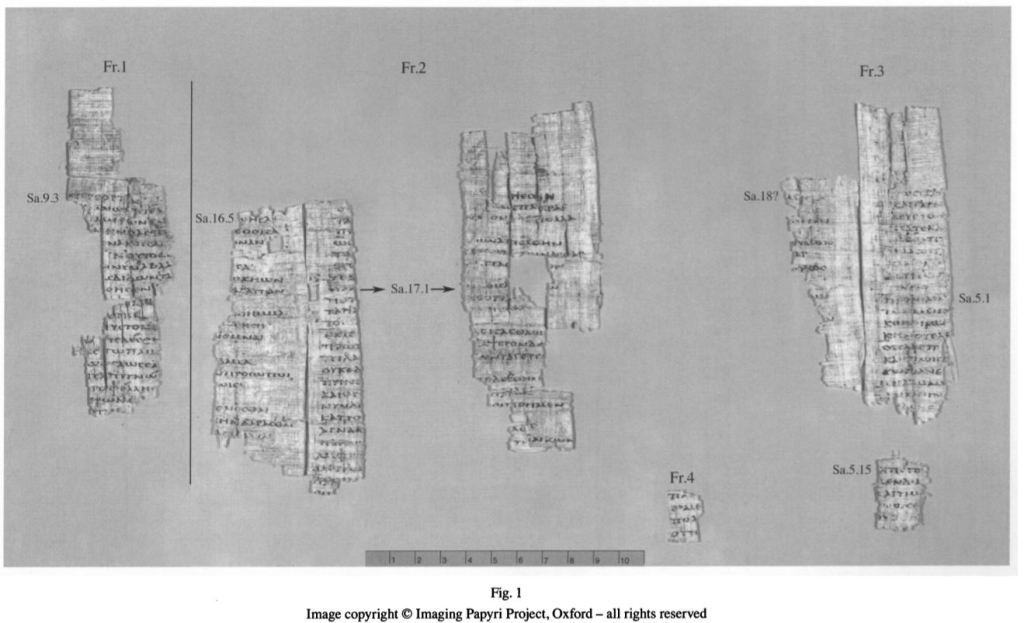
1. In 2014, images of the HL Sappho fragments were published in an article in ZPE (Bd. 189, pp. 1-28).
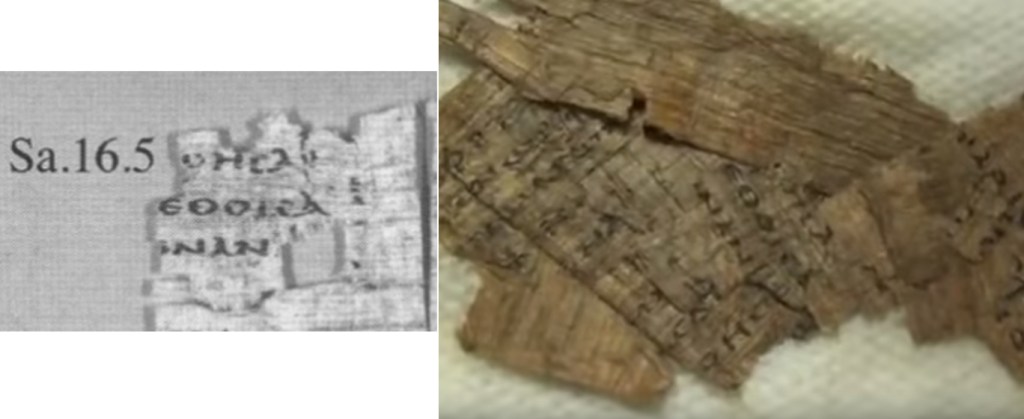
3. Brian Hyland, an MOTB curator, pointed out to me that about one-third of the HL Sappho fragments are visible in a video filmed at Baylor University on January 16, 2012 (https://www.youtube.com/watch?v=j_gwgGcpD1M; this is the well-known video of Scott Carroll dismantling a mummy mask). One example of a visible fragment: in the published ZPE image of the fragments, the small fragment just to the right of the label “Sa.16.5” can be seen at the 6:35 mark of the video.
Some of the Sappho fragments are visibly wet, giving the impression that they were being extracted from the mummy mask at the time the video images were taken—an impression that is, however, almost certainly incorrect, in light of the next point.
4A. A purchase agreement dated January 7, 2012, and signed by Yakup Eksioglu is accompanied by (i) an invoice for the following items:
“Ancient Greek-Coptic language Papyrus fragments parobably between 800- 1000 fragment Shown as in the group pictures”
“Cartonagge Masks and other cartonagge fragments Shown as in the group pictures”
and (ii) several “group photographs” of the items purchased, arranged in rows and columns. The “group photographs” clearly show the shape and general appearance of the items, but do not show enough detail to identify the contents of any particular item.
4B. A photo, shared by Dirk Obbink with Brian Hyland (via Dropbox on August 17, 2016), is a close-up image of one of the “cartonnage” pieces visible in one of the “group photographs” accompanying the invoice mentioned in 4A above. In the close-up image, the piece of “cartonnage”—more like a wad of multiple layers of stuck-together papyrus—is in the same relationship to the other pieces around it as it is in the “group photographs.”
According to its metadata, this image was taken on December 7, 2011, 3:25 a.m. In this photograph the small Sappho fragment visible in the ZPE photograph just to the right of the label “Sa.16.5” (and also visible at the 6:35 mark in the January 12, 2012, Baylor video) is clearly visible.
To summarize briefly:
The presence of HL Sappho fragments in the Baylor video definitely moves the date of the earliest “sighting” from Feb 7 to Jan. 16 2012.
The metadata on the “close up” photo apparently moves the earliest “sighting” to Dec. 7, 2011.
The HL Sappho fragments were not recovered from a mummy mask.
Eksioglu (“Mixantik”) is the apparent source of the HL Sappho fragments.
Many questions remain (including, e.g., this one: from whom did Obbink obtain the image he shared with Hyland?), and the MOTB curators are continuing their research. But for now, this note shares the additional evidence that we have been able to confirm to date; additional documentation will be available when a fuller statement is formally published.
The information that Mike and his team have shared raises a number of questions, which we will no doubt be unpacking in the coming days.
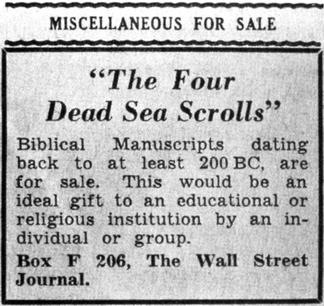
Pretty much everyone with a passing knowledge of the Dead Sea Scrolls will recognize the famous ad in The Wall Street Journal (1 June 1954) placed at the request of the Syrian Archbishop Mar Athanasius Yeshue Samuel. Mar Samuel had brought four scrolls to the US. These were some of the first scrolls that had come to light in late 1946 or early 1947–the well preserved scrolls said to have come from “Cave 1”– the Isaiah Scroll (1QIsaa), the Rule of the Community (1QS), the Habakkuk Pesher (1QpHab), and the Genesis Apocryphon (1QgenApoc). Until recently, however, I was unaware that there was newsreel footage in the Sherman Grinberg Film Library of the publicity tour put on by Mar Samuel shortly after his arrival in the US in 1949. It’s fascinating to see the scrolls actually being handled and rolled out (this looks like the Isaiah Scroll being laid out on a table):
In October of 1949, Mar Samuel brought these four scrolls to the US, and they were displayed in a series of venues:
The Library of Congress in the Great Hall of the Thomas Jefferson Building, Washington, D.C. (23 October – 6 November 1949) Newsreel clip of exhibit here.
The Walters Art Gallery in Baltimore (10-17 November)
Duke University (12-17 February 1950)
The Oriental Institute in Chicago (17-26 November 1950)
The Worcester Art Museum (October 1951)
There are a few other clips at the website of the Grinberg Film Library (search “Dead Sea Scrolls”). This footage (along with the similar clips at Getty Images) all relates to the display of the scrolls in Washington, D.C., but it appears there must be other records of these exhibits. In his thorough account of the Dead Sea Scrolls, Weston Fields includes this image from the display at Duke University:
Image source: Weston W. Fields, The Dead Sea Scrolls, A Full History: Volume One, 1947-1960 (Leiden: Brill, 2009), p. 102
It would be good to learn if there is other existing video footage of the Scrolls at this relatively early date.
In The Guardian today, Charlotte Higgins has a follow-up to her longer story on Professor Dirk Obbink. Apparently Professor Obbink bought an important 15th century manuscript at auction in 2014 and then sold it to “an overseas buyer” (at a loss) in an auction in 2019. Now, the British government has put an export bar on the item in order to give “UK buyers the chance to fundraise to purchase the item. A UK buyer would have to raise £168,750 by 13 April to save it for the nation.” The government views the manuscript as a heritage item, so ideally it would reside in a public museum or library, but this move by the government could, as the article notes, “lead to the unusual scenario of a civic institution raising funds from the public to acquire an item from a person who is suspected of wrongdoing.” Read the full story here.
Following up on the fascinating article on Professor Dirk Obbink by Charlotte Higgins in The Guardian, Roberta Mazza recently revisited her conversations with a representative from Christie’s in 2014 and 2015, which now raise “further questions and doubts on the newest Sappho provenance narratives, and more broadly on the mysterious ways in which ancient manuscripts move on the market.”
One of the frustrating things about the new Sappho papyrus is the repeated claim that we can be confident about its provenance because of existing documentation that has not yet been made public. All the way back in 2015, Professor Obbink said in an interview with Live Science that more detailed documentation about the provenance of the Sappho would be forthcoming:
“Obbink said he knew the Sappho papyrus had a legal, documented provenance all along. ‘There’s no question in my mind about where the piece came from,’ Obbink told Live Science. ‘I can absolutely guarantee that there’s no question about that.’ . . .In the coming months, Obbink said the plan is to make the collecting documents and related photographs of the London Sappho papyrus available online, including letters, transcripts and other papers from people, including Robinson, who worked on this collection early on.“
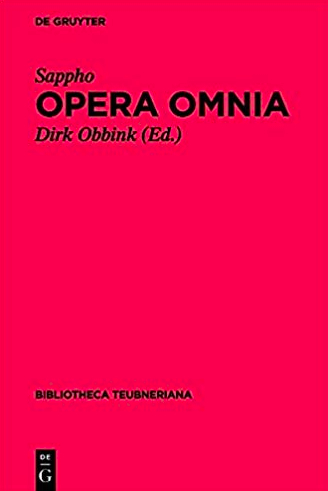
This information has yet to appear. It is thus interesting to learn that Professor Obbink is set to publish a new edition of the collected works of Sappho with the respected German publishing house, Walter de Gruyter [[Update 22 February 2020: Link now dead. Archived link here.]]. It’s a little hard to tell what stage of production the volume is in. It has an ISBN. Amazon says the volume has 222 pages and is due out on 30 April 2020, but the de Gruyter website says the book has “approx. 202 pages” and isn’t due out until April 2025. So, perhaps we can look ahead to seeing the full provenance documentation of the London Sappho fragments later this year, or perhaps in 2025.
“History of Religions: Encounters and Conflict is focused on the issues of religious cross-pollination, coexistence and conflict with particular emphasis on Europe and the Middle East. Taking a long historical perspective stretching from Antiquity to the early modern period, the programme seeks to illuminate the roots of present peaceful coexistence and interchange, as well as of today’s antagonisms and conflicts.
The underlying idea of the programme is that, in order to fully grasp current religious conflicts and alliances, we need to understand how the perceptions of past and present are intertwined, reciprocally dependent, and constantly reshaped.”
We are currently accepting applications for enrollment beginning in August 2020 (the deadline for non-EU applicants is 1 February). This is a 2-year MPhil program featuring one year of course work and a second year dedicated to writing a 30,000-45,000-word thesis. The full description of the program can be found here.
The language of instruction is English, and one of the benefits of the program is that there are no tuition fees. See the admissions page for more information about requirements and deadlines.
We are home to the Center for the Advanced Study of Religion, which houses several research projects focused on antiquity, and Oslo is presently a hub for research on ancient cultures.
So, come live in a European capital city and study with us!
Charlotte Higgins has just published a long story in TheGuardian on Dirk Obbink. It is a very nice compilation of what we know and how the stories of the Sappho papyrus and the stolen Oxyrhynchus papyrus intersect. It also contains some new revelations:
Dirk Obbink has been “suspended from duties” at Oxford since October 2019
“The alleged thefts [of Oxyrhynchus papyri] were reported to Thames Valley police on 12 November. No one has yet been arrested or charged.”
Mike Sampson (University of Manitoba) has analyzed a Christie’s brochure in pdf format obtained from “an academic source” that offers the London Sappho papyrus for sale; Sampson has determined through the pdf metadata that there were attempts to sell the papyrus privately in 2013 and 2015
The Christie’s brochure is said to contain images of the cartonnage from which the Sappho papyrus fragments were extracted. Recall that Professor Obbink’s stories about the origins of the Sappho papyrus have changed over time; first it was said to have come from mummy cartonnage, then later from “industrial” cartonnage. The Christie’s brochure contains “images that purport to show how the two different types of cartonnage – mummy cartonnage and industrial cartonnage – were confused. One picture shows a brightly painted blue-and-red piece of mummy cartonnage lying in a ceramic basin beside a brown mass of what appears to be flattened papyrus, described as ‘cartonnage’. The caption recaps the final story reported by Obbink – that the two items were muddled up in a ‘confusion of processing’. However, in the opinion of Sampson, it ‘defies belief’ that the entirely different objects could have been confused.”
“Perhaps Sampson’s most telling finding, though, is that parts of the Sappho manuscript were shown in public when they were supposedly still undiscovered in a wodge of industrial cartonnage.According to his study of the PDF’s metadata, the photographs of the materials sitting side by side in the ceramic basin, prior to ‘processing’, were taken on 14 February 2012. And yet there is video footage of Scott Carroll brandishing 26 small fragments of the Sappho, those that ended up belonging to the Greens, a week earlier, on 7 February 2012.”
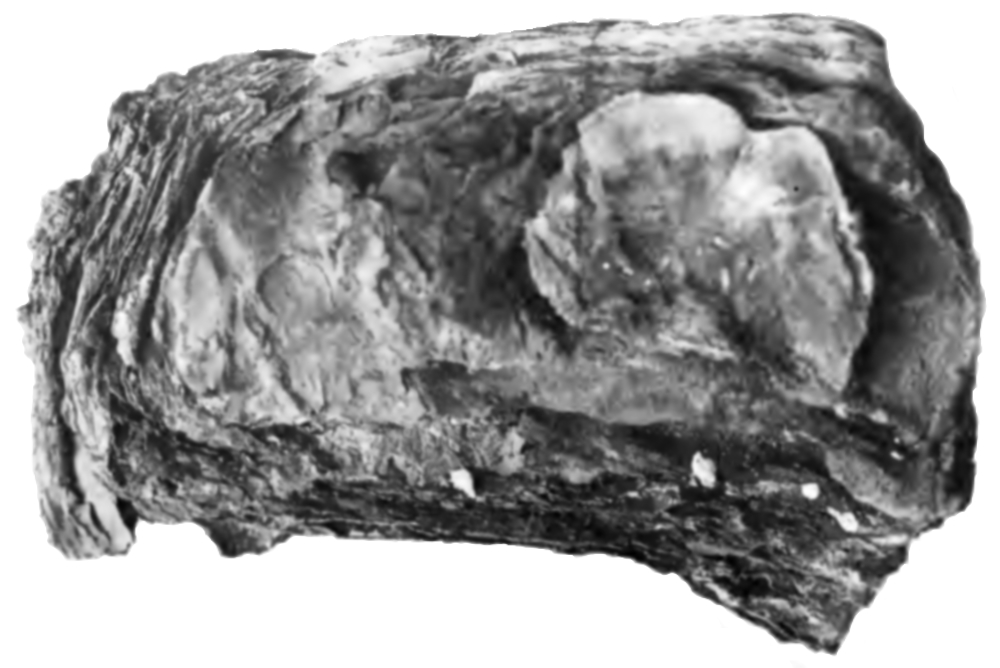
The American railroad magnate Charles Lang Freer bought this damaged parchment codex in Cairo in 1906 together with three other early Christian manuscripts. One of these books was a well preserved copy of the four gospels in Greek, complete with wooden covers (LDAB 2985). But unlike the better preserved and more aesthetically pleasing codex containing the gospels, the Pauline epistles codex did not survive the ravages of time so well. This is what it looked like when Freer bought it:
Image source: Sanders, The New Testament Manuscripts in the Freer Collection (New York: Macmillan, 1918), Plate VI
Nevertheless, a considerable amount of text of Paul’s letters was recovered from 84 leaves after they were separated with “a thin-bladed dinner knife.” The remains of the codex were thus published in 1918 without the type of luxurious facsimile edition produced for the gospels codex. This 1918 edition, part II of Henry Sanders, The New Testament Manuscripts in the Freer Collection (New York: Macmillan, 1918), is available online at archive.org.
The readings of the Freer Pauline epistles codex were duly noted at the time of publication, but the codex has received little attention since that time. In a 2004 JBL article, Wayment reported on newly identified variants in the codex discovered with the help of new digital color images and multi-spectral images (MSI) made in 2002-2003. Wayment also contributed a short chapter on the scribal characteristics of the codex to the volume on the Freer codices published by the Society of Biblical Literature in 2006.
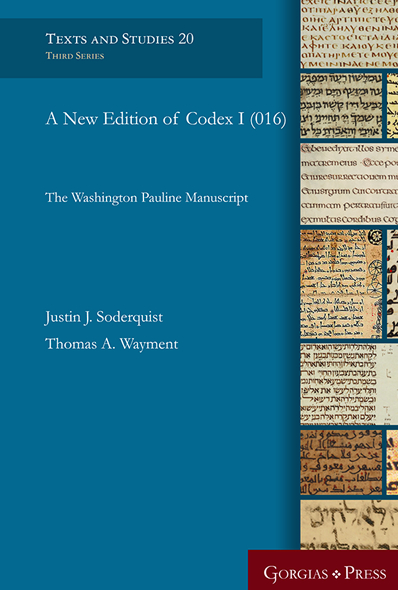
Using the color and multispectral images, Soderquist produced a new edition of the codex as an MA thesis in 2014 (a thesis for which Wayment was a reader). The thesis seems to have provided the basis for the edition now produced by Gorgias Press, in which Soderquist and Wayment provide an up-to-date introduction to the codex and a new transcription.
The introductory material is generally well-informed and judicious, although I would question one view repeatedly attributed to Sanders:
“Sanders assumes that Codex I was organically connected with Codex Washingtonensis that contained the four gospels. That codex was bound with painted covers, and its textual association with Codex I remains unclear despite Sanders’ assertion. If the two manuscripts originated from the same location, then they may have been used by the same community, but there is no surviving evidence to indicate that they functioned as a single codex, and the covers of the gospels codex exclude the possibility that they were joined in a physical way” (p. 6)
The reference in the edition of Sanders that prompts this observation reads as follows:
“The preservation of ten quire numbers, including the last (KZ), makes certain the original size and content of the MS. It once contained between 208 and 212 leaves. The legible fragments begin at 1 Corinthians 10, 29, and portions of all the remaining Pauline epistles are found. The Epistle to the Hebrews follows II Thessalonians. There have been lost at the beginning of the MS fifteen quires and two leaves. On the basis of the amount of text per page in the preserved portion we may reckon Acts at about sixty leaves or eight quires, of which the last was probably a four-leaf quire; the Catholic Epistles would fill 24 leaves or three quires, and the Epistle to the Romans with the missing part of I Corinthians would require some 34 leaves, i.e. just over four quires. This was then the content of the original MS. Joined with the MS of the four gospels found with it, it made a complete New Testament, which did not however contain Revelation” (Sanders, New Testament Manuscripts, p. 252)
Thus, Soderquist and Wayment are surely right that these two books were never physically bound together, but I don’t think that Sanders ever implied that they were. His statement here seems to refer quite clearly to the books as a collection, not as a codicological unity. Sanders does occasionally refer to the manuscripts as “parts of a Bible,” but on such occasions, he seems to be using the term “Bible” in the sense of “library” rather than the in the sense of “codicological unit.” For instance, in one of his first reports about the manuscripts, Sanders described the books in the following way: “The four manuscripts are of different sizes, shapes, and ages, but they apparently once formed volumes of a single Bible, so I shall refer to them by the Roman numerals I to IV in the order in which they would have stood in that collection,” American Journal of Archaeology 12 (1908), p. 49.
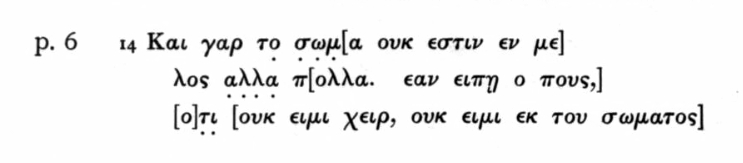
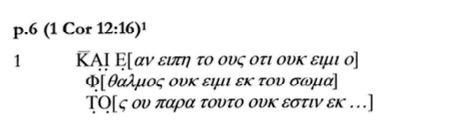
In terms of the transcription, the new edition of Soderquist and Wayment is more conservative than that of Sanders, who, as he phrased it “tried to determine the position of the MS regarding many [variants] which fall in lines partly lost” (Sanders, New Testament Manuscripts, p. 259) Soderquist and Wayment stick to what they can see in the images and thus supply considerably less conjectural text than Sanders. At the same time, they provide a fuller (and obviously more up to date) apparatus for the text. In some instances, however, Soderquist and Wayment offer quite different readings from those presented by Sanders. An extreme example is the page labelled 6. Here is the reading of Sanders, who takes the remains as part of 1 Cor. 12:14:
And here is the reading of Soderquist and Wayment, who interpret the remains as a part of 1 Cor. 12:16:
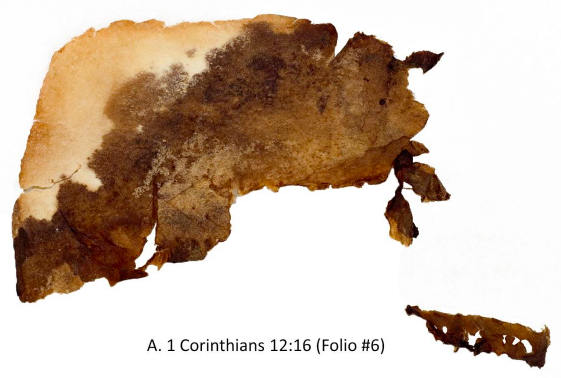
Soderquist and Wayment do provide a photograph of this page of the codex as Plate 2:
I can’t make out the correct reading from the plate with certainty, but Soderquist and Wayment provide a thorough and helpful discussion of their decision making process both here and in other cases where their readings differ substantially from those of Sanders.
The book concludes with several data-rich appendices on different topics (terminal nu, line-ending or terminal sigma, enlarged letters with ekthesis and paragraphoi, nomina sacra, textual variants, and orthography), which again are largely based on the work in Soderquist’s 2014 thesis.
Anyone who now wishes to refer to the readings of this codex will want to make the edition of Soderquist and Wayment their first stop.
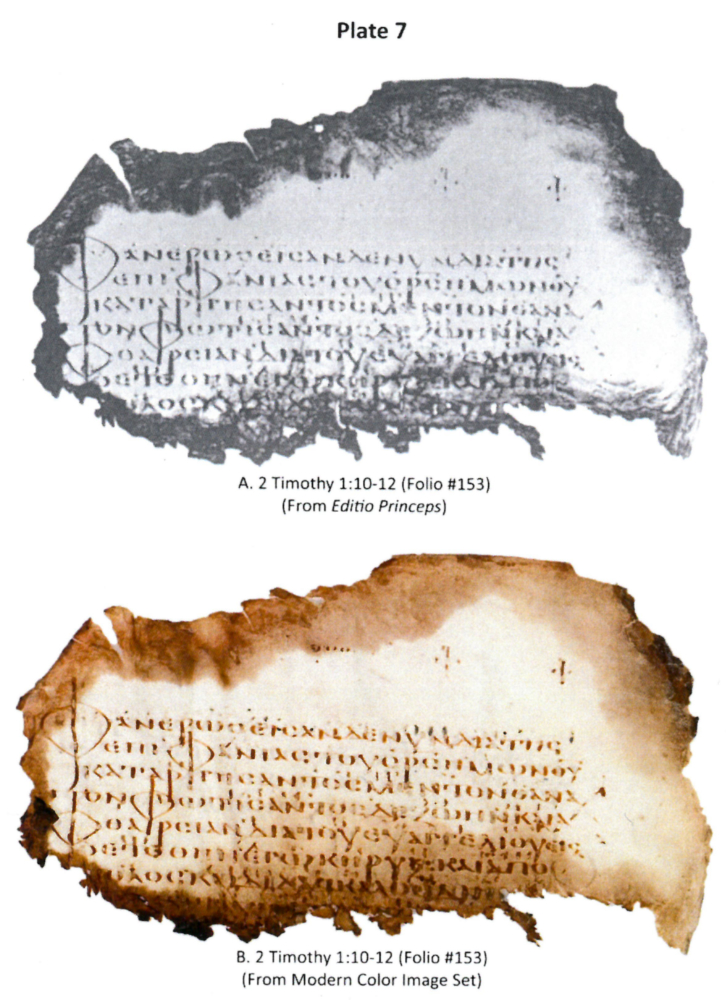
The 8 photographic plates included in the book are helpful. I would have liked to see plates of all the new color images included in the edition, but this would have likely made the volume even more expensive. And unfortunately, the plates are not as detailed as I might have hoped. I understand that they were made from digital images taken in 2002-2003, so the lamentably low resolutions (reportedly 240 dpi for the color images and just 72 dpi for the MSI images) are understandable. But it would be wonderful if the digital images themselves would be made available. The quality of the single image of the codex at the Smithsonian website is actually reasonably good.
As a side note: The 1918 edition of Sanders contained only four photographic plates, but I wonder if photographs of the other leaves of the codex were taken at the time of that publication? During my own research in the Freer archives, I saw a number of glass plate negatives of the different codices, and these could be scanned to produce images of excellent quality. Other negatives, however, were of the highly combustible nitrate variety and had to be kept in cold storage. I am unable to say anything about their present condition and quality. It would be good to have an inventory all the extant negatives.
Nevertheless, the improved legibility of the color images is obvious from the selected plates included by Soderquist and Wayment. I provide a scan of one below, showing the image published in the edition of Sanders and the corresponding new image (note the more visible letters in the lower part of the fragment):
Finally, I must report a bookbinding oddity. In my copy, the photographic plates (pages 159-166) appear out of sequence between pages 168 and 169 in the middle of the bibliography.
Justin J. Soderquist and Thomas A. Wayment, A New Edition of Codex I (016): The Washington Pauline Manuscript (Texts and Studies 20; Piscataway NJ: Gorgias Press, 2019). Hardback. $125 USD. ISBN 978-1-4632-4054-7
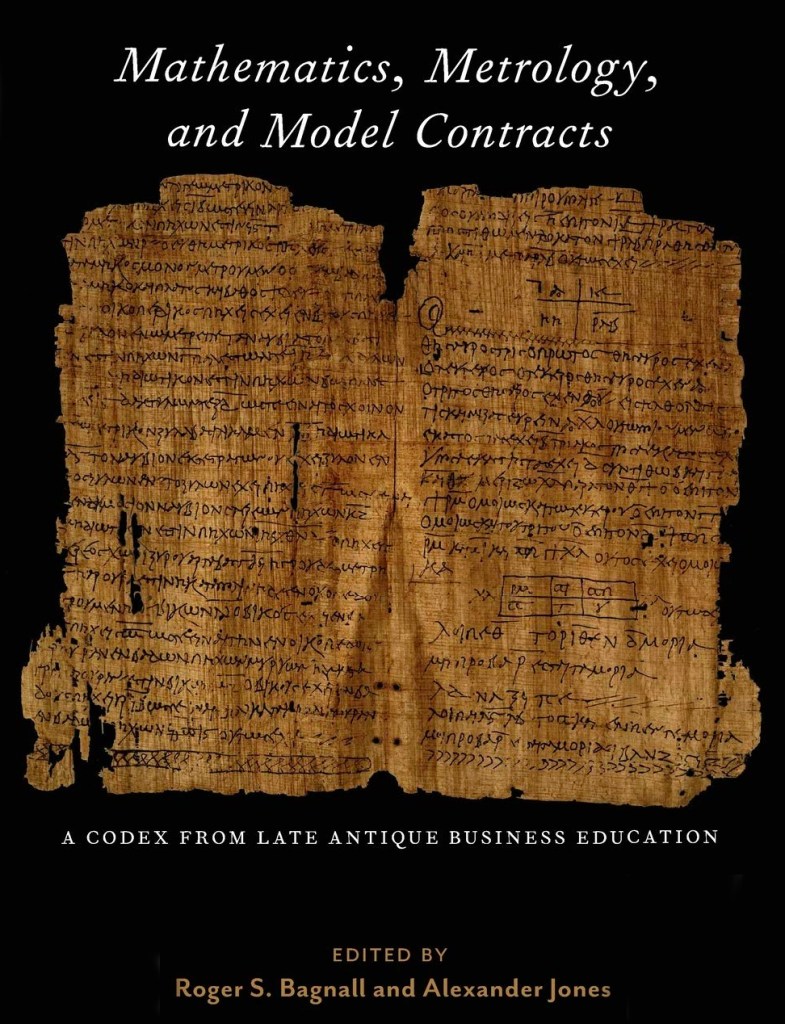
I see that later this month we can expect the publication of the Tchacos-Ferrini mathematical codex (LDAB 10719, now dubbed by the editors P.Math.). This codex travelled the antiquities market along with a papyrus codex of Exodus in Greek, a papyrus codex of the letters of Paul in Coptic, and the more famous papyrus codex containing the Gospel of Judas. All of the codices are said to have been found together in Qarara in Egypt in the 1970s, but the story is somewhat dubious (see God’s Library, pp. 95-96). The cover of the new publication gives us a first good look at the appearance of the mathematical codex, with an image of an intact bifolium:
Despite the damage to the top of the bifolium, it looks like the format of this codex roughly resembles that of the other Tchacos-Ferrini codices, in which the height of the leaf is about double that of the width:
Tchacos-Ferrini Gospel of Judas codex, Exodus codex, and Coptic letters of Paul (not to scale)
The publisher’s blurb for the book is as follows:
“Mathematics, Metrology, and Model Contracts is a comprehensive edition and commentary of a late antique codex. The codex contains mathematical problems, metrological tables, and model contracts. Given the nature of the contents, the format, and quality of the Greek, the editors conclude that the codex most likely belonged to a student in a school devoted to training business agents and similar professionals.
The editors present here the first full scholarly edition of the text, with complete discussions of the provenance, codicology, and philology of the surviving manuscript. They also provide extensive notes and illustrations for the mathematical problems and model contracts, as well as historical commentary on what this text reveals about late antique numeracy, literacy, education, and vocational training in what we would now see as business, law, and administration.”
I look forward to the discussion of provenance to see if anything new can be learned on that front.





 Pretty much everyone with a passing knowledge of the Dead Sea Scrolls will recognize the famous ad in The Wall Street Journal (1 June 1954) placed at the request of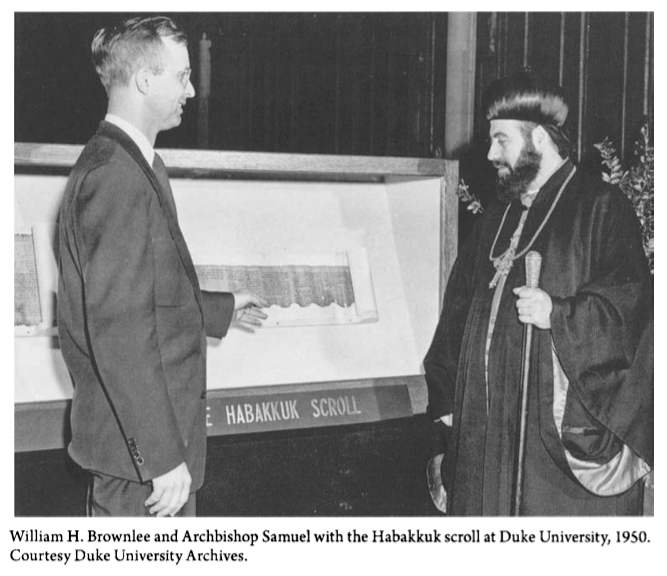





 Variant Readings