Pachomian Letters

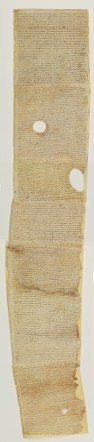
Beatty W 145 Pachomius

Among the images recently posted online at the Chester Beatty Library are a number of copies of the writings of the Egyptian monk Pahom (usually called by his Latinized name, Pachomius) and his followers. Pachomius established a monastery near Faw Qibli (ancient Pbow) in the 330s. The letters of Pachomius himself have long been known in the form of a Latin translation made by Jerome early in the fifth century, which was transmitted through the centuries and survives in several manuscripts, the oldest of which comes from the ninth century. But in the 1950s, copies of the letters of Pachomius and his followers preserved in Coptic (and occasionally Greek) surfaced on the antiquities market. The manuscripts are generally assigned to a much earlier period (some perhaps as late as the seventh century but one possibly as early as the late fourth century). These manuscripts are notable for their curious formats. Some are copied on oddly shaped strips of parchment; others are copied on long narrow rolls of parchment, while others are written in very broad columns on papyrus rolls.

These items have been rather challenging to study because of a lack of access of good images. This has now changed. Continue reading

Posted in Bodmer Papyri, Chester Beatty Papyri | 2 Comments

“Bodmer Papyri” at the Chester Beatty Library in Dublin

Beatty NPG 1942

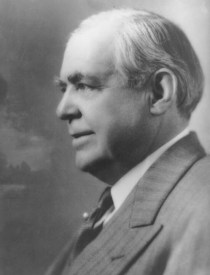
Sir Alfred Chester Beatty; image source: National Portrait Gallery

I’ve mentioned before that the term “Bodmer Papyri” can be a little misleading, both because the ancient collection that scholars call the “Bodmer Papyri” includes some items that are not kept at the Fondation Martin Bodmer in Geneva and because many of the items that are at the Fondation in Geneva do not come from this find. Several other institutions hold pieces that are believed to come from this same ancient collection. The most important of these locations is the Chester Beatty Library in Dublin. Although Chester Beatty is more well known to scholars of early Christianity for his acquisition of the “Chester Beatty Biblical Papyri” in the early 1930s, Beatty continued to buy manuscripts from Egypt into the 1950s, and some of the items he purchased in the mid-1950s belong to the same ancient collection as the “Bodmer Papyri.” The Chester Beatty Library has recently (quietly) put online a large selection of images of manuscripts from their collection, including some of these “Bodmer” pieces. The Beatty holdings of “Bodmer Papyri” include the following: Continue reading

Posted in Bodmer Papyri, Chester Beatty Papyri, P.Bodmer II | 5 Comments

Visiting the University of Oslo

I’m spending the next couple weeks visiting the University of Oslo, specifically the Faculty of Theology. I’ll be meeting with the research groups here in New Testament and Early Christianity and Coptic Texts and Manuscripts. On Thursday, April 4, I’ll be giving the Oslo Lecture in New Testament and Early Christian Studies. The title of my talk is “Manuscripts: The Problem with the Synoptic Problem.” You can see the full details of the lecture here. If you happen to be in Oslo, drop by!

Posted in New Testament | 2 Comments

The Cast in “Greek Papyri”

Oxyrhynchus Papyri

Many thanks to Ann Hanson for helping to identify the figures in the “Greek Papyri” film featured in my last post. Starting from the beginning of the film:

The voice reading the selection from Winckelmann’s account of the Herculaneum papyri at about the 4 minute mark is that of Otto Skutsch (University College London): Continue reading

Posted in Oxyrhynchus Papyri | 7 Comments

The Film “Greek Papyri”

Greek Papyri

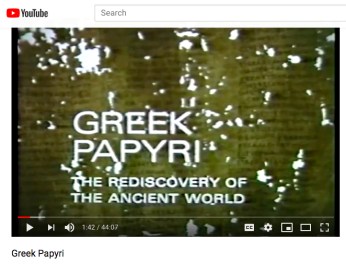
Thanks to a notice from an anonymous commenter, I am thrilled to report that the film “Greek Papyri–The Rediscovery of the Ancient World” is now available on Youtube. The film was produced in 1971 by the Greek and Latin Departments and the Slade School of Fine Art at University College London. It was directed by Mirek Dohnal and features some fantastic archival footage of the British papyrologists of the day. The film is mentioned in an exhibition catalog by T. S. Pattie and E. G. Turner, The Written Word on Papyrus: An Exhibition Held in the British Museum 30 July – 27 October 1974 (British Library Board, 1974). Continue reading

Posted in Mummies, Mummy cartonnage, Oxyrhynchus Papyri | 3 Comments

Unpublished Christian Papyri from Oxyrhynchus: Some Numbers

Oxyrhynchus Papyri Pile

Excavated papyri; image source: Egypt Exploration Society

My book on early Christian manuscripts contains a chapter on the Christian material that has so far emerged from the excavations of Grenfell and Hunt at Oxyrhynchus. One of the questions I was unable to answer during my research was  to what degree the Christian literary material that has been published in the Oxyrhynchus Papyri series is representative of the total amount of Christian literary material that was collected by Grenfell and Hunt. To phrase it another way, can we know whether the 160 or so Christian books (codices and rolls) so far published in the P.Oxy. series represent 5%, or 20%, or 50%, or 60%, etc. of the total number of Christian fragments collected in the Oxyrhynchus excavations.

You may recall that, in light of the odd circumstances surrounding the identification and publication of P.Oxy. 83.5345 (the papyrus formerly known as “first-century Mark”), the Egypt Exploration Society announced that in the spring of 2016, “the EES decided to review what NT fragments had been identified in its collection but not yet published.” Now the EES has made available the results of that summary (in the form of rough numbers): Continue reading

Posted in First Century Mark, Oxyrhynchus Papyri | 8 Comments

The Green Collection’s “Block Book” and What It Means to Own a Cultural Heritage Item

During the “Passages” Speaker Series in Charlotte, North Carolina in 2012 and 2013, it was customary for Jerry Pattengale to host the evening talks and to provide updates on the development of the Green Collection. In one of these updates, Pattengale briefly described some of the circumstances surrounding the Green Collection’s purchase of a particular book. What he said helps us to understand what it can mean for the Green Collection to “own” some of its artifacts. Continue reading

Posted in Antiquities Market, Green Collection | 1 Comment

Burning Papyri

Schow ChartaAs I compiled stories of discoveries of early Christian manuscripts for my book, God’s Library, one of the recurring tropes I encountered was the claim (usually by European and American scholars and collectors) that native Egyptians burned manuscripts. Such stories circulated about the Beatty Biblical Papyri, the Bodmer Papyri, the Nag Hammadi Codices, Codex Sinaiticus, and the Tura Papyri (for further details and references, see the entry for “burning of manuscripts” in the index of God’s Library).

The idea that “the natives burned” manuscripts is a trope that goes back to the very beginning of European encounters with Egyptian papyri. The earliest such report known to me is Nicolao Schow, Charta papyracea graece scripta musei Borgiani Velitris (Rome: A. Fulgonium, 1788), iii–iv: “diripiebant Turcae, earumque fumo (nam odorem fumi aromaticum esse dicunt) sese oblectabant” (the Turks tear them up; they are delighted by the smoke, for they say its smell is aromatic). Continue reading

Posted in Antiquities Market | 4 Comments

P129: Some Questions about a Papyrus of 1 Corinthians

[[Update: The papyrus fragments of Romans and 1 Corinthians discussed in this post were among those stolen from the Egypt Exploration Society. See details here.]]

On a few occasions, I’ve mentioned a fragmentary papyrus leaf containing 1 Corinthians in the Green Collection, GC.PAP.000120 (which has been assigned the number P129 in the INTF Liste). In one of Scott Carroll’s videos from 2018, this papyrus was featured along with an additional fragment said to be from the same manuscript. The “new” fragment is on the right side of the slide shown here, while the Green Collection portion is on the left:

P129 Carroll Slide 2018

Slide from a talk by Scott Carroll showing fragments of a papyrus of 1 Corinthians (P129); image source: “Stones and Scriptures”

Now, thanks to some clever detective work by David Bradnick, we have some more information about this new fragment. But first, here is what Carroll had to say in the 2018 video: Continue reading

Posted in Antiquities Dealers and Collectors, Antiquities Market, Green Collection, Green Collection 1 Corinthians, Green Collection Romans, Scott Carroll | 6 Comments

The Tchacos-Ferrini Codex of the Pauline Epistles in Coptic

While working through Scott Carroll’s videos, I’ve mentioned what I’m calling the Tchacos-Ferrini Codex of the Pauline epistles in Coptic (LDAB 108582). Little is currently known about this papyrus codex aside from an article in the journal Early Christianity by Hans-Gebhard Bethge from 2013. Through this article we learn that this is the codex that was allegedly found together with three other codices (supposedly in Qarara in Egypt): one containing the Gospel of Judas and other texts (LDAB 108481), one containing Exodus in Greek (LDAB 66871), and one containing mathematical material in Greek (LDAB 10719). These books first surfaced on the antiquities market in the early 1980s. Coptologist Stephen Emmel saw them in Geneva hotel room in 1983 and reported as follows on the codex of Paul’s letters: Continue reading

Posted in Antiquities Dealers and Collectors, Antiquities Market, Bruce Ferrini, Frieda Tchacos, Lee Biondi, Scott Carroll, Tchacos-Ferrini Codices, Tchacos-Ferrini Exodus Codex, Tchacos-Ferrini Math Codex, Tchacos-Ferrini Pauline Epistles Codex | 5 Comments