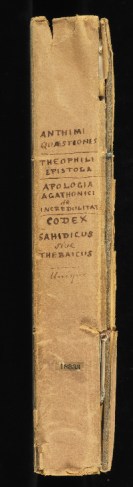
While the Bodmer Papyri are best known for the subset of Greek and Coptic codices that Martin Bodmer acquired from Egyptian sources through the Cypriot dealer Phocion Tano in the 1950s, there are other early Christian materials in the collection that were acquired under different circumstances. One of the most curious of these is now known as P.Bodmer 58 (LDAB 107785). This papyrus codex, usually said to have been copied in the sixth or seventh century, contains a series of works in Coptic: a dialogue between two deacons and Cyril of Alexandria, letters of Theophilus, a dialogue between Horsiesius and Theophilus, a dialogue between Phausos and Timotheos with Horsiesius, and a collection of works attributed to Agathonicos, along with a set of instructions for the preparation of parchment. Unlike the more famous Bodmer Papyri that first appeared on the antiquities market in the 1950s, P.Bodmer 58 has been known since the nineteenth century. It was formerly in the collection of Thomas Phillipps (1792-1872). The individual papyrus leaves have been placed between a kind of wax paper, and these “sandwich” leaves have been bound together in a modern binding in a somewhat jumbled order. Three different copyists seem to have been responsible for the production of the leaves now bound together in the codex. Continue reading
 In light of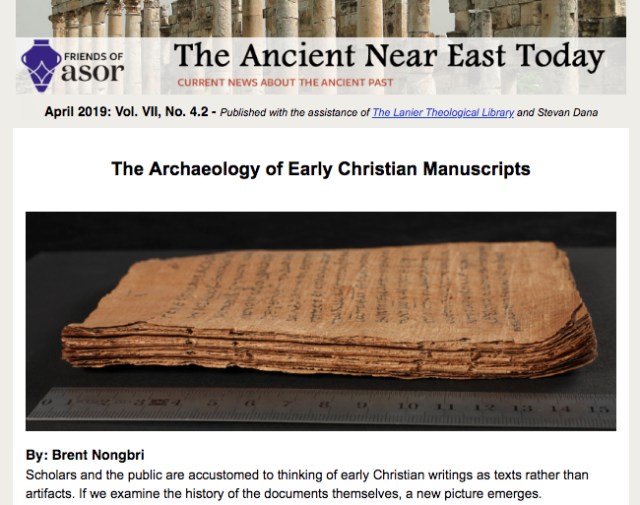
 In addition to