Images of the Bodmer Papyri Online

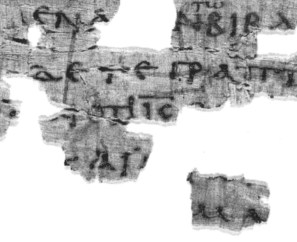
Bodmer Papyri SiteI’m happy to announce that as part of the ongoing work of the Bodmer Lab, images of the Greek and Coptic manuscripts from Egypt held at the Fondation Martin Bodmer are now available online. The website remains a work in progress, but the bulk of the images are now available, and the site is live. A couple points to note as you use the site: Continue reading
Posted in Bodmer Papyri, Codices | 4 Comments

An Old Quote from Frank Moore Cross on Unprovenanced Artifacts

Fake Dead Sea Scroll

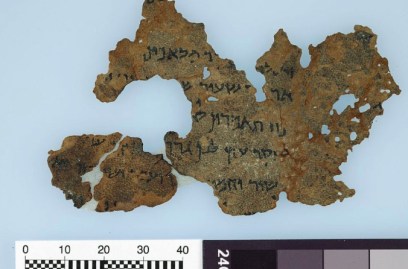
A Fake “Dead Sea Scroll” in the Museum of the Bible Collection

I’ve just returned from a stimulating week at the University of Agder. I had loads of interesting conversations about a number of topics, many of them stemming from the Museum of the Bible’s admission that (at least) five of their recently purchased, unprovenanced “Dead Sea Scroll” fragments are fake. This admission has inspired a number of reactions in various online forums, the most interesting of which have less to do with the fact of the forgeries (which have been suspected by The Lying Pen project and others for some time) and more to do with the ethical issues involved in the purchase (by collectors) and publication (by scholars) of unprovenanced artifacts. Continue reading

Posted in Antiquities Market, Dead Sea Scrolls, Fakes and Forgeries, Frank Moore Cross, Palaeography | 10 Comments

P.Bodmer II as Possible Evidence for the Circulation of John without Chapter 21

P66 Plate 145 Descreened

In the most recent issue of the journal Early Christianity (vol. 9, 2018), I have an article that bears on one of the classic “problems” of New Testament interpretation. I’ve given some background on the issues in previous posts here and here. So finally, here is the abstract of the article: Continue reading

Posted in Codices, New Testament, P.Bodmer II, Textual criticism | 9 Comments

Fake Dead Sea Scrolls at the Museum of the Bible

MoB DSS Nehemiah

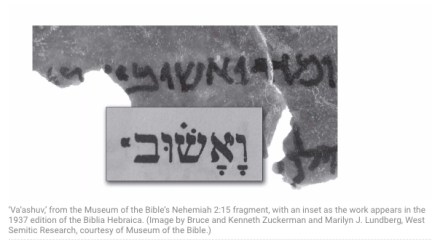
It has been a truly fascinating day for me at the University of Agder. After spending Monday morning and afternoon listening to sharp and informative talks by Matthew MongerIngrid Breilid GimseJosephine Munch Rasmussen, and Årstein Justnes on the probability that many recently published “Dead-Sea-Scrolls-like fragments” are forgeries, the Museum of the Bible has just earlier this evening confirmed that five of their Dead Sea Scrolls are fakes.   And now we await the testing of the rest of the alleged Dead Sea Scroll fragments in the collection…

Posted in Dead Sea Scrolls, Fakes and Forgeries | 1 Comment

Visiting the University of Agder

I’m excited that next week I’ll be heading to the University of Agder in Norway to visit the research project, “The Lying Pen of Scribes: Manuscript Forgeries and Counterfeiting Scripture in the Twenty-First Century,” best known for its incisive investigations into the so-called “post-2002 Dead-Sea-Scrolls-like fragments,” such as the detailed review of the Museum of the Bible’s Scrolls fragments by Årstein Justnes. Continue reading

Posted in Fakes and Forgeries, Rylands Papyri | 2 Comments

The Corrections in P.Bodmer II

In an earlier post, I mentioned an article I just published on John 21 and provided a little background on the issues concerning the “endings” of the Gospel According to John. Before I can finally move on to a summary of the article itself, I need to provide just a little more background of a different sort.

This second piece of necessary information has to do with some of the textual peculiarities of P.Bodmer II, the well known papyrus codex containing the Gospel According to John in Greek. It is one of the earliest well preserved copies of the Gospel. It was published in two parts in the late 1950s and early 1960s (for a fuller discussion of the codex, see my 2014 article).

One of the first things that scholars noticed about the book was the high number of corrections it contained. Continue reading

Posted in P.Bodmer II, Textual criticism | 5 Comments

John 21 in the Amsterdam Database of New Testament Conjectural Emendation

Just one more update on my discussion of the history of the proposal that the Gospel According to John circulated in a twenty-chapter version: Thanks to Jeff Cate for pointing out the Amsterdam Database of New Testament Conjectural Emendation has an entry for John 21:1-25 that contains several authors who have argued both for and against the view that the twenty-first chapter of John is a later addition. Hugo Grotius (1641) does seem to be the earliest author to discuss the matter in detail.

I’m pleased to learn that the Amsterdam database has an entry for John 21, because it once again helps me identify one of my own blind spots. Continue reading

Posted in New Testament, Textual criticism | 2 Comments

Hugo Grotius on John 21

In my previous post on the twenty-first chapter of the Gospel According to John, I noted that the hypothesis that chapter 21 is a later addition to the gospel goes back at least to Julius Wellhausen’s 1908 commentary.  I’m grateful to Dexter Brown of Yale University for pointing out to me that the hypothesis in fact goes back (much!) earlier–at least to the 1641 edition of the Annotationes of Hugo Grotius. According to Grotius, chapter 21 was added after the death of John by the church of Ephesus. Grotius makes the point in one of his notes on John 20:30: Continue reading

Posted in New Testament | 9 Comments

The Twenty-first Chapter of the Gospel According to John

Several of the articles that I have published recently have been pretty technical–reports of newly discovered fragments of manuscripts or new information about the construction of particular ancient books. My most recent article also concerns technical details of an ancient manuscript, but it is a little more adventurous, in that it tackles an old debate in scholarship on the Gospel According to John. To provide some context for a description of the article, I need to first discuss the ending of the Gospel According to John, which is what I will do in this post. Continue reading

Posted in New Testament | 8 Comments

The Bodmer Codex of Visions

One of the most intriguing pieces among the papyrus and parchment manuscripts at the Fondation Martin Bodmer is the so-called Codex of Visions (LDAB: 1106). Its “P.Bodmer” designation is somewhat cumbersome: P.Bodmer XXXVIII+XXIX+XXX+XXXI+XXXII+XXXIII+XXXIV+XXXV+XXXVI+XXXVII. The codex contains one work that has long been well known, namely the “Visions” of the Shepherd of Hermas. The other works in the codex were previously unknown: the “Vision of Dorotheos, son of Quintus (ⲕⲩⲓⲛⲧⲟⲥ) the Poet” and a series of shorter poetic compositions that seem to be rhetorical exercises that use Christian content to develop classical rhetorical skills. For instance, among the poetic compositions are instances of ethopoiia (“speech-in-character”), such as a hexameter composition answering the question “What would Cain say after murdering Abel?” Continue reading

Posted in Barcelona-Montserrat Greek-Latin Codex, Bodmer Codex of Visions, Bodmer Papyri, Book binding, Codices | Leave a comment