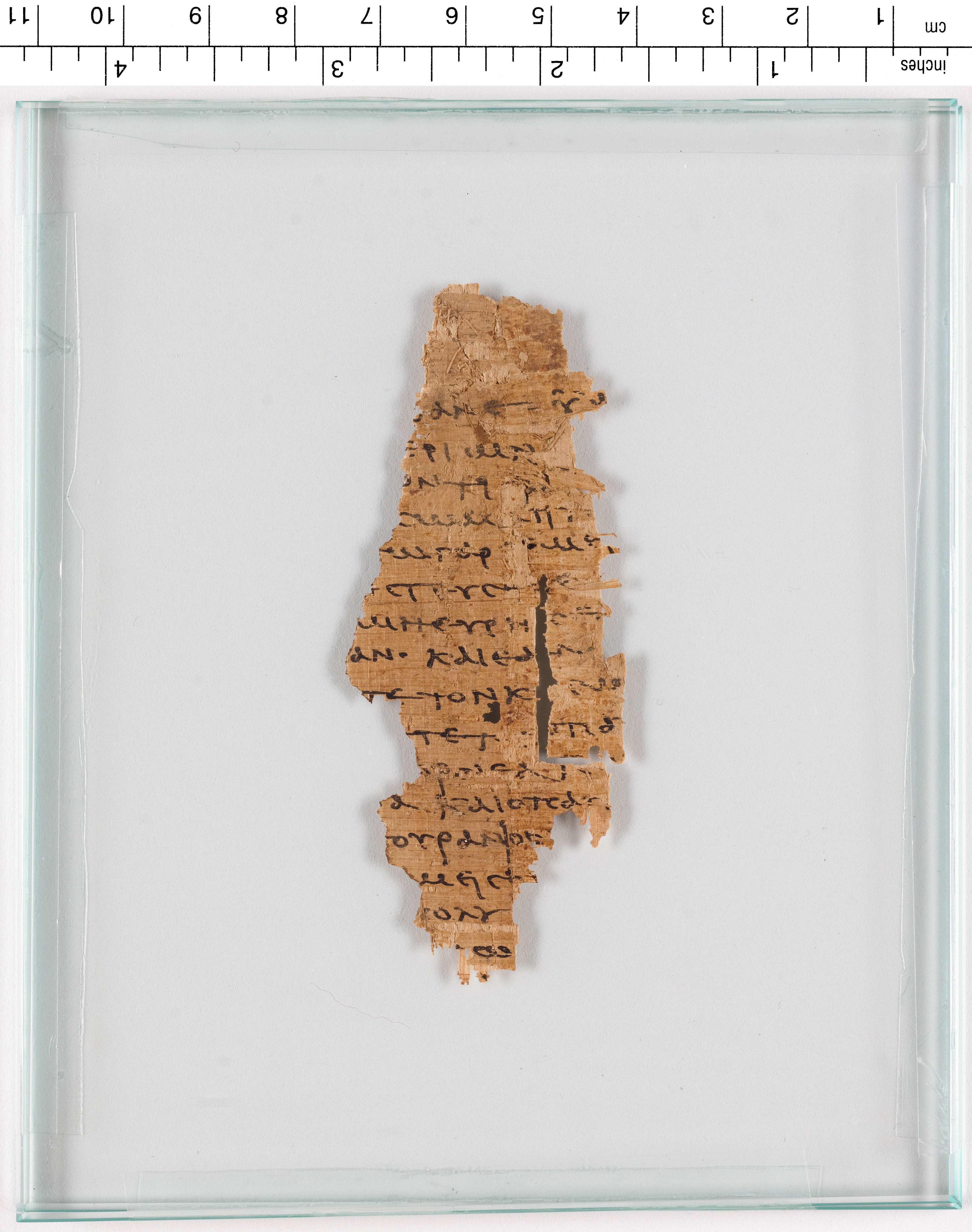
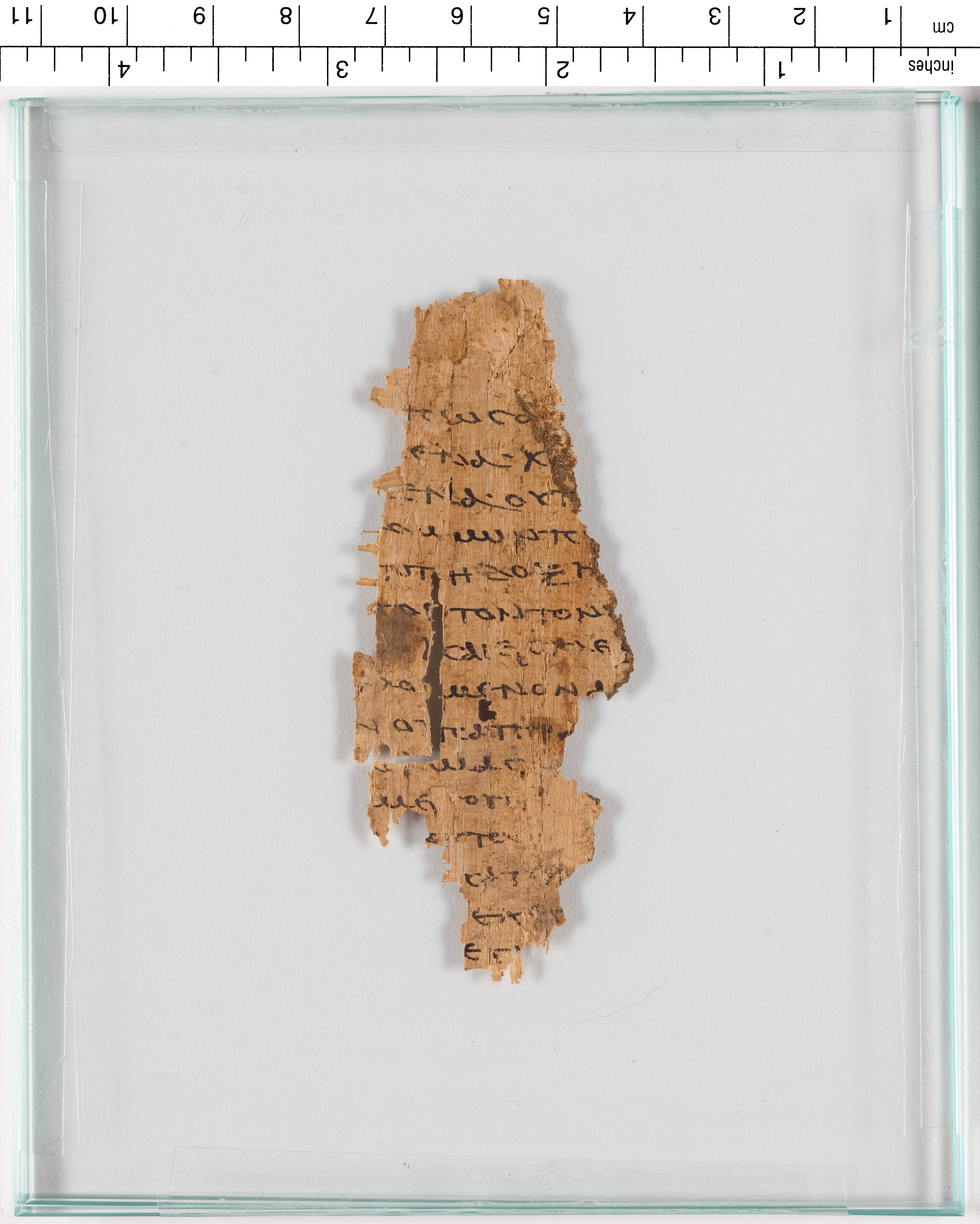
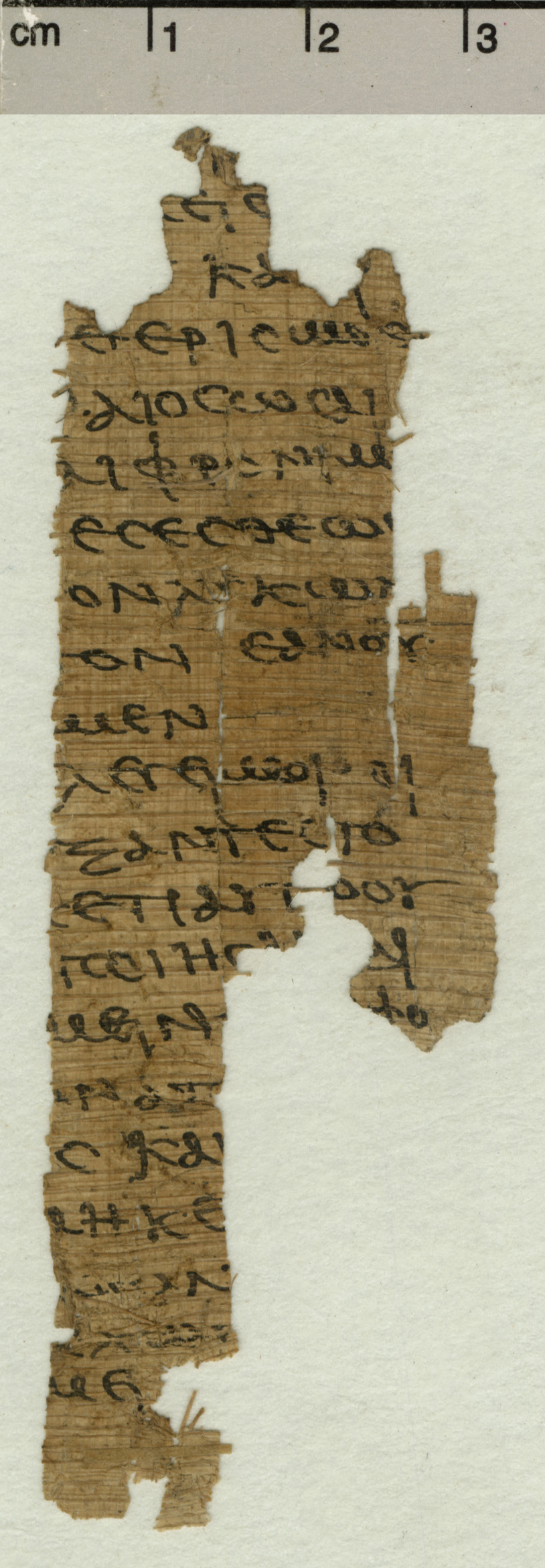
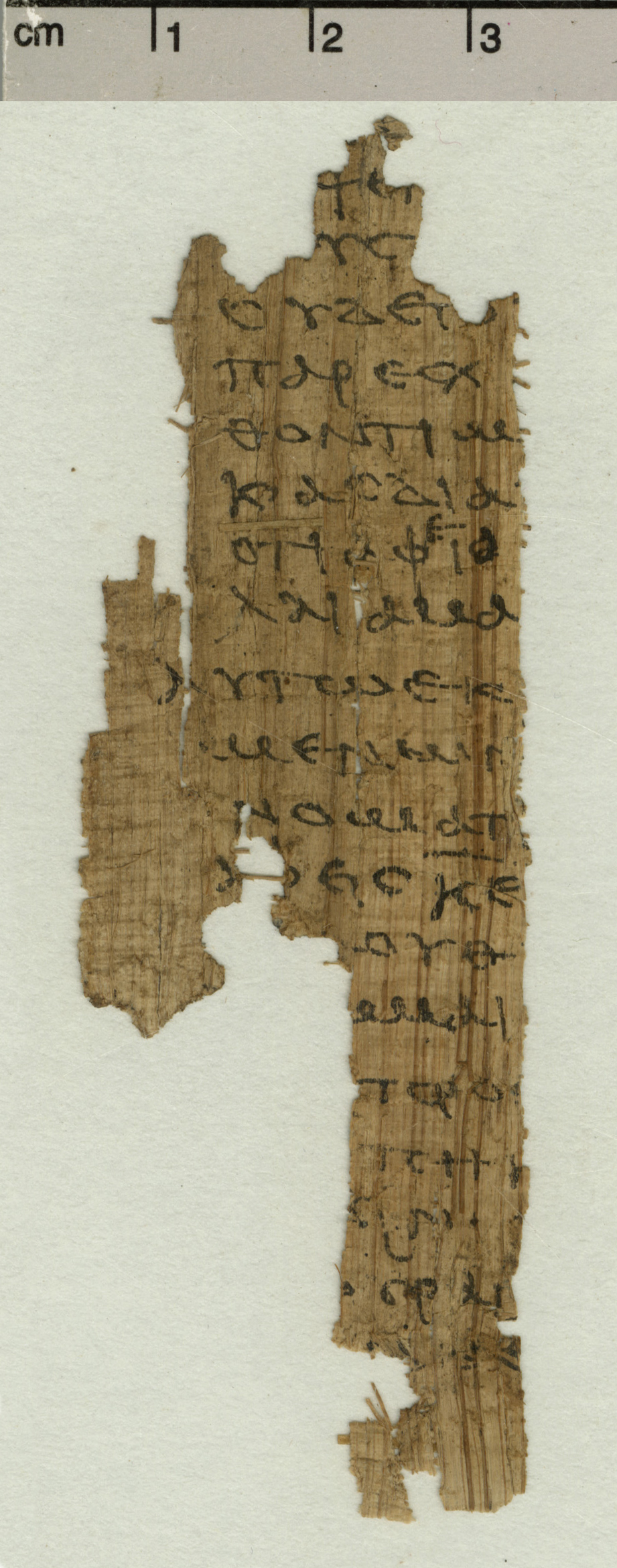
What Do We Mean By “Codex”?

P.Hib. 113, the papyrus kept at Graz that has recently been proposed as being the earliest surviving remains of a codex, continues to be in the news. I made a brief post about it some days ago, and in the comments to that post, David Kelsey raised an interesting question:

“If I were to take three sheaths of paper, fold them in the middle and insert inside each other to form a quire, then stitch the sections together, as a finished product I essentially have a booklet. But is this a codex? At what point does folded sheets gathered become a codex? Could this papyrus from Graz University be the front page of a booklet only and can it is so proved to have other associated pages written on both side be an actual codex?”

This is a good observation and really boils down to this: What do we mean by the term “codex”? Is it something more than a series of leaves linked together in some fashion? I tend to think of the codex as an example of a kind of technology, so it is indeed these physical characteristics that are most interesting to me. I would answer David’s question affirmatively. What he describes, a stack of three sheets folded together and stitched through the middle, is a small, single-quire codex.

But other questions remain. What about less flexible materials like wood or ivory–can these form codices? What about, say, a diptych joined by hinges rather than threads or tackets–is that a codex?

For some bookbinding specialists, the method of binding is the key element. J.A. Szirmai, for example, has pointed to the method of joining the “leaves” as a determining factor and a firm point of separation between tablets and codices:

“Hardly any textbook in which the origin of the codex is discussed, fails to assure us that it [was] wooden tablets from which the construction of the codex was derived. Even authorities proclaim this with great certainty, so Roberts and Skeat (The Birth of the Codex, 1983, p. 1): ‘There has never been any doubt about the physical origin of the codex, namely that it was developed from the wooden writing tablet. . . ‘. The certainty with which the validity of this statement is taken for granted is in marked contrast with the lack of any substantial evidence or explanation as to the exact nature of this genetic relationship. Yet the assumption is being repeated again and again without any sign of intellectual discomfort about the weakness of the argument. . . The analogy in the geometrical shape of the composing elements or of their ability to be turned along one side is merely superficial; the primitive methods of connecting the elements of the writing tablets (using hinges, metal rings or lacing) have scarcely anything in common with the codex structure.”

Still other specialists also factor in the textual contents. In his reflections on “Les origines du codex,” Joseph van Haelst defined “codex” as follows: “The term ‘codex’ . . . designates a collection of sheets of papyrus or parchment folded in two, grouped into a quire (or quires), sewn together along the spine, and usually protected by a cover. Its content, unlike that of the so-called documentary codex, is a composition, i.e. a text designed for distribution and preservation. This may be literary (classical works) or professional-technical (biblical, legal, magical, medical, scholarly, etc.).”

I don’t really like this division between the (real) codex and “documentary codex,” but for better or worse, it is a part of the scholarly discussion. So, we really have three intertwined issues–physical form (leaves), method of joining (binding), and contents (documentary vs. literary).

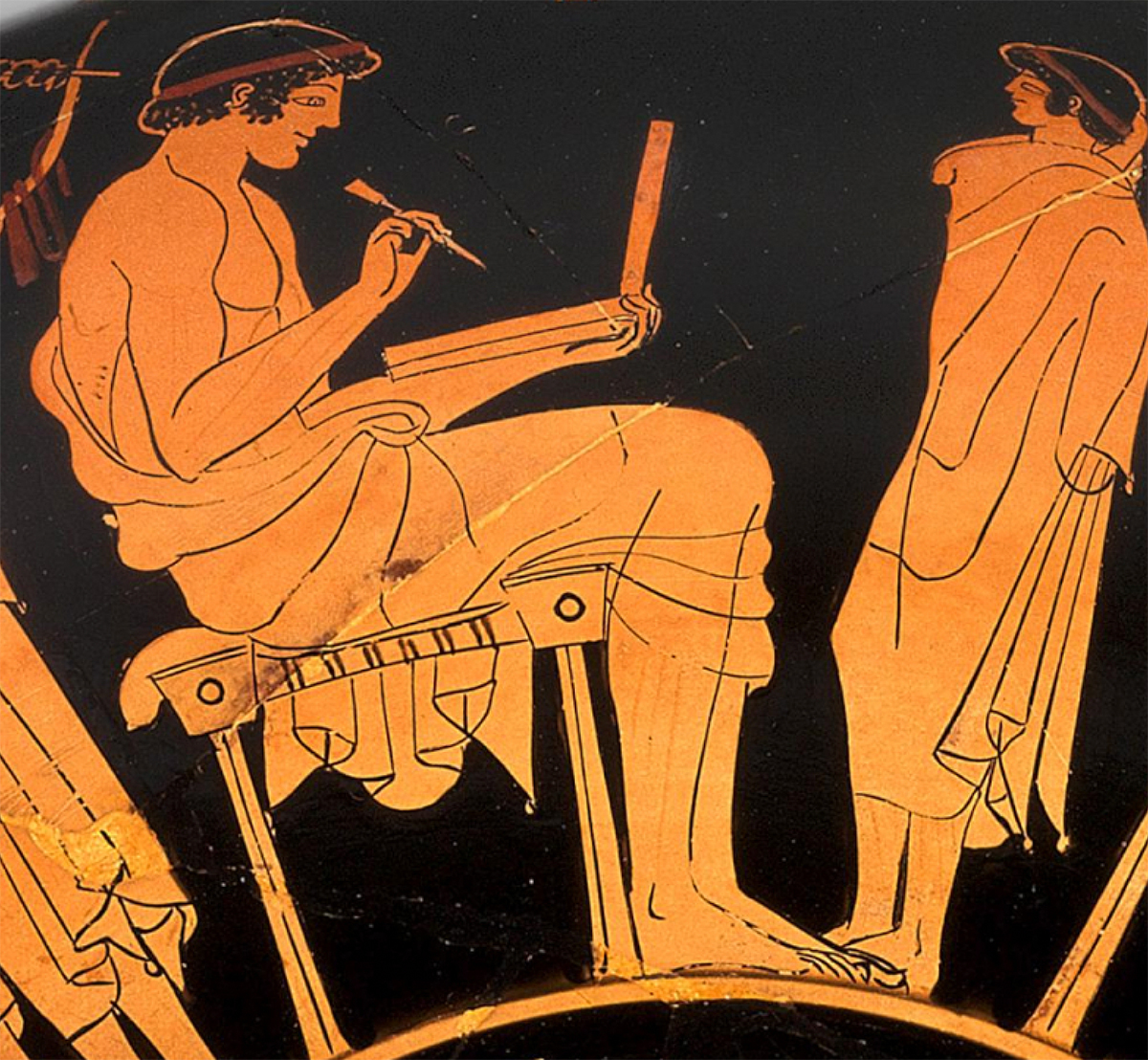
Part of the reason for these overlapping categories has to do with etymology. The Latin caudex originally meant “tree trunk” or “block of wood,” and was later used to refer to bound sets of wooden tablets, which were themselves cut from blocks of wood (Greeks seem to have used the words δέλτος or πίναξ to refer to these tablets). We don’t have surviving examples of this kind of artifact from very early periods, just some iconography, such as the famous Douris School Cup of the early fifth century BCE:

A teacher with a set of writing tablets on the “Douris School Cup” produced in the early fifth century BCE; image source: Staatliche Museen zu Berlin, Antikensammlung /CC BY-SA 4.0

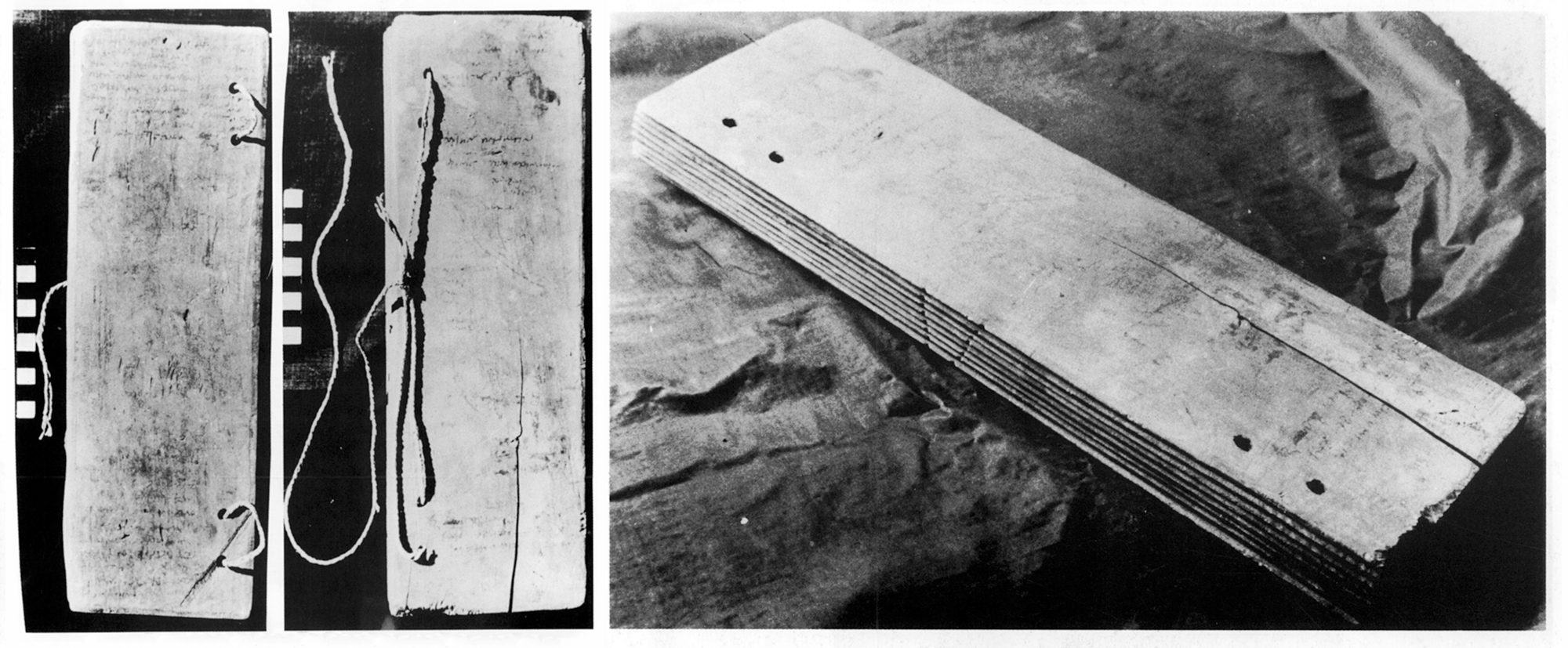
Surviving examples of wooden tablets from later in the Roman era, however, are plentiful. The images below show a well-preserved set of wooden tablets dating from the fourth century CE that were found in the Egyptian city of Kellis. They were excavated intact with the “binding” thread in place (left and center), and they are shown in a stack after the thread was removed (right).

The “Kellis Agricultural Account Book,” a set of wooden tablets found intact at Kellis in Egypt; image source: Roger S. Bagnall et al., The Kellis Agricultural Account Book (Oxbow, 1997), plates

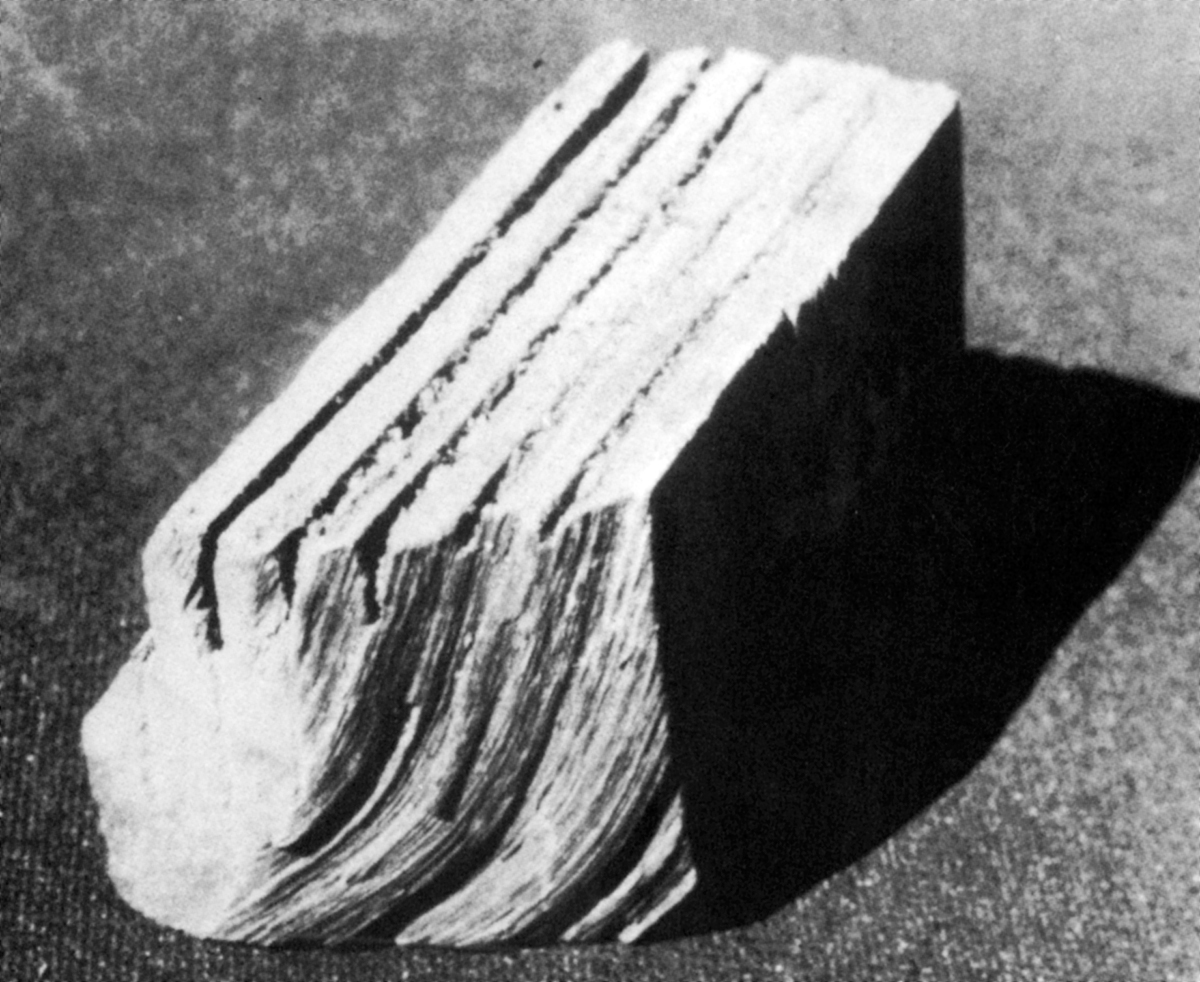
We can get a glimpse into how these tablets were made by looking at another artifact found at Kellis in proximity to woodworking tools, namely a wooden block that appears to be an off-cut from a block that had been sawn into a similar set of thin slabs:

An off-cut from a wooden block that had been sawn into thin slabs for tablets, found at Kellis in Egypt; image source: Roger S. Bagnall et al., The Kellis Agricultural Account Book (Oxbow, 1997), plate

So we can see the etymological connection to the caudex as “block of wood.” But there is also the question of how the slabs are held together after they were cut from the block. We don’t have a full picture of how these tablets were usually bound. The example shown above from Kellis has a pretty simple “binding” of a thread looped through the holes that were drilled in the wood slabs and tied off. But other surviving tablets have “covers” (outer slabs) that show evidence of a somewhat more elaborate lacing of the threads, and a 2018 book by Georgios Boudalis offers some speculative but very intriguing ideas about exactly what such lacing might have looked like, and indeed how closely it might resemble the bindings of multi-quire papyrus and parchment codices.

While these bound groups of wooden slabs are sometimes described as “codices,” some scholars (most scholars?) tend to reserve the term for bound groups of leaves made of more flexible materials like parchment, papyrus, and later paper. As noted earlier, in many studies of codices, we find a kind of evolutionary narrative that is based on contents as much as physical characteristics. These wooden tablets often contained documentary writing. The tablet found at Kellis shown above, for example, contained agricultural accounts. Other tablets contained legal documents, wills, public records, writing exercises, or other sorts of “non-literary” writing. We also have papyrus and parchment books that contain similar non-literary sorts of material. But such manuscripts are often described not as codices proper, but rather as “notebooks.”

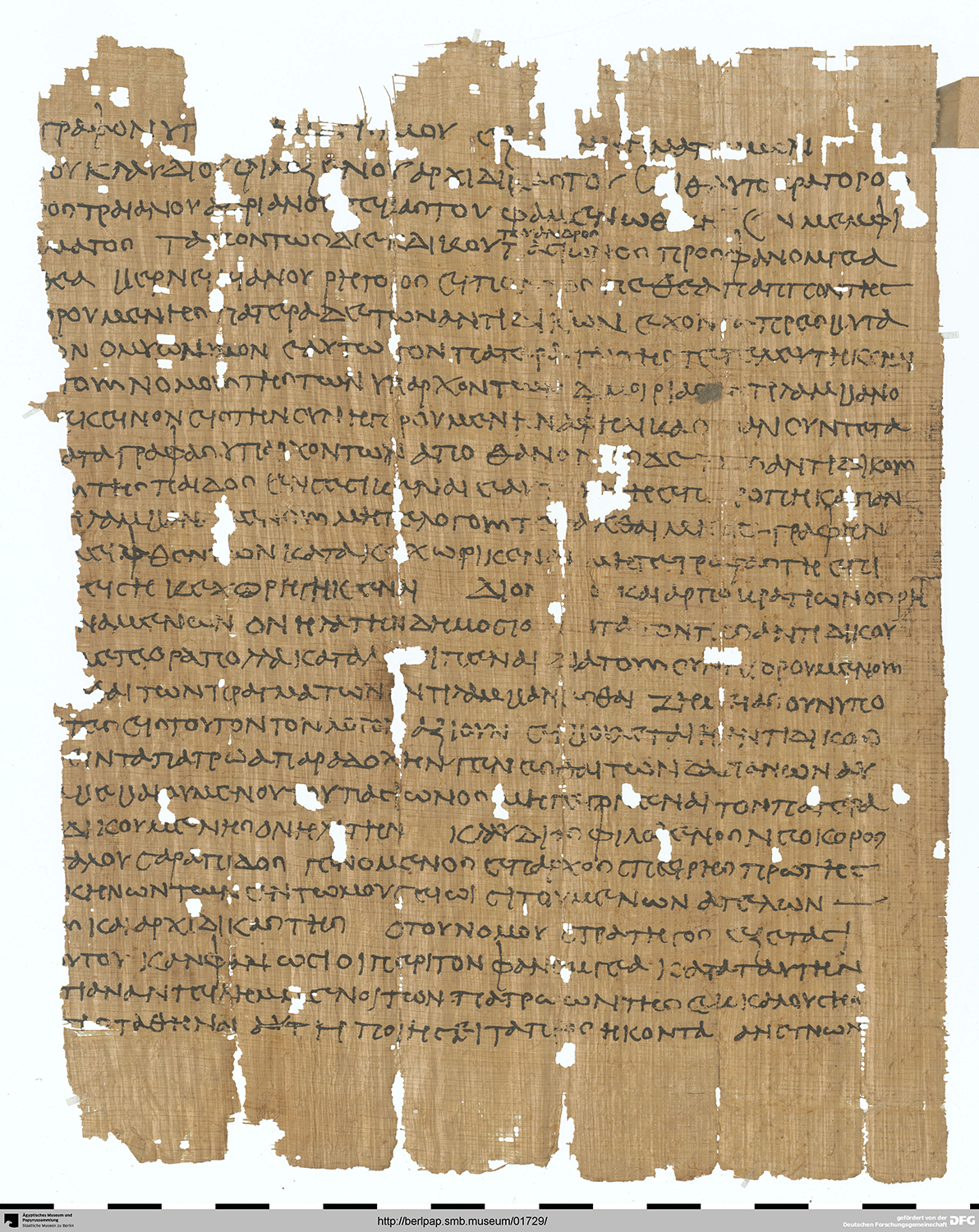
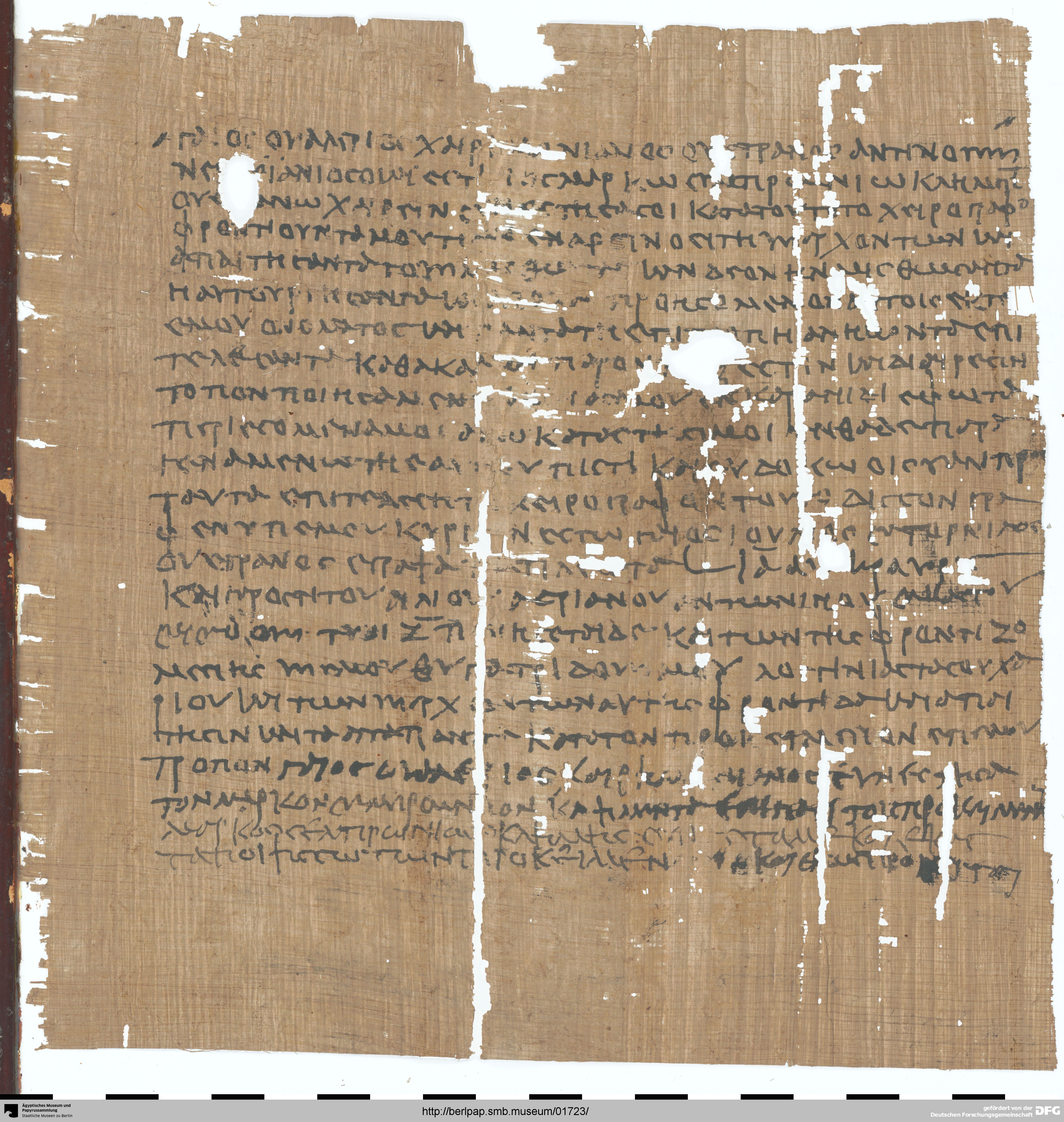
A typical example of such a “notebook” (the one used as an illustration by Roberts and Skeat in The Birth of the Codex) is a parchment bifolium in Berlin, P. 7358 + P. 7359 (SB 26 16551) that contains some notes on labor carried out and payments made. Roberts and Skeat assigned the manuscript to the second century CE, but the editor of the papyrus preferred a date in the third century (on p. 21, footnote 2 Roberts and Skeat also assign the manuscript to the third century):

The two sides of a bifolium from a parchment “notebook,” Berlin, P. 7358 + P. 7359; image source: Berliner Papyrusdatenbank

In The Birth of the Codex, Roberts and Skeat present the arrival of the “notebook” as a turning point in the story of the codex, as indicated by the chapter title “From Writing Tablet to Parchment Note-Book.” They use the terminology of a transition and name the agent: “Certainly it was the Romans who took the decisive next step, that of replacing the wooden tablet by a lighter, thinner and more pliable material” (p. 15). Now, I’m not sure at present how much I like this linear, evolutionary way of thinking about wooden tablets and papyrus and parchment codices, but if we momentarily allow this scenario, it is at this point in the narrative that the Graz papyrus might shake things up. If the Graz papyrus really is an example of a papyrus codex/notebook from the third century BCE produced by Greek-speakers in Egypt, then the Roberts-Skeat story about the Romans’ invention would require some significant revision.

Sources cited:

Roger S. Bagnall et al., The Kellis Agricultural Account Book (Oxbow, 1997).

Georgios Boudalis, The Codex and Crafts in Late Antiquity (Bard Graduate Center, 2018).

Günter Poethke, “Ein Berliner ‘Notizbuch’ aus Leder,” in C.-B. Arnst et al., Begegnungen: Antike Kulturen im Niltal (Verlag Helmar Wodtke, 2001), 399-403.

C.H. Roberts and T.C Skeat, The Birth of the Codex (Oxford University Press, 1983).

Joseph van Haelst, “Les origines du codex,” in Alain Blanchard, Les débuts du codex (Brepols 1989), 13-35.

J.A. Szirmai, “Wooden Writing Tablets and the Birth of the Codex” Gazette du livre medieval 17 (1990), 31-32.

Posted in Codices, Codicology, P.Hib. 113, Tablets | 11 Comments

The Oldest Codex?

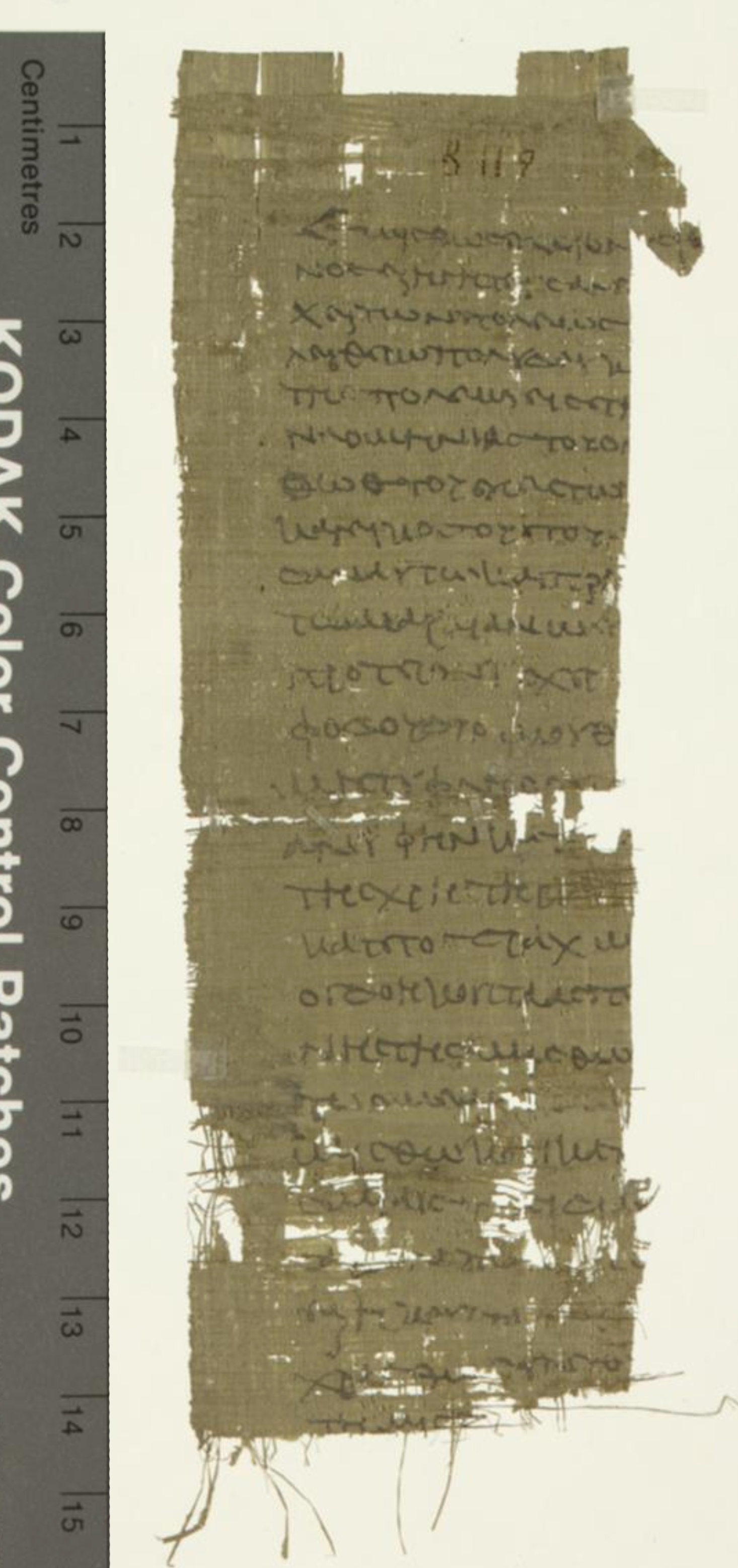
News reports coming out of Graz today suggest that a papyrus in the collection of the University of Graz may be the earliest surviving specimen of a bound book with pages, possibly as early as the third century BCE. It is a papyrus that was published way back in 1906, P.Hib. 113:

The earliest codex? Graz, UBG Ms 1946; image source: University of Graz, Universitätsbibliothek

“The papyrus fragment (Graz, UBG Ms 1946), which measures only about 15 x 25 cm, has belonged to the University of Graz since 1904. Discovered during an excavation in the Egyptian necropolis of Hibeh (today El Hiba) south of Fayum (El-Fayoum), the fragment now belongs to a collection of 52 papyrus objects, some of which were used as so-called cartonnage for mummy wrappings in the Ptolemaic period (305-30 BC).”

Theresa Zammit Lupi, the head of conservation of the Special Collections of Graz University Library, noticed the presence of a thread, what appears to be a central fold, and holes along the central fold that could indicate binding. This announcement is potentially very exciting news for those of us interested in the early history of the codex, but the news release itself is a bit jumbled. The claims made about the earliest codices in the report seem somewhat confused. According to the press release,

“The earliest codices known to date with evidence of stitching in book form have been dated to 150-250 AD. Two such examples are located in the British Library (Add MS 34473) and the Chester Beatty Library, Dublin (CBL BP II).”

British Library “Add MS 34473” isn’t a designation of a single manuscript. That inventory number covers several parchment manuscripts, none of which (to the best of my knowledge) has been assigned especially early dates. The possible exception might be parchment fragments of a codex containing works of Demosthenes filed under that inventory number (P.Lond.Lit 127, TM 59549), which are sometimes assigned a date as early as the second century CE. There is, however, a parchment codex fragment in the British Library that is generally assigned an even earlier date, British Library Papyrus 745, (TM 63267), which may be as old as the second or even the first century CE. Chester Beatty BP II is, of course, the single-quire papyrus codex of Paul’s letters better known to New Testament scholars as P46 (TM 61855), which has been assigned to a wide range of dates, from the late second century CE to the late third or fourth century CE. But it is generally thought that the earliest of the Beatty Biblical Papyri is the BP VI (TM 61934), the Numbers-Deuteronomy papyrus codex, which is usually assigned to the second or third century CE.

These small details aside, I am excited to learn more about this papyrus. It was reused for cartonnage, which gives us a reasonable terminus ante quem. But as far as I can see from the online images, there is no writing visible on the “back” side of the papyrus. There is writing on the right side of the “front” of the papyrus, but it is tough to decipher. It would be nice to see the whole thing subjected to multi-spectral imaging to see what is legible on the right side of the papyrus as well as the “back” side. If there is continuous text from the back to the front, that would be a nice confirmation that we do in fact have a very early codex here. I look forward to learning more about this piece!

Posted in Codices, Codicology, P.Hib. 113 | 7 Comments

A Book of Psalms and a Missing Page Number

As part of the EthiCodex project, our team has been revisiting the often fragmentary remains of early codices. Thankfully, many collections have made digital images of their materials widely available. But sometimes it is also necessary to see things in person.

P.Mich. inv. 22 is a fragmentary folium from a papyrus codex that contains remains of Psalm 8:3-9 and 9:7-17 (TM 61984). It was purchased in Egypt in 1920 by Bernard Grenfell and Francis Kelsey (during the same trip that they purchased the famous Rylands fragment of John’s Gospel, P52). P.Mich. inv. 22 was published by Henry Sanders in 1936 as P.Mich. 3 133.

P.Mich. inv. 22; image source: University of Michigan Papyrology Collection

Given that the papyrus contained portions of Psalm 8 and 9, material relatively near the beginning of the Book of Psalms, Sanders offered a fairly confident estimate of the position of this folium within the codex: “Some seven pages, i.e. three and one-half leaves, preceded the beginning of this fragment in the original codex.”

I am not sure how Sanders came to this number, but it seems a little strange based on the surviving evidence.

Because the top lines of each page are preserved, we have a reasonably good idea of the number of words on the “front” page of the papyrus (everything from the words [στόμα]τος νηπίων καὶ in Psalm 8:3 to the words ἀπώλετο τὸ in Psalm 9:7, inclusive). We can then check the number of words and characters in that stretch of text in a printed edition. In this case, we count in the Rahlfs-Hanhart edition 199 words and 1237 characters (including spaces, punctuation, etc.). From the words ἐκ στόμα[τος] in Psalm 8:3 back to the beginning of Psalm 1:1, we have in the Rahlfs-Hanhart edition 1154 words and 6925 characters (again including spaces, punctuation, etc.). From here, it is just a matter of division to determine roughly how many codex pages would be needed to contain the material on the pages preceding our folium (assuming they carried about the same amount of text as the surviving papyrus folium and assuming that we are dealing with a “normal” collection of Psalms):

1154 words ÷ 199 words per page ≈ 5.799 pages

7178 characters ÷ 1237 characters per page ≈ 5.803 pages

So, we would seem to be looking not at seven pages of preceding text but rather at about 5.8 pages worth of text. But this is just if we consider words or characters. If we also take into account some extra spacing for the titles and numbering of the first eight Psalms, then we can say that probably 6 pages (3 folia) preceded the surviving folium. That means that the “front” of P.Mich. inv. 22–that is, the side with vertical fibers (↓) that contains Psalm 8:3-9:7–would be page 7 and the back–the side containing Psalm 9:7-17 written on the horizontal fibers (→)–would be page 8.

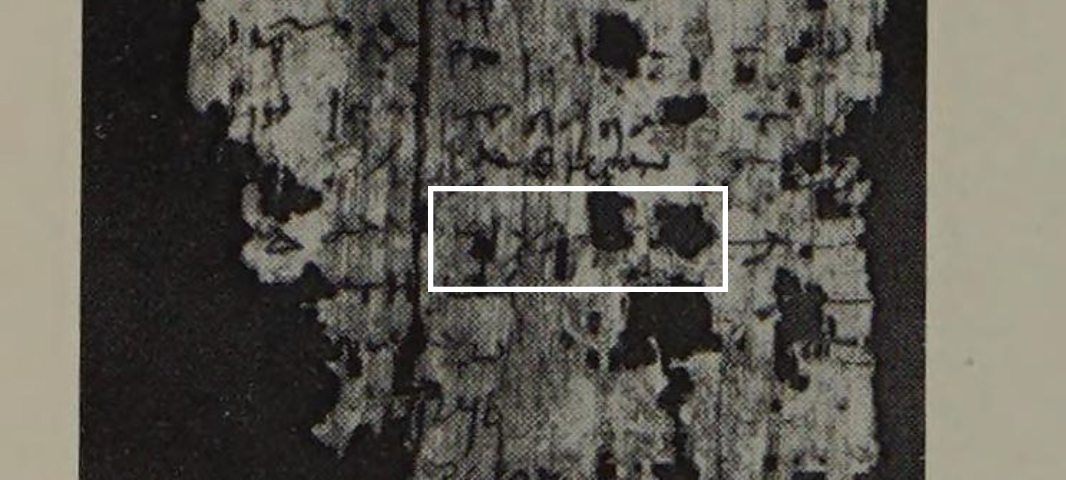
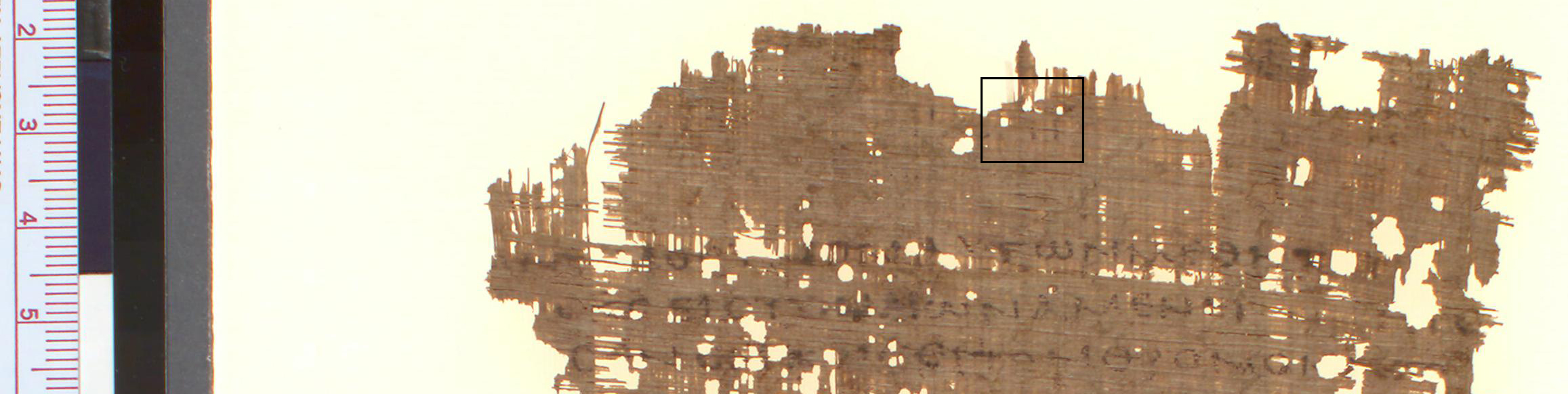
And here is where in-person examination is helpful. In fact it turns out that in the surviving part of the upper margin of the back (→) side of our folium, there is a lightly written page number: H̅, that is to say, page 8, just as the rough calculation above suggested. I noticed the faded letter while looking at the upper margin under high magnification:

P.Mich. inv. 22, detail of surviving page number

But once I knew where to look, I could see the number even in the online digital image:

P.Mich. inv. 22, position of page number indicated by a square

Sanders seems not to have been aware of the page number (in his defense, it is possible that the ink may have become more visible in the decades since he published the papyrus). I haven’t seen it mentioned in subsequent scholarship, either–though I’m happy to be corrected if I’ve overlooked something. In any event, this papyrus offers a good example of why it is worthwhile to revisit these early codex fragments, especially those pieces that were published in the early decades of papyrology.

Posted in Antiquities Market, Bernard Grenfell, Codices, Codicology, Michigan Papyri | 3 Comments

The Helgö Buddha

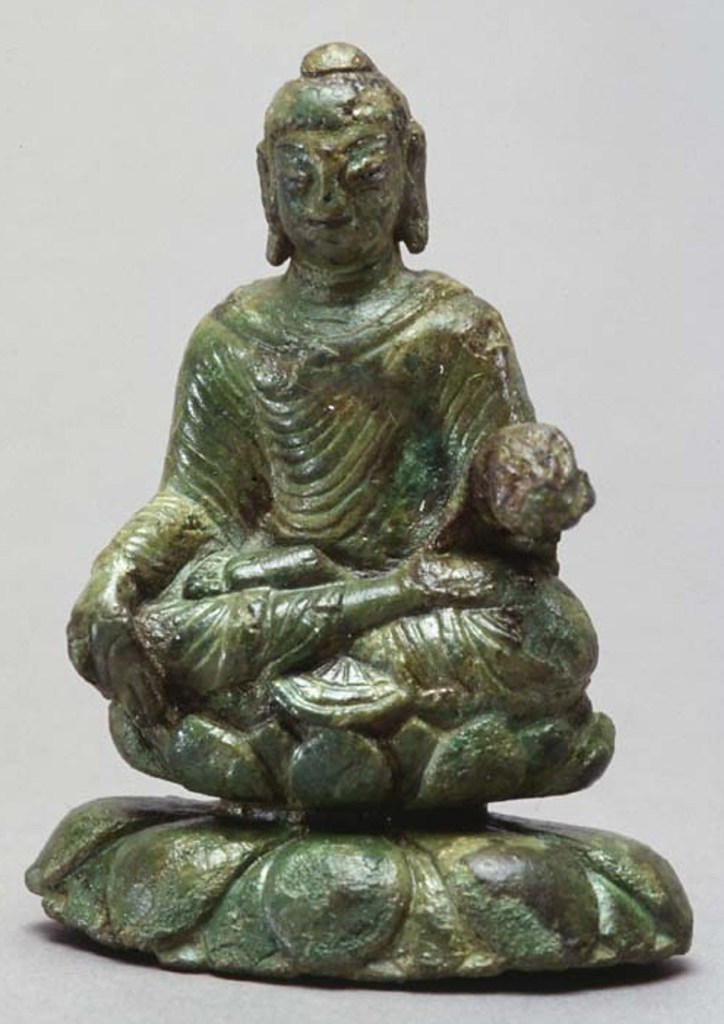
The news of the excavation of a small statue of the Buddha in Egypt is very exciting. But at least one of the claims about this statue doesn’t seem quite right. I have in mind this statement in The Smithsonian: “The artifact is the first Buddha ever found west of Afghanistan.” In the course of my teaching a few years ago, I encountered a fascinating artifact that I had somehow missed up to that point. I started a post on it at the time but got distracted. Now seems like a good moment to return to it:

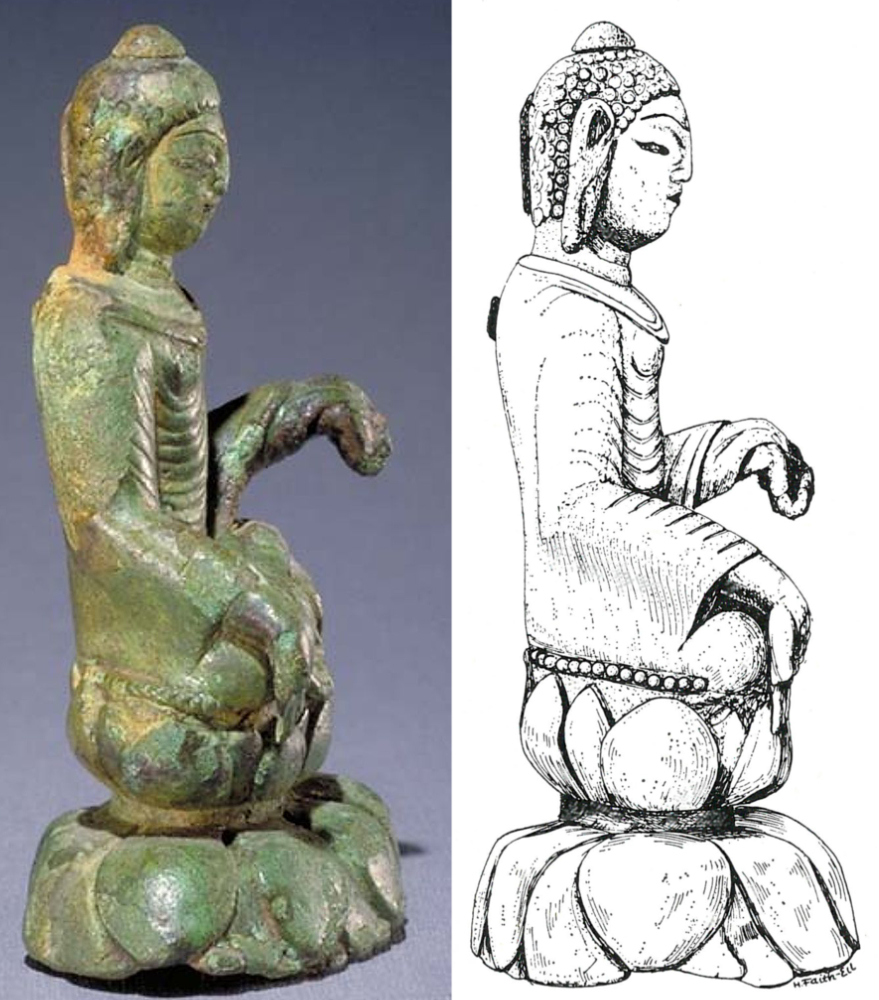
Image source: Swedish History Museum

This bronze statuette of the Buddha stands about 8.4 cm tall. Specialists in Buddhist iconography suggest that it was manufactured in northwest India perhaps sometime around the 6th century CE.

Image sources: Swedish History Museum and Holmqvist et al., Excavations at Helgö I: Report for 1954-1956 (Uppsala, 1961), p. 113

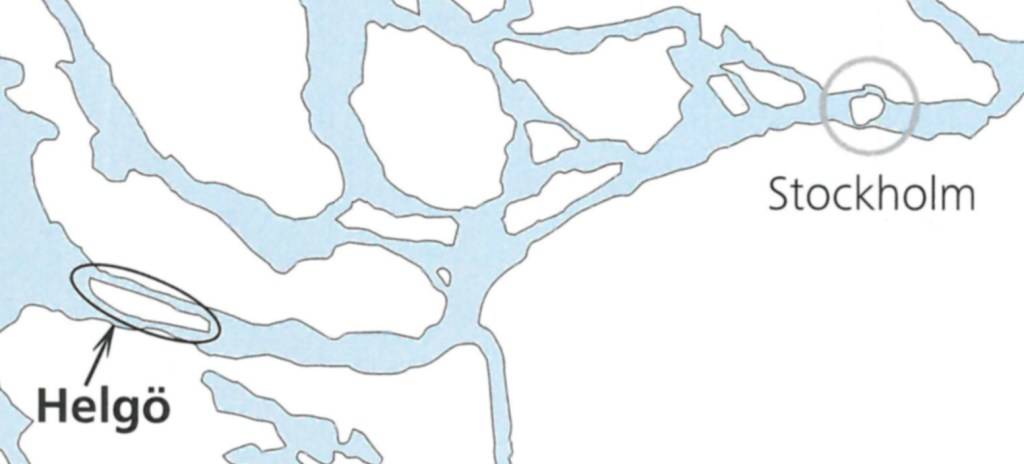
What makes the item special is that it was excavated on a small island in Sweden just west of Stockholm. In the mid-1950s, excavations began on the eastern end of the island of Helgö (Lillön).

Location of Helgö in relation to Stockholm; image source: adapted from Clarke and Lamm, Helgö Revisited (Schleswig, 2017), p. 4, Fig. 1.3

The excavators found evidence for occupation from the fourth century CE to the eleventh century CE. In July of 1956, excavators uncovered the Buddha in an indistinct layer outside the remains of one of the structures on the site. The site, located on a series of terraces on a hillside, was challenging to excavate and interpret:

“Space was restricted, so the houses were built and rebuilt in almost exactly the same place from generation to generation, resulting in a bewildering array of post holes which are still very difficult to interpret. In addition, the occupation layer was thin and compressed, so that artefacts of all dates were found together, virtually unstratified.” (Clarke and Lamm, Helgö Revisited, p. 3)

Unfortunately (but understandably in these circumstances), the exact stratum to which the Buddha belongs cannot be determined, and thus, if I read the reports correctly, the Buddha cannot be confidently associated with any one of the discrete occupational phases of the site. The original excavation report says little about the context of the find. The specialist report on the Buddha gives the following information:

“The Buddha figure was found in Building Group 2, not far from the metal workshop of Building Group 3, and together with artefacts dating from before c. AD 800 […]. The bronze figurine could well have been owned by a craftsman working with metal casting, who was primarily interested in its technical qualities.” (Gyllensvärd, “The Buddha found at Helgö,” p. 17)

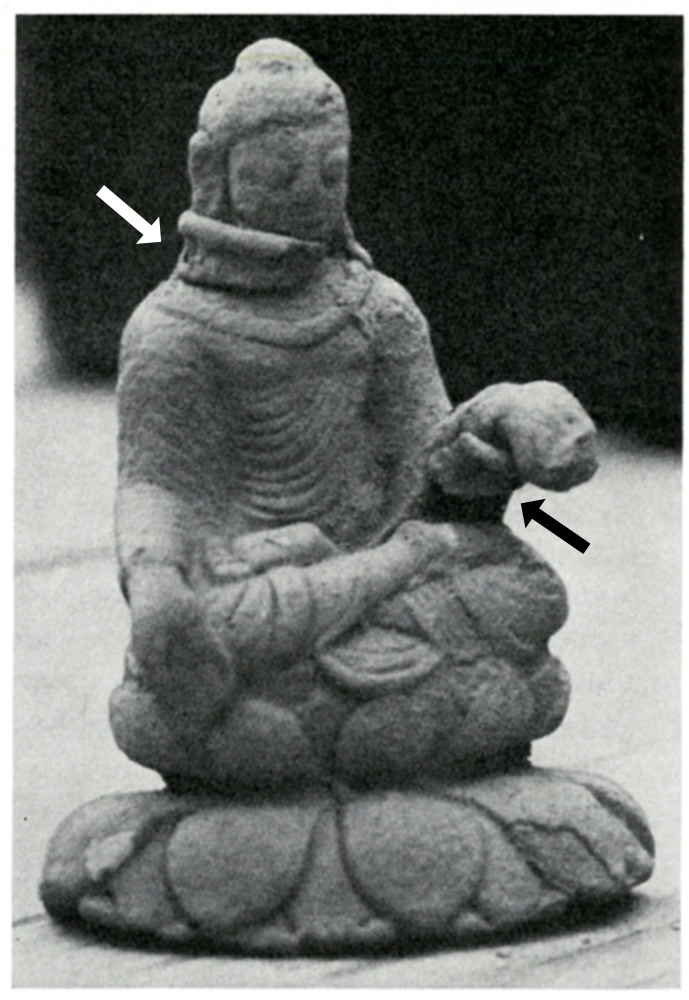
Two observations are in order. First, there is a photograph of the object apparently taken shortly after it was excavated, which shows loops of leather around the neck and left arm of the statuette, suggesting that it was hung either on a person or another object (wall, door, etc.). These bands would also at least possibly obscure the “technical qualities” of the object.

Helgö Buddha with remains of leather straps still attached; image source: Holmqvist et al., Excavations at Helgö I: Report for 1954-1956 (Uppsala, 1961), p. 112, Fig. 18

Second, the back of the artifact shows signs of repairs (patches on the back of the head and left elbow), suggesting that the statuette was in use for some period of time. In the absence of precise stratigraphic information, scholars have speculated about how and why the Buddha came to Sweden. The most thorough specialist study offered this possible explanation:

“As it was unearthed near a workshop for metal casting and smithing, its owner may have been particularly attracted to this finely cast bronze object with contrasting inlays of copper and silver. The figurine would undoubtedly have been of great interest to a metalworking craftsman who may have used a leather thong to hang it around his neck or on a nail.” (Gyllensvärd, “The Buddha found at Helgö,” p. 23)

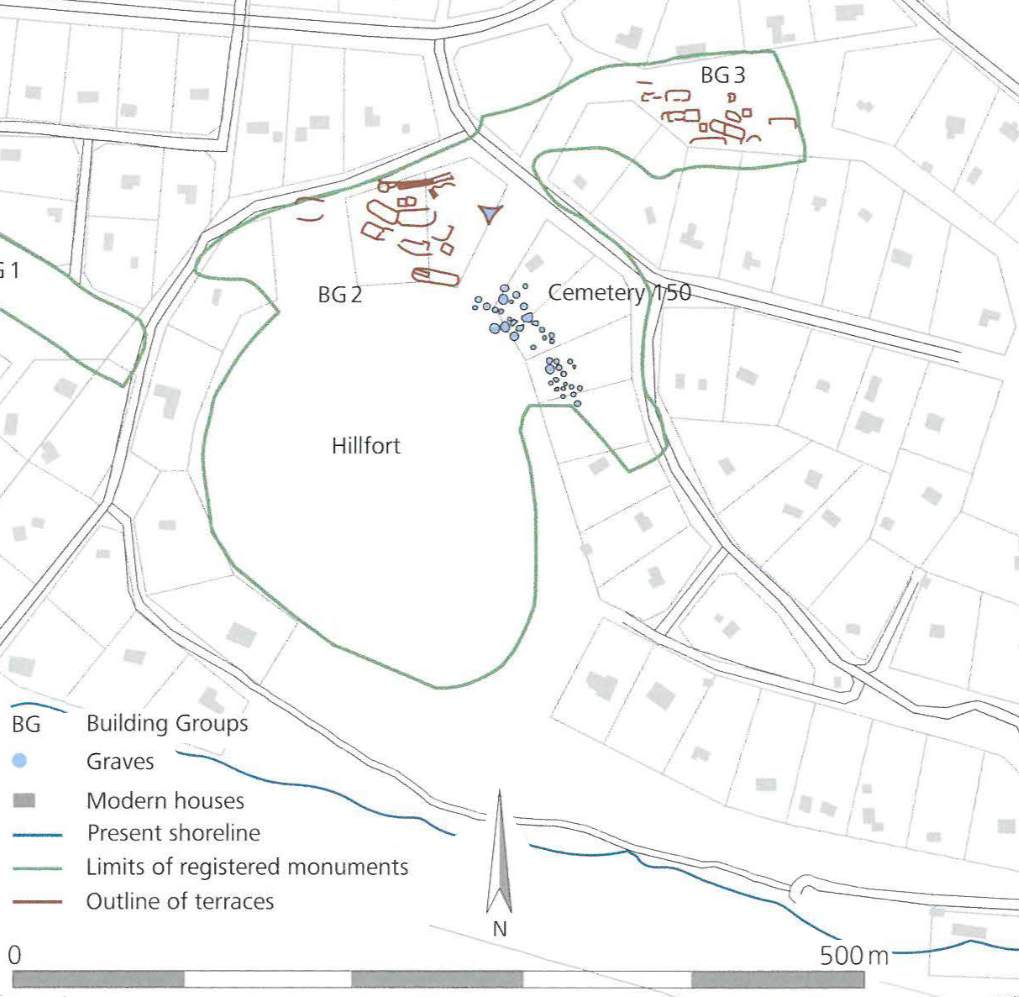
This is a strange statement. If I understand the excavation report correctly, the metal workshop was a part of Building Group 3. This group of structures was quite distant from Building Group 2:

Helgö Building Groups 2 and 3; image source: adapted from Clarke and Lamm, Helgö Revisited (Schleswig, 2017), p. 5, Fig. 1.4

By “near,” then, Gyllensvärd means 150-200 meters. The metal workshop does not seem like a probable context for the Buddha. If it is to be associated with any of the structures, it would probably be one of the two sets of rectangular foundations in Building Group 2.

In any event, it is fun to wonder about the circumstances that might have brought this Buddha to rest here in Sweden, just as it will be interesting to learn more about the newly discovered Egyptian Buddha.

Photographs of the Helgö Buddha taken from a number of angles are available through the website of the Swedish History Museum here.

Further Reading:

Helen Clarke and Kristina Lamm, Helgö Revisited: A New Look at the Excavated Evidence for Helgö, Central Sweden (Schleswig: Stiftung Schleswig-Holsteinische Landesmuseen Schloss Gottorf, 2017)

Bo Gyllensvärd et al., Excavations at Helgö XVI: Exotic and Sacral Finds from Helgö (Stockholm: Almqvist & Wiksell International, 2004)

Wilhelm Holmqvist et al., Excavations at Helgö I: Report for 1954-1956 (Uppsala: Almqvist & Wiksells, 1961)

Posted in Archaeological context, Buddha | 4 Comments

Ancient Jewish Fish Sauce?

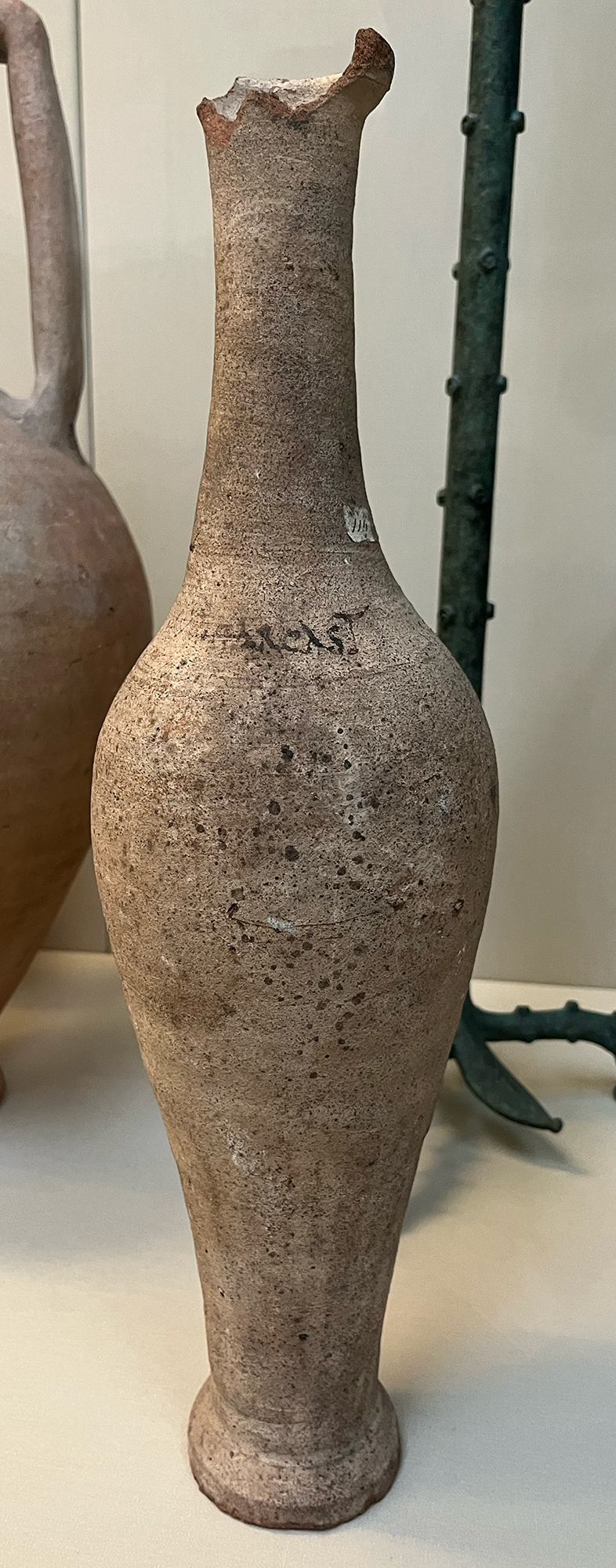
When I visit museums, I always keep an eye out for ancient Jewish and Christian artifacts. I recently (may have) encountered one that I had overlooked on previous visits to the British Museum. The museum holds a coarse ware jar with a flat bottom that is said to have come from Pozzuoli in the Bay of Naples. The jar was one of many artifacts bequeathed to the museum in 1856 by Sir William Temple (1788-1856). It is assigned a date in the first or second century CE. This type of jar was used to hold garum, a fermented fish sauce that was a staple of the Roman diet.

Garum jar, British Museum 1856,1226.337; image source: Brent Nongbri, 2023

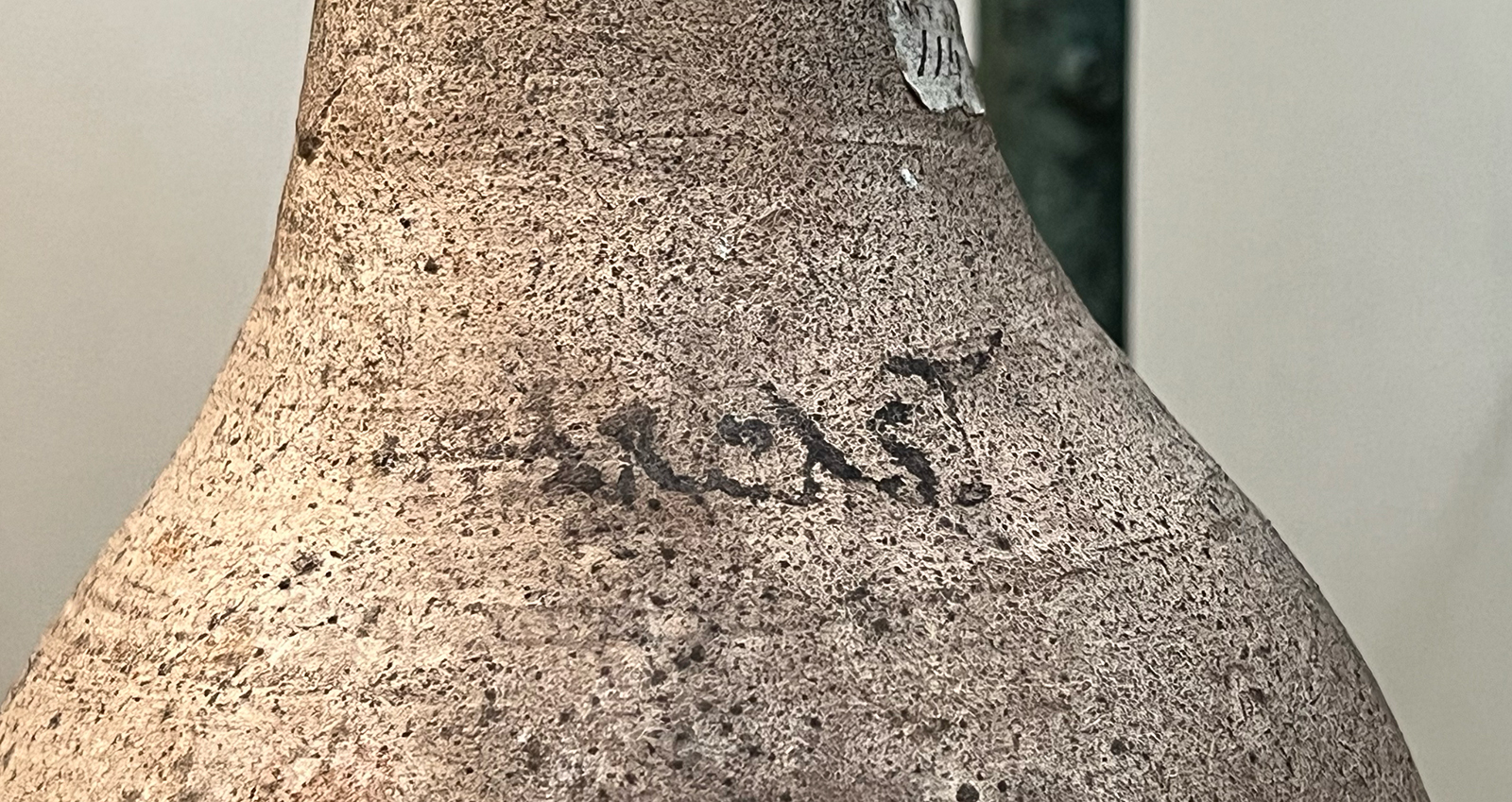
What makes this particular jar interesting is the dipinto, or inked label, which reads G̣Α̣RCAST

Garum jar, British Museum 1856,1226.337; image source: Brent Nongbri, 2023

The didactic tag at the museum states the following:

“The painted inscription says it contained garum, a popular fermented fish sauce, and a vital part of Roman cuisine. The inscription on the bottle GARCAST shows it was garum castimoniarum (kosher), for the Jewish market.”

The resolution of the abbreviation GARCAST to garum castimoniarum depends on a reference in Pliny the Elder (Natural History 31.44), but the meaning of this passage is unclear, and the manuscript evidence for this passage looks pretty messy. The Loeb edition prints the following text and translation (along with the accompanying notes below). The larger context is a discussion of garum, and the immediate context is the use of allec (or alec or allex) a sedimentary byproduct of garum that was also consumed by Romans:

aliud vero . . .2 castimoniarum superstitioni etiam sacrisque Iudaeis dicatum, quod fit e piscibus squama carentibus.But another kind <of garum>b is devoted to superstitious sex-abstinence and Jewish rites, and is made from fish without scales.
2 ad codd.: est Mayhoff: post ad lacunam indicat Detlefsen.bAs allex is feminine, and aliud neuter, it seems best to suppose that there is a lacuna here, but Pliny may be thinking of garum, to which he has just reverted.

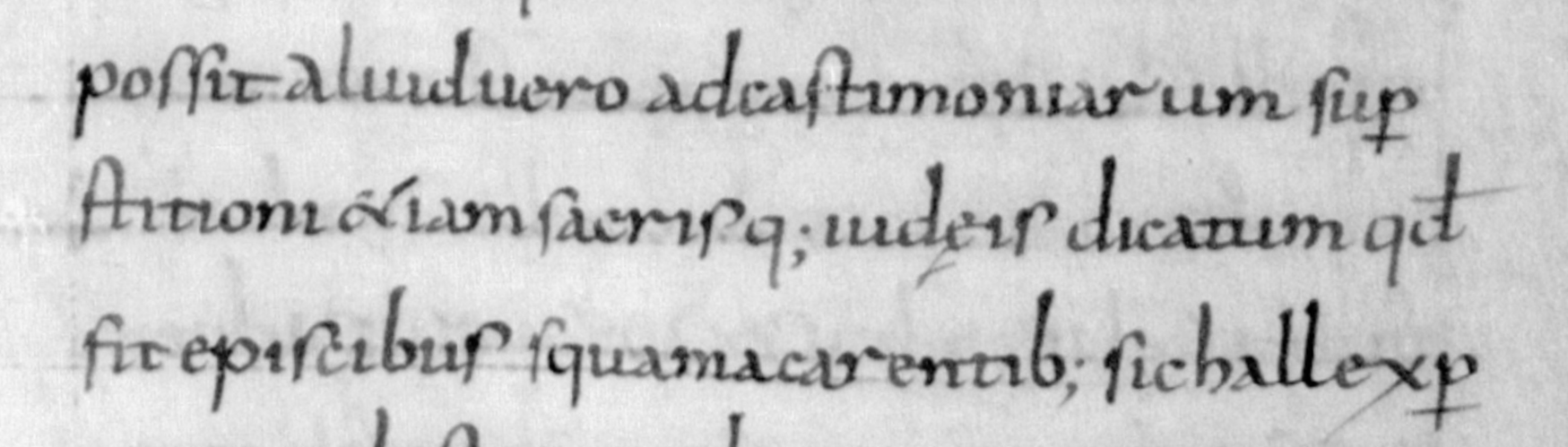
It is clear that there is something unusual here–either about the text or about Pliny’s facts or about the Jews being described. The biggest curiosity is the notion that a particularly Jewish food would contain pisces squamis carentes–fish that lack scales. This idea seems to conflict with the rule in Leviticus 11:9-11, which expressly forbids the consumption of aquatic creatures that lack scales (in the Vulgate version: quicquid autem pinnulas et squamas non habet). So, we would seem to have a reference to a group of Jews with a different set of food rules, or an example of Pliny being confused, or a corrupt text. I suspect that it may be a textual problem. The earliest surviving evidence for this passage seems to be ninth century manuscripts. BnF Latin 6795 gives us the Loeb text (but with the ad before castimoniarum):

Paris, Bibliothèque nationale de France Latin 6795, folio 331 recto; image source: Gallica

Ricc 488 is similar, though with some erasures and corrections, which result in the end of the passage reading quam a caren tibus:

Florence, Biblioteca Riccardiana 488, folio 141 verso; image source: Biblioteca Riccardiana

Though I have not seen images of them, Leiden LIP 7 (apparently not digitized) and Leiden VLF 061 (digitized but behind a steep paywall) are reported to read squamamaceretnentib, which again suggests some confusion in the text in this passage. The Budé edition is more aggressive than the Loeb in resolving the problematic text, printing squama <non> carentibus (fish not lacking scales), though this makes little sense given that in the next sentence Pliny goes on to enumerate aquatic animals without scales!

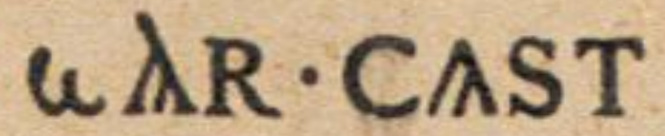
Whatever the exact meaning of Pliny’s passage may be, there are other examples of the label GARCAST vel sim. on jars from Pompeii. I see at least CIL IV 2569 (published as and said to come from the temple of Mercury–presumably the temple of Genius Augusti) and CIL IV Supp. 5662 (published as CAR CɅST / SCOMBRI/////FORTUNATI). Also possibly CIL IV Supp. 5660 (published as ///////VM CɅST) and 5661 (published as gɅR CɅST / aB VMBRICIɅ FORTUNATA). The other terms represented in these dipinti deal either with the type of fish used (scomber = mackerel) or the specific producer (Umbricia Fortunata is attested on other garum jars; hers was a family associated with fish products).

It is debatable whether these labelled jars held garum produced specifically for Jews, or even were made in a particular way that did not violate Jewish food prohibitions. There is, however, related evidence that suggests that special garum for Jews did exist in Roman antiquity, namely the presence of garum (and allec) jars at sites known to have Jewish inhabitants, namely Masada. During excavation there, a jar (apparently of the Herodian era) with a garum label was found. More telling perhaps is the discovery of a pot fragment with the remains of many small fish bones (inv. 7039-1047). The analysts of these bones reached the following conclusion:

“It seems to us significant that the residue of fish bones left at the bottom of Inv. 7039-1047 belonged to two kinds of fish only, namely herring and anchovy, both of which are kosher fish. This could be interpreted as a sign that the allec at the bottom of this jar was meant to be kosher.” (Cotton, Lernau, and Goren, p. 237)

A fish sauce made from just two species (both with scales) seems like solid evidence for the existence of garum and allec that met the dietary concerns of at least some Jews. Whether such products are to be identified with garum castum (or whatever Pliny meant by castimonia) seems to me to be an open question.

There is a decent bibliography on the questions addressed here. Some of the key sources are below:

  • Thomas H. Corcoran, “Pliny’s garum castimoniarum,” Classical Bulletin 34.6 (1958), 69.
  • Hannah Cotton, Omri Lernau and Yuval Goren, “Fish Sauces from Herodian Masada,” Journal of Roman Archaeology 9 (1996), 223-238.
  • T. J. Leary, “Jews, Fish, Food Laws, and the Elder Pliny,” Acta Classica 37 (1994), 111-114.
  • Susan Weingarten, “Fish and Fish Products in Late Antique Palestine and Babylonia in their Social and Geographical Contexts: Archaeology and Talmudic Literature,” Journal of Maritime Archaeology 13 (2018), 235-245.


Posted in British Museum, Judaism | 1 Comment

Radiocarbon Analysis of Papyrus and Parchment Manuscripts: A List

It occurs to me that it would be useful to have (as complete as possible) a list of papyrus and parchment manuscripts that have been subjected to radiocarbon analysis. I have tried to arrange this list chronologically by the date when the analysis was carried out (which sometimes differs substantially from the date of publication). I would be grateful to be informed of omissions (especially Pharaonic-era papyri and medieval parchment manuscripts; I know that many have been analyzed, but I am not aware of the publication details). Thanks in advance. Links are provided for open access materials. [Last updated 29 May 2025.]

[Before 1972–date of analysis uncertain]. Parchment manuscripts from Renaissance-era Britain. Berger et al., “Radiocarbon Dating of Parchment,” Nature 235 (1972) 160-161.

1990. 14 Dead Sea Scrolls. Georges Bonani et al., “Radiocarbon Dating of Fourteen Dead Sea Scrolls,” Radiocarbon 34 (1992) 843-849. See also R.E. Taylor and Ofer Bar-Yosef, Radiocarbon Dating: An Archaeological Perspective (2nd ed.; Walnut Creek: Left Coast Press, 2014), 38-42.

1994. 18 Dead Sea Scrolls. A.J. Timothy Jull et al., “Radiocarbon Dating of Scrolls and Linen Fragments from the Judean Desert,” Radiocarbon 37 (1995), 11-19. See also R.E. Taylor and Ofer Bar-Yosef, Radiocarbon Dating: An Archaeological Perspective (2nd ed.; Walnut Creek: Left Coast Press, 2014), 38-42.

1994. The Glazier Codex. John Lawrence Sharpe, “The Earliest Bindings with Wooden Board Covers: The Coptic Contribution to Binding Construction,” pages 2.455–2.478 in Carlo Federici and Paola F. Munafò (eds.), International Conference on Conservation and Restoration of Archival and Library Materials. 2 vols. (Rome: Istituto centrale per la patologia del libro, 1999). The leather wrapping strap was analyzed (see also Nongbri, “A New Radiocarbon Calibration Curve and Early Christian Manuscripts“).

1995. The Vinland Map. D.J. Donahue, J.S. Olin, and G. Harbottle,” Determination of the Radiocarbon Age of Parchment of the Vinland Map,” Radiocarbon 44 (2002) 45-52 (see also Cummings, “Analysis Unlocks Secret of Vinland Map–It’s a Fake“).

1995. Cologne Mani Codex. Cornelia Römer, “Die Datierung des Kölner Mani-Kodex,” Zeitschrift für Papyrologie und Epigraphik 220 (2021) 94-96 (see also Nongbri, “Radiocarbon Dating of the Cologne Mani Codex“).

[Before 1998–date of analysis uncertain, originally published in Hebrew]. P.Mur. 22 and P.Mur. 29. Ḥanan Eshel, Magen Broshi, and Timothy A.J. Jull, “Four Murabbaʻat papyri and the alleged capture of Jerusalem by Bar Kokhba,” in Ranon Katzoff and David Schaps (eds.), Law in the Documents of the Judaean Desert (Leiden: Brill, 2005) 45-50.

1999. So-called “Dead Sea Scroll,” XJoshua. James H. Charlesworth, “Unknown Provenance: XJoshua,” in E. Tov et al., Discoveries in the Judaean Desert XXXVIII: Miscellaneous Texts from the Judaean Desert (Oxford: Clarendon, 2000), 234, note 8. See also Årstein Justnes and Josephine Munch Rasmussen, “More Dubious Dead Sea Scrolls,” Dead Sea Discoveries 28 (2021) 20-37.

2000. Samples of parchment from the Garima Gospels. No proper publication. Analysis mentioned in Mercier, “La peinture éthiopienne à l’époque axoumite et au XVIIIe siècle,” Comptes rendus des séances de l’Académie des Inscriptions et Belles-Lettres 144e (2000) 35-71.

[Before 2001–date of analysis uncertain]. Two Dead Sea Scrolls, 4Q427 and 4Q491. Magen Broshi and Hanan Eshel, “Radiocarbon Dating and The Messiah Before Jesus,” Revue de Qumrân 20 (2001) 311-317.

2005. Tchacos Codex (Gospel of Judas). Christian Askeland, “Carbon Dating the Tchacos Codex,” Bulletin of the American Society of Papyrologists 58 (2021) 299-314.

[Before 2010–date of analysis uncertain]. 7 parchment and 3 paper manuscripts from the University of Seville, 13th to 17th centuries. F.J. Santos et al., “Radiocarbon dating of medieval manuscripts from the University of Seville,” Nuclear Instruments and Methods in Physics Research B 268 (2010) 1038-1040.

[Before 2010–date of analysis uncertain]. Artemidorus Papyrus. M.E. Fedi et al., “The Artemidorus Papyrus: Solving an Ancient Puzzle with Radiocarbon and Ion Beam Analysis Measurements,” Radiocarbon 52 (2010) 356-363.

[Before 2011—date of analysis uncertain]. The Voynich Manuscript. Widely reported in news outlets, but no proper publication of data yet?

2012-2013. Manichaean codices from Medinet Madi. Jason BeDuhn and Greg Hodgins, “The Date of the Manichaean Codices from Medinet Madi, and its Significance,” pages 10-28 in S.N.C. Lieu (ed.) Manichaeism East and West (Turnhout: Brepols, 2017) (see also “A New Radiocarbon Calibration Curve and Early Christian Manuscripts“).

2012. 9 parchment Torah scrolls. Fabiana M. Oliveira et al., “Radiocarbon analysis of the Torah scrolls from the National Museum of Brazil collection”, Nuclear Instruments and Methods in Physics Research Section B 361 (2015),531–534.

2012. Additional analysis of parchment from the Garima Gospels. No proper publication. Analysis mentioned in Judith S. McKenzie and Francis Watson (eds.), The Garima Gospels: Early Illuminated Gospel Books from Ethiopia (Manar al-athar, 2016), 1.

[Before 2013–date of analysis uncertain]. 6 British historical parchments, 14th to 19th centuries. Fiona Brock, “Radiocarbon Dating of Historical Parchments,” Radiocarbon 55 (2013) 353-363.

[Before 2014–date of analysis uncertain] Gospel of Jesus Wife and Associated Fragment. Gregory Hodgins, “Accelerated Mass Spectrometry Radiocarbon Determination of Papyrus Samples,” Harvard Theological Review 107 (2014) 166-169 and Noreen Tuross, “Accelerated Mass Spectrometry Radiocarbon Determination of Papyrus Samples,” Harvard Theological Review 107 (2014) 170-171. The report of Hodgins lists many other papyrus manuscripts (mostly Pharaonic) that have been subjected to radiocarbon analysis.

2013 and 2014. 6 Manuscripts at the Museum of the Bible–P.Oxy. 11.1353, P.Oxy. 12.1459, P.Oxy. 15.1780 (NT P39), P.Bodm. 24 (Greek Psalms), MOTB PAP.000379, MOTB PAP.000447 (Tchacos Exodus). Daniel Stevens, “Radiocarbon Analysis of Six Museum of the Bible Manuscripts,” Zeitschrift für Papyrologie und Epigraphik 227 (2023) 153-160.

2014. Papyrus amulet with a Christian prayer. Roberta Mazza, “P.Ryl. Greek Add. 1166: Christian Prayer Amulet with a Tax Receipt on the Back,” Zeitschrift für Papyrologie und Epigraphik 197 (2016) 73-84.

2014. Crosby-Schøyen Codex. Hugo Lundhaug, “The Date of MS 193 in the Schøyen Collection: New Radiocarbon Evidence,” Bulletin of the American Society of Papyrologists 57 (2020) 219-234.

2014. Nag Hammadi Codex I. Hugo Lundhaug, “Dating and Contextualising the Nag Hammadi Codices and their Texts: A Multi-methodological Approach Including New Radiocarbon Evidence,” pages 117-142 in J. Verheyden, J. Schröter, T. Nicklas (eds.), Texts in Context (Leuven: Peeters, 2021).

2014. Wyman Fragment of Romans. Daniel Stevens, “The Wyman Fragment: A New Edition and Analysis with Radiocarbon Dating,” New Testament Studies 68 (2022) 431-444.

2015. 4 Early Quran Manuscripts. Michael Josef Marx and Tobias J. Jocham, “Zu den Datierungen von Koranhandschriften durch die 14C-Methode,” Frankfurter Zeitschrift für Islamisch-theologische Studien 2 (2015) 9-43.

[Before 2016–date of analysis uncertain]. Carbonized Ein Gedi Leviticus Scroll. Brent Seales et al., “From damage to discovery via virtual unwrapping: Reading the scroll from En-Gedi,” Science Advances 2 (2016).

2017. 30 Dead Sea Scrolls. Mladen Popović et al., “Dead Sea Scrolls data collection (images, labels, prediction plots) for dating ancient manuscripts using radiocarbon and AI-based writing style analysis,” PLOS One (2025).

[Before 2019–date of analysis uncertain]. Dated Arabic letters in Heidelberg. Eva Mira Youssef-Grob, “Radiocarbon (14C) Dating of Early Islamic Documents: Background and Prospects,” pages 139-187 in Andreas Kaplony and Michael Marx (eds.), Qur’ān Quotations Preserved on Papyrus Documents, 7th-10th Centuries and the Roblem of Carbon Dating Early Qur’āns (Leiden: Brill, 2019). Youssef-Grob’s paper is a great overall introduction to radiocarbon analysis as it applies to manuscripts.

2019. 7 parchment Quran manuscripts and a Syriac Bible. Ali Aghaei and Michael Josef Marx, “Carbon dating of seven parchment Qurʾān manuscripts and one Syriac bible of the National Museum of Iran,” Journal of Iran National Museum 2 (2021) 205–226.

2019. Several Arabic manuscripts. Ali Aghaei et al., “Radiocarbon Dating of Manuscripts Kept in the Central Library of the University of Tehran Radiocarbon (2023); (Arabic) LiLi Kordavani, et al., “Carbon Dating Analysis of Manuscripts kept in the Central Library of The University of Tehran,” Academic Librarianship and Information Research 56 (2022) 63-80.

[Before 2020–date of analysis uncertain]. P.Köln Inv. 5941 (Hebrew text on animal hide). Elisabetta Boaretto et al., “Date, Materiality and Historical Significance of P.Köln Inv. 5941,” COMSt Bulletin 6/2 (2020).

[Before 2021–date of analysis uncertain]. 15th-17th century parchment documents and modern parchment. Tuuli M. Kasso et al., “Volumes of Worth–Delimiting the Sample Size for Radiocarbon Dating of Parchment,” Radiocarbon 63 (2021) 105-120.

2022. P.Oxy. 47 3321. Brent Nongbri,”Radiocarbon Analysis of Papyrus and Parchment: Pitfalls and Potentials,” in Jean-Luc Fournet (éd.), Actes du XXXe Congrès international de papyrologie (StudPAP 7; Paris, 2025) 553-566.

The alleged radiocarbon analysis of a papyrus containing works of Sappho is not substantiated.

Posted in Cologne Mani Codex, Crosby-Schøyen Codex, Dead Sea Scrolls, Glazier Codex, P.Sapph. Obbink, Radiocarbon analysis | 13 Comments

Buying Papyrus in Roman Antiquity

I recently came across the reference in Theodor Birt that reminded me of an old problem. After a description of the production of papyrus sheets, Birt states that “the resulting sheets were sold individually (Die so entstandenen Blätter kamen einzeln zum Verkauf)” (Birt, Die Buchrolle in der Kunst, 1907, p. 6). The common view now is that the unit of sale for papyrus was the roll and not the individual sheet. The fact that we find kollēseis (the overlap where sheets are joined together) in the bifolia used to make up papyrus codices would seem to be decisive evidence that papyrus was purchased in rolls rather than individual sheets, at least in the Roman period. In some cases, we can even reconstruct the rolls from which the bifolia of papyrus codices were cut (scroll down at the link here). And we also find kollēseis in documentary letters, which suggests that these too were cut from rolls. P.Oxy. 42 3057 is a nice example of this phenomenon. It’s a letter (likely of the first or second century CE) with a prominent kollēsis running down the right side of the papyrus.

P.Oxy. XLII 3057; image source: The Oxyrhynchus Papyri Online

It’s certainly understandable that views change over time as new evidence accumulates, but there are a couple things about this quote from Birt that give me pause. First, no reference is given. Birt knew the literary and iconographic evidence very well, and he regularly cites his sources. It’s odd that he does not do so here, and I wonder what he may have had in mind. Second, I had thought one explanation could be that Birt believed, as many scholars did in those days, that the word χάρτης (Latinized charta) generally meant “sheet of papyrus” rather than “roll of papyrus” (the latter is the consensus view today). But now I see that Birt quite clearly regarded χάρτης as “roll” already in the early twentieth century. In another book, he wrote as follows: “In order to describe a roll as a roll per se, the Greeks used the words βύβλος, βυβλίον (or βίβλος, βιβλίον), χάρτης, χαρτίον (Um die Rolle als Rolle zu bezeichnen, …etc.)” (Birt, Kritik und Hermeneutik nebst Abriss des antiken Buchwesens, 1913, p. 274). So, I am still at a loss as to Birt’s source for the idea that papyrus was sold by the single sheet rather than the roll.

But this brings me to a second problem less directly related to Birt. As I noted above, it’s clear that most papyrus codices were made up of bifolia cut from rolls. The presence of kolleseis demonstrates this point, as does the occasional appearance of the prōtokollon among the leaves of codices (the prōtokollon is the first sheet of a roll, with fibers oriented at a 90 degree angle relative to the fibers of the rest of the roll).

What bothers me is that, when you are trying to make a papyrus codex, working with papyrus that has been rolled up is really challenging. The tendency of modern papyrus to curl is very strong. Even papyrus that is shipped flat tends to curl when not kept in a folder under some kind of pressure. I usually steam sheets and dry them under heavy weight before I arrange them into quires. This is a time-consuming and somewhat awkward process.

I’m aware that commercially available papyrus is not made in the same way as ancient papyrus. The modern process involves the use of chemicals and alterations of the color (there is an excellent video about the modern production process in Egypt that you can watch here). Ancient papyrus tends to be much finer (thinner) than modern attempts, and may well have had other different physical properties as well. But I wonder if the makers of ancient codices also encountered these kinds of problems, and if there were sources for buying papyrus by the sheet. Some papyrus codices, namely the Manichaean codices from Medinet Madi, are occasionally said to have been produced from specially prepared sheets and not from rolls, though it’s hard to be sure about this (only clear differences in fiber patterns across all bifolia or the complete absence of kollēseis would be compelling evidence, and these codices are too poorly preserved to make those type of judgements).

Finally, I should close with James Robinson’s observation that many of the Nag Hammadi codices (probably produced in the mid-to-late fourth century) seem to have been manufactured from rolls that were made up of very long kollēmata (sheets well over 1 meter long, as opposed to rolls with shorter kollēmata of about 20-30 cm in the preceding centuries). So by the fourth century, the method of manufacturing papyrus sheets seems to have changed, such that entire height of the papyrus reed was used to make large sheets. But even these, it seems, were still pasted into rolls to be sold and used by codex makers and others.

Measurements of the kollēmata that make up the rolls of the first quire of Nag Hammadi Codex I from Robinson’s introduction to The Facsimile Edition of the Nag Hammadi Codices, page 67

Posted in Ancient letters, Book Trade in Antiquity, Codices | 4 Comments

More Digital Images of Papyri at the Bodleian Online

A couple years ago, I noted that the Bodleian Library at Oxford had put digital images of several early Christian manuscripts online. Now they have uploaded images of many more manuscripts, and there are several old favorites among them. The most substantial pieces of the Oxyrhynchus codex of Philo of Alexandria, for example, are held at the Bodleian, including a fragment that preserves a parchment stay and binding thread:

One of the fragments of the Oxyrhynchus Philo codex at the Bodleian (Bodleian Library MS. Gr. class. c. 74; image source: Digital Bodleian, CC-BY-NC 4.0)

(Sidenote: I’ve written a bit about the excavation of the different parts of this codex here, and there has been some interesting recent work on the copyists of the codex by Sean A. Adams in a Festschrift for James Royse, who of course wrote the essential treatment of this codex in a 1980 article.)

As far as I can see, there are about 100 other Oxyrhynchus pieces among the newly digitized materials, including some new and much-improved images of P.Oxy. 1.1, the Gospel of Thomas:

P.Oxy. 1.1, the Gospel of Thomas; (Bodleian Library MS. Gr. th. e. 7 (P); image source: Digital Bodleian, CC-BY-NC 4.0)

In addition to the Oxyrhynchus papyri, there are now images of other important papyri in the Bodleian, like this fragment from the Psalms that is generally thought to be one of the earliest surviving codices:

Papyrus codex fragment containing the Psalms in Greek (Bodleian Library MS. Gr. bib. g. 5 (P); image source: Digital Bodleian, CC-BY-NC 4.0

It’s great to see these excellent images made more widely available. Thanks once again to our colleagues at the Bodleian Library for making it happen.

Posted in Bodleian Library, Oxyrhynchus Papyri, Oxyrhynchus Philo | 4 Comments

Inks, Imaging, and EthiCodex

Over the last several years, one of the big changes in the study of ancient manuscripts has been an increased interest in thinking about the materials that go into the production of ancient books. In the case of early codices, this generally means some combinations of papyrus, parchment, leather, inks, threads, and wood. When working with fragmentary codices, we almost always deal with papyrus or parchment mounted in between two panes of glass, and we often study the materials through this glass.

P.Amh. Gr. 1, Ascension of Isaiah, mounted in a glass frame sealed with tape; image source: The Morgan Library & Museum

Over at the project blog for EthiCodex, our specialist in materials analysis, Ariadne Kostomitsopoulou Marketou, has made a series of posts about some practical experiments looking into the significance of this fact. Along the way, she introduces us to the production of different kinds of inks, and the set-up of a hyperspectral camera, as part of a collaboration with the Colourlab at NTNU Gjovik and The Lying Pen of Scribes project.

Check out the posts:

Image from the Rossano Gospels, folio 121r, Mark the Evangelist copying the beginning of his gospel.

Posted in Imaging, Ink | Leave a comment

A Cursed Figurine

I had the opportunity recently to revisit an interesting artifact at the Louvre. It is a small nude female figurine with hands and feet bound, pierced through with thirteen pins. According to the Louvre website, the figurine was bought in 1975 from a person (or business?) identified as “Mathéos, Alkis Dimitrios,” about whom I know nothing (any leads are welcome). The seller reported that the figurine came from Egypt.

Magical figurine; Musée du Louvre E 27145; image source: Brent Nongbri 2022

The figurine is said to have been found together with a defixio (a lead curse tablet) inside a small ceramic jar. The assemblage is assigned to the third or fourth century on the basis of the script of the defixio, which is said to resemble the writing of papyri of those dates (specifically this papyrus from the year 236 CE and this papyrus from the year 372 CE).

Magical assemblage: vase, figurine, and defixio; Musée du Louvre E 27145; image source: Brent Nongbri 2022

I had seen the measurements of the figurine (9 cm high) before, but I didn’t appreciate just how small this set was. Nor had I seen the full “kit” all together: vase, figurine, and defixio. The display in the Louvre is nice–well lit in a dark space below the ground level. But text of the tablet is tough to read in the display, and the pedagogical materials provide neither a Greek text nor a translation into a modern language.

The full Greek text of the defixio is available through the PHI Greek Inscriptions site. The original edition of the Greek text of the tablet can be found online here. Below I reproduce an English translation from Beard, North, and Price, Religions of Rome Volume 2: A Sourcebook (Cambridge University Press, 1998), pages 266-267:

I entrust this binding spell to you chthonic gods (παρακατατίθεμαι ὑμῖν τοῦτον τὸν κατάδεσμον θεο[ῖ]ς καταχθονίοις), Pluto and Kore Persephone Ereschigal and Adonis also called Barbaritha and Hermes chthonian Thoth Phokensepseu Erektathoti Misonktaik and Anoubis the powerful Pseriphtha, who holds the keys of Hades, and to you chthonic divine demons, the boys and girls prematurely dead, the young men and women, year after year, month after month, day after day, hour after hour, night after night; I conjure all the demons (ὁρκίζω πάντας τοὺς δαίμονας) in this place to assist this demon Antinous. Rouse yourself for me and go to each place, to each neighborhood, to each house and bind Ptolemais whom Aias bore, the daughter of Horigenes, so that she should not be fucked, buggered or should not give any pleasure to another man (ὅπως μὴ βινηθῇ μὴ πυγισθῇ μὴδὲν πρὸς ἡδονὴν ποιήσῃ ἑταίρῳ ἀνδρὶ), except to me alone Sarapammon, whom Area bore; and do not let her eat nor drink nor resist nor go out nor find sleep except with me Sarapammon, whom Area bore. I conjure you, Antinous spirit of the dead, in the name of the Terrible and Fearsome, the name at whose sound the earth opens up, the name at whose sound the demons tremble in fear, the name at whose sound rivers and rocks burst asunder. I conjure you, Antinous spirit of the dead (ὁρκίζω σε, νεκύδαιμον Ἀντίνοε), by Barbaratham Cheloumbra Barouch Adonai and by Abrasax and by lao Pakeptoth Pakebraoth Sabarbaphaei and by Marmaraouoth and by Marmarachtha Mamazagar. Do not disregard me, Antinous spirit of the dead, but rouse yourself for me and go to each place, to each neighbourhood, to each house and bring me Ptolemais, whom Aias bore, the daughter of Horigenes; prevent her from eating, from drinking, until she comes to me, Sarapammon, whom Area bore, and do not allow her to accept the advances of any man other than me alone Sarapammon. Drag her by the hair, the guts, until she does not reject me, Sarapammon, whom Area bore, and I have her, Ptolemais, whom Aias bore, the daughter of Horigenes, subject to me for the entire extent of my life, loving me, desiring me, telling me what she thinks. If you do this, I will release you (ἀπολύσω σε).

The figurine seems to have been made by following a set of instructions very much like those preserved in a papyrus codex in Paris, BnF MS Supp. grec 574 (PGM IV):

BnF MS Supp. grec 574, folio 5 recto; image source: Gallica

These instructions have been translated in Betz, The Greek Magical Papyri in Translation (Chicago: University of Chicago Press, 1986), page 44:

Wondrous spell for binding a lover (φιλτροκατάδεcμοc θαυμαcτόc). Take wax [or clay] from a potter’s wheel and make two figures, a male and a female. Make the male in the form of Ares fully armed, holding a sword in his left hand and threatening to plunge it into the right side of her neck. And make her with her arms behind her back and down on her knees. …[Instructions for inscribing the figurine’s body parts follow.] …And take thirteen copper needles and stick 1 in the brain while saying, “I am piercing your brain, [name]”; and stick 2 in the ears and 2 in the eyes and 1 in the mouth and 2 in the midriff and 1 in the hands and 2 in the pudenda and 2 in the soles, saying each time, “I am piercing such and such a member of her, [name], so that she may remember no one but me, [name], alone. And take a lead tablet and write the same spell and recite it. And tie the lead leaf to the figures with a thread from the loom after making 365 knots while saying as you have learned, “ABRASAX, hold her fast!” You place it, as the sun is setting, beside the grave of one who has died untimely or violently, placing beside it also seasonal flowers. The spell to be written and recited is: “I entrust this binding spell to you, chtonic gods (παρακατατίθεμαι ὑμῖν τοῦτον τὸν κατάδεcμον θεοῖc χθονίοιc)…” [a spell very much like the one on the defixio follows.]

Further bibliography on the figurine and the defixio can be found at the Louvre website. For reasons why we should avoid calling this figurine and others like it “voodoo dolls,” see this recent article.

Posted in Antiquities Market, Magic | 7 Comments