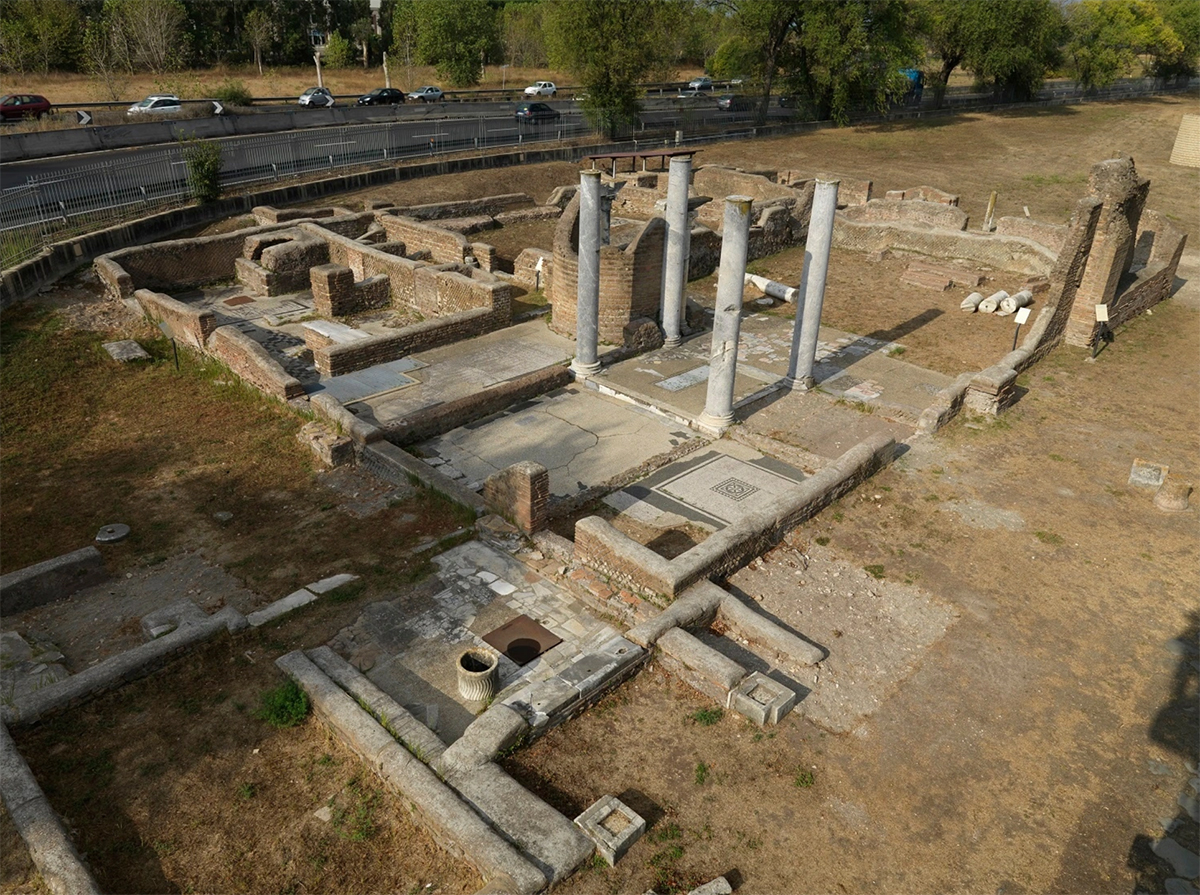
The ancient synagogue in Rome’s port city of Ostia was uncovered by accident in the early 1960s during the construction of a highway between Rome and the newly built international airport in Fiumicino. The discovery of a Roman-era synagogue was big news, and the excavation and restoration of the building was carried out between 1961 and 1963. Several popular publications about the building appeared over the next few years, but no proper excavation report was ever produced, and very few of the artifacts discovered at the synagogue were ever published.
Beginning in 2001, a project based at the University of Texas at Austin began re-examining the 1960s work and conducting new archival investigations and archaeological excavations at the site. One aspect of the project has been an attempt to coordinate the artifacts excavated in the 1960s with the more recent stratigraphic excavation undertaken by the Texas team. The results of this work are sometimes pretty amazing, and they are starting to be published.
Some of the artifacts excavated from the synagogue in the 1960s were briefly discussed in the early publications and so have been in some sense “known about” for a long time, even if they were wrongly dated. For example, a few of the 1960s articles about the synagogue showed a series of terracotta lamps decorated with menorahs and torah shrines.
Oil lamps found at the synagogue at Ostia; image source: Brent Nongbri 2010
These have now been systematically studied and published by Letizia Ceccarelli (see her chapter here).
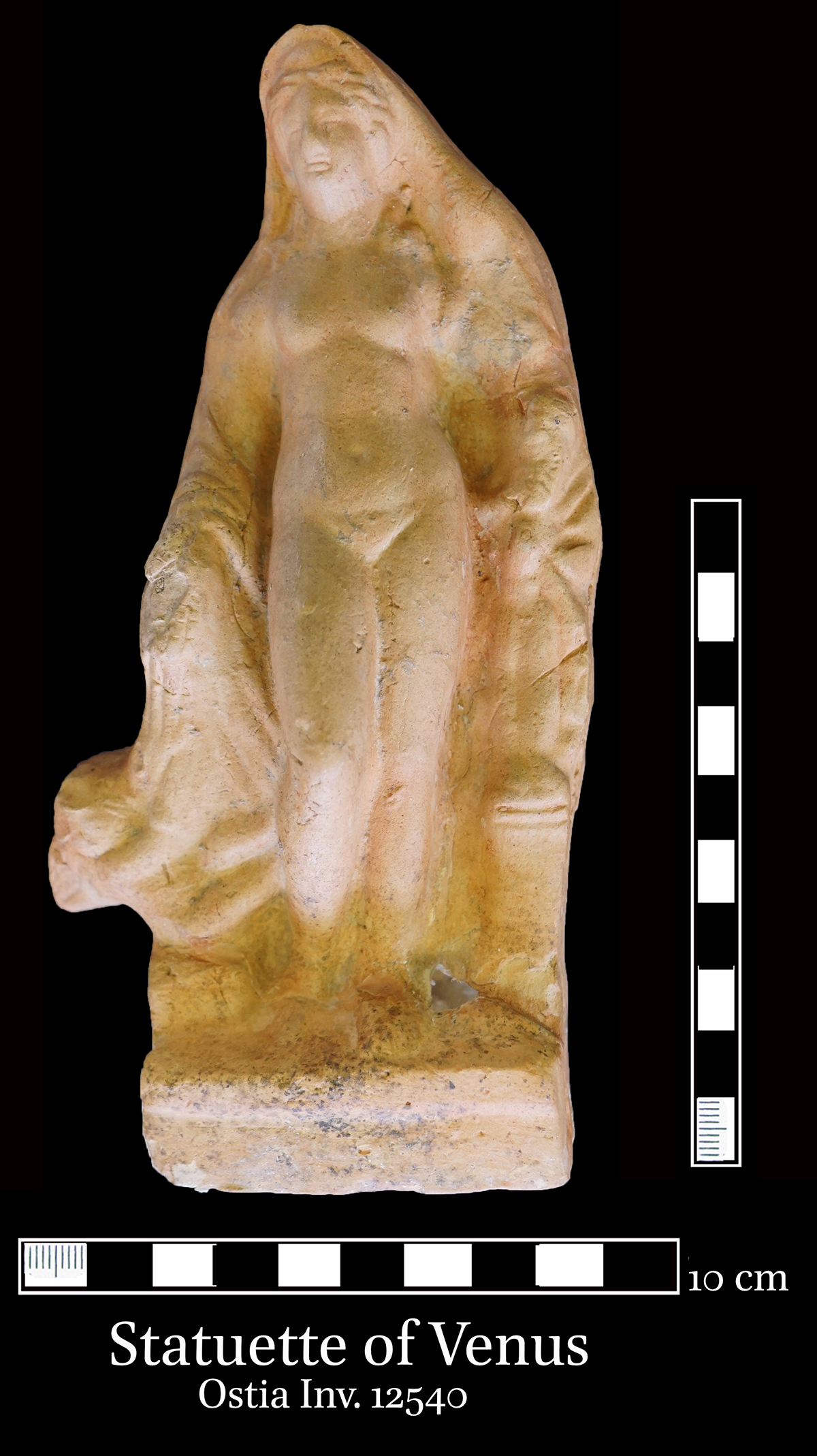
Other material found at the site of the synagogue has been almost entirely unknown to the wider public, and some of it is incredibly interesting. Among the objects excavated from one of the earliest phases of the building are two of terracotta figurines. One depicts a lar (a Roman household god) and the other is the Roman goddess Venus:
Figurine of Venus from the synagogue at Ostia; image source: Mary Jane Cuyler, “Veiled Venus and Camillus of the Harvest: Two Terracotta Figurines Discovered in the Synagogue Complex at Ostia,” in La sinagoga di Ostia antica: 60 anni dalla scoperta 20 anni di Arte in Memoria (Parco archeologico di Ostia antica, 2023), p. 94, figure 2 (photo by L.M. White)
They are preserved in relatively good shape, and excavation records indicate that they were discovered in the same spot. They seem to have been deposited together in antiquity. What were these Roman gods doing in a Jewish synagogue? Mary Jane Cuyler has published the figurines and her chapter is available open access.
Other finds from the 1960s excavation of synagogue include a coin hoard found under a mosaic that was published by Daniela Williams in 2014 (see the open access article here). More material from the Ostia synagogue should be published in the near future.
A disclaimer: I’m fan of maps in general and of the Severan marble map of Rome in particular (I’ve mentioned it before on the blog). So it may be no surprise that I am very enthusiastic about the new museum dedicated to the map that has opened on the edge of the Caelian hill in Rome.
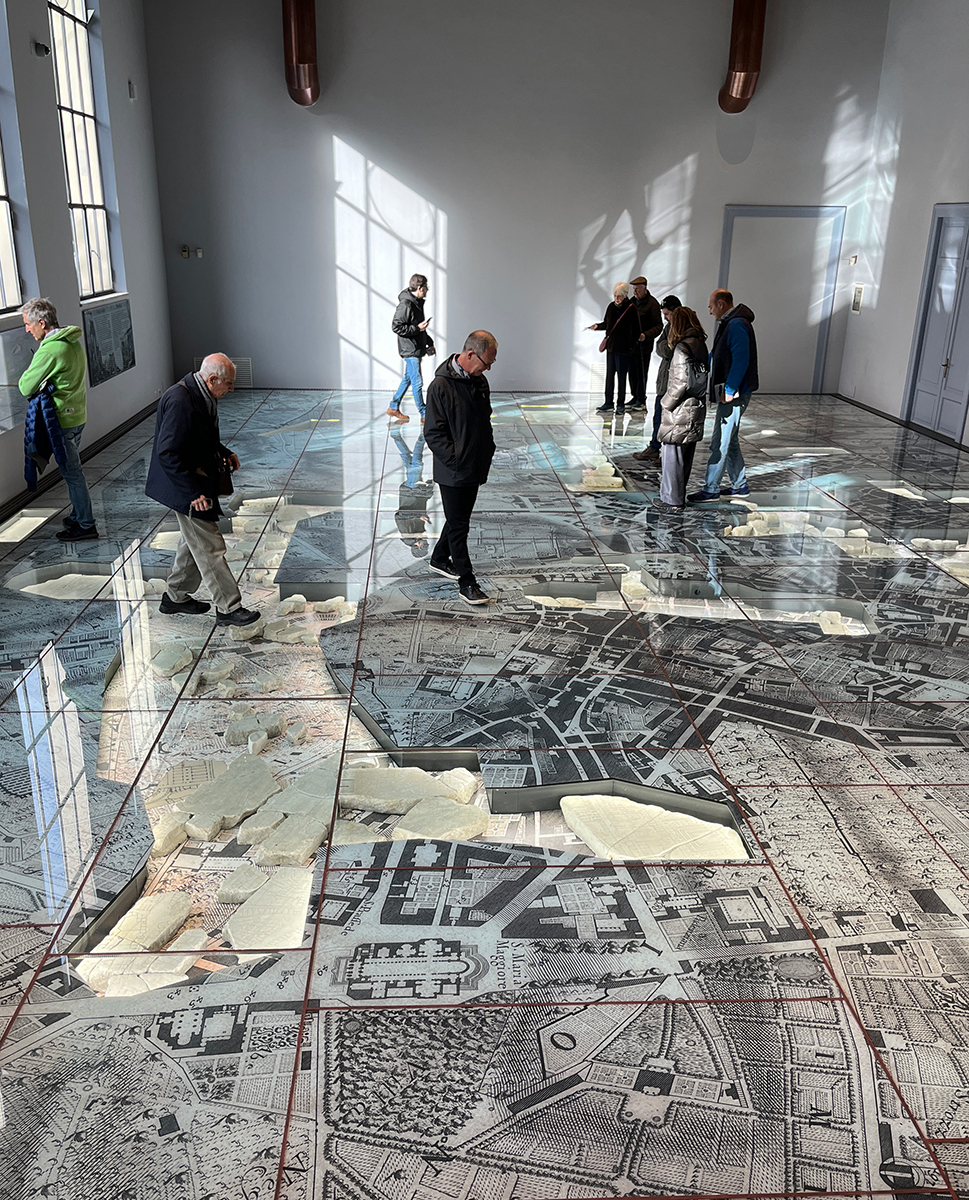
Only a relatively small percentage of the original map survives in the form of fragmentary marble blocks, but what we do have provides valuable data about the topography of the ancient city at the time the map was made (between 203 and 211 CE). The map was originally displayed on a wall in the Temple of Peace near the forum. The organizers of the museum, however, have wisely chosen to place the fragments on the floor under glass embedded in an eighteenth-century map that fills in the missing areas. The curators have also superimposed the outlines of some ancient buildings on the eighteenth-century map in order to help with orientation.
The Museo della Forma Urbis
Provided that the glass on the floor doesn’t get too dirty and scratched, this seems like an ideal solution. Right now, it looks great, and it even photographs reasonably well:
Remaining bits of the Severan marble map showing the Temple of Minerva (left) and the Temple of Peace (right); the darker black line directly beneath the join of the two fragments on the right represents the wall to which the marble map was originally affixed
The museum is not large, but it is very well done. The main room houses the surviving fragments whose placements are known. Pieces whose placements are uncertain are mounted on the wall and used to help explain some of the symbols that one finds on the map:
A key to some of the symbols found on the marble map
There are also small side displays about how the marble slabs were attatched to the wall and about problems with the orientations of some structures on the map. It’s a fantastic display in a small space. The museum is set within the Parco archeologico del Celio just to the south of the Colosseum. Outside the museum is a garden full of interesting inscriptions and architectural fragments. I very much enjoyed spending a morning there.
For anyone interested in the map, also have a look at the Stanford Digital Forma Urbis Romae Project . The page is a bit dated now, but it’s still a solid set of online resources for the study of the marble map. A related useful resource for the topography of Rome is the zoomable online version of Rudolfo Lanciani’s Forma Urbis Romae. which superimposes the modern (1901) street plan of the city on the ancient remains of the city that were known at that time.
Back in June 2023, several news outlets picked up the story of “the Graz mummy book.” A team at the University of Graz led by Theresa Zammit Lupi had identified P.Hib. 113, a papyrus extracted from mummy cartonnage and published by Grenfell and Hunt in 1906, as a bifolium from a codex, a book with pages. This was big news because P.Hib. 113 can be dated with a reasonable degree of confidence to about the middle of the third century BCE. This is some three centuries earlier than most scholars have placed the development of papyrus and parchment codices.
Then in September, I noted that the team at Graz had posted a more detailed essay on the papyrus. This has now been summarized in an open-access report published in early 2024 in theJournal of Paper Conservation.
Earlier this week, a group of scholars that included specialists in papyrology, bookbinding, and conservation met in Graz to examine the papyrus. Together with the Graz team, we took a close look at several different aspects of this papyrus. It was an eye-opening experience.
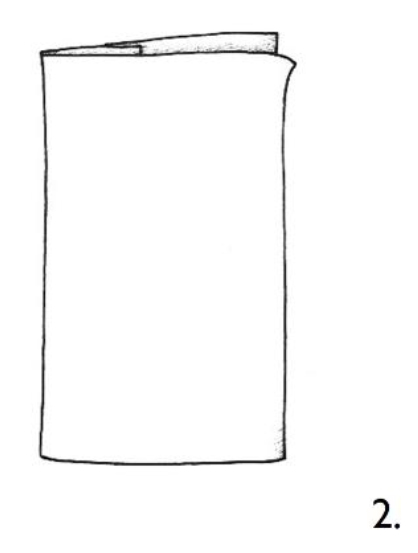
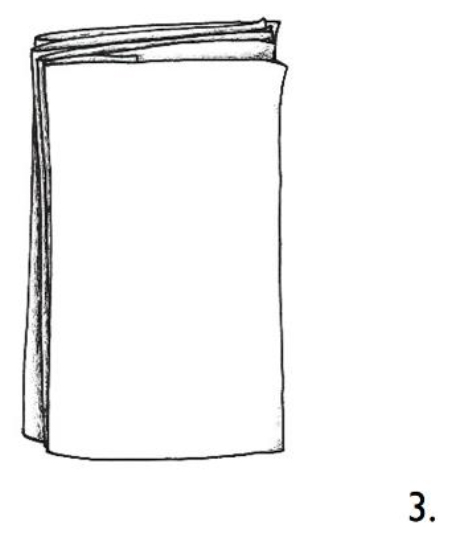
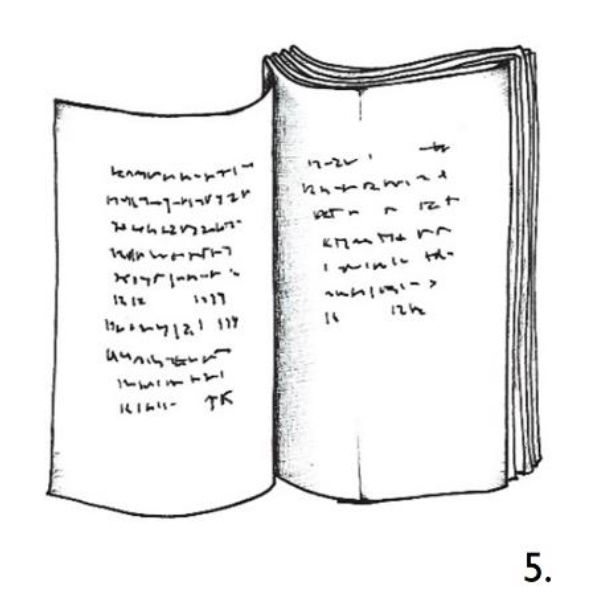
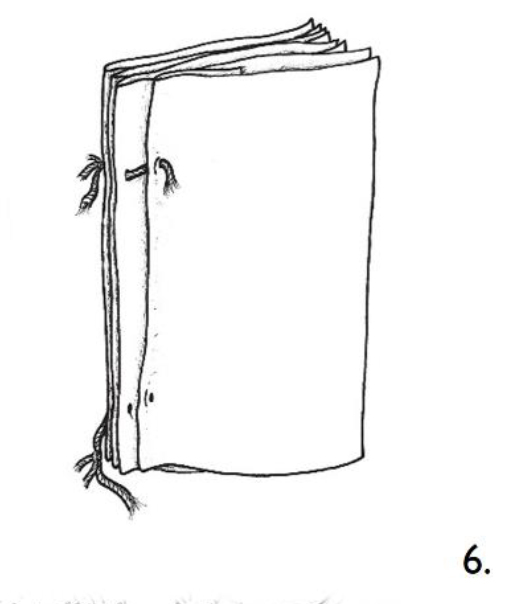
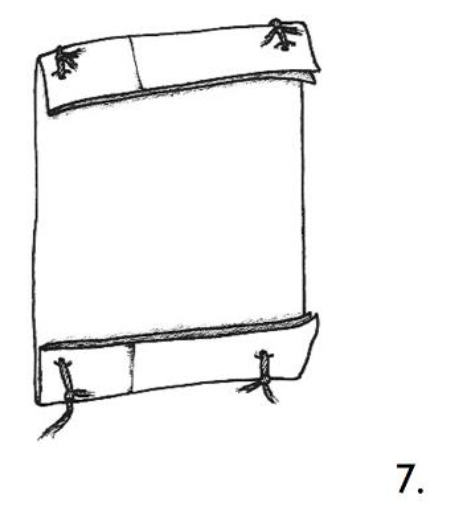
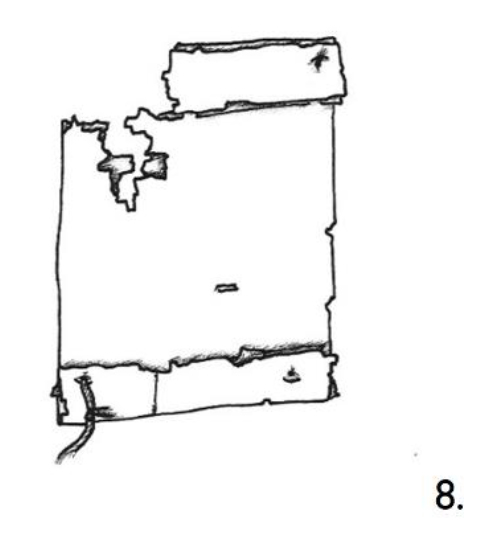
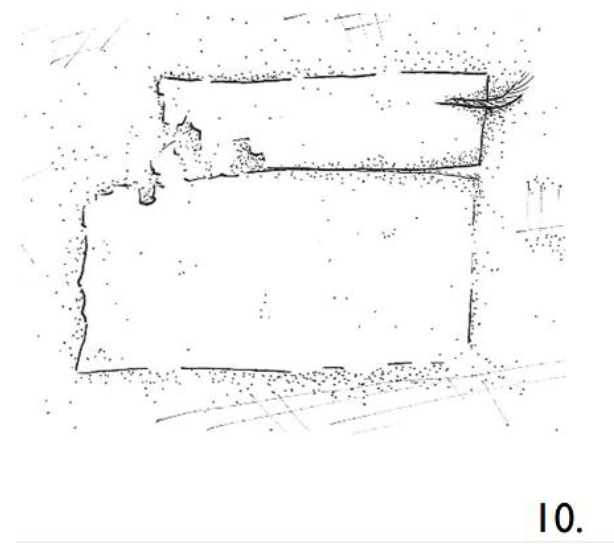
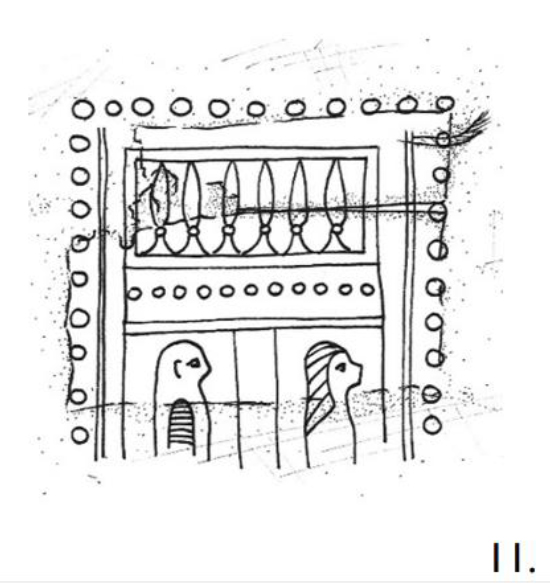
Before I get to the take-aways from the meeting, here’s a quick summary for those who haven’t read the essay by the Graz team: After multispectral photography and further study, the authors maintained their overall conclusion that we have a bifolium of a codex, but they also adjusted some key details of the earlier announcement. In terms of new evidence: The multispectral imaging significantly increased the amount of legible text on the papyrus and also showed that ink transfer had taken place between the two sides of the papyrus, suggesting to the authors that the papyrus was folded closed while the ink was still wet. In terms of changes: The thread that was at first thought to be part of the binding was reinterpreted as one of four tackets that had at one point sealed the folded papyrus (see images below), and the original proposal of binding through the central fold was adjusted in light of what the authors take as evidence for a stab binding (two holes on either side of the central fold). This short description simplifies the authors’ detailed discussion of a series of holes and evidence of folds in the papyrus. In the end, the authors explain the physical evidence of the present condition of the papyrus by discussing its “lives” in 12 steps in their nicely illustrated Figure 14, which I reproduce below with their captions:
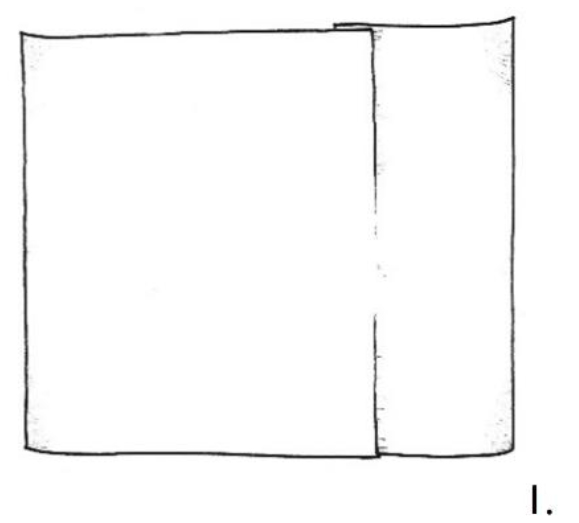
1. A blank papyrus sheet (formed of two kollemata joined by a kollesis)
2. The piece is folded to form a bifolio
3. Multiple bifolios are stacked together
4. The bifolios are stab sewn
5. The notebook is written upon
6. The binding is dismantled and the bifolios are separated
7. The bifolio is secured with tackets
8. Significant damage occurs to the bifolio
9. The bifolio is reused as mummy cartonnage alongside further papyrus waste and textile
10. The cartonnage surface is plastered
11. The cartonnage is painted
12. The bifolio is taken from the mummy and becomes a museum object.
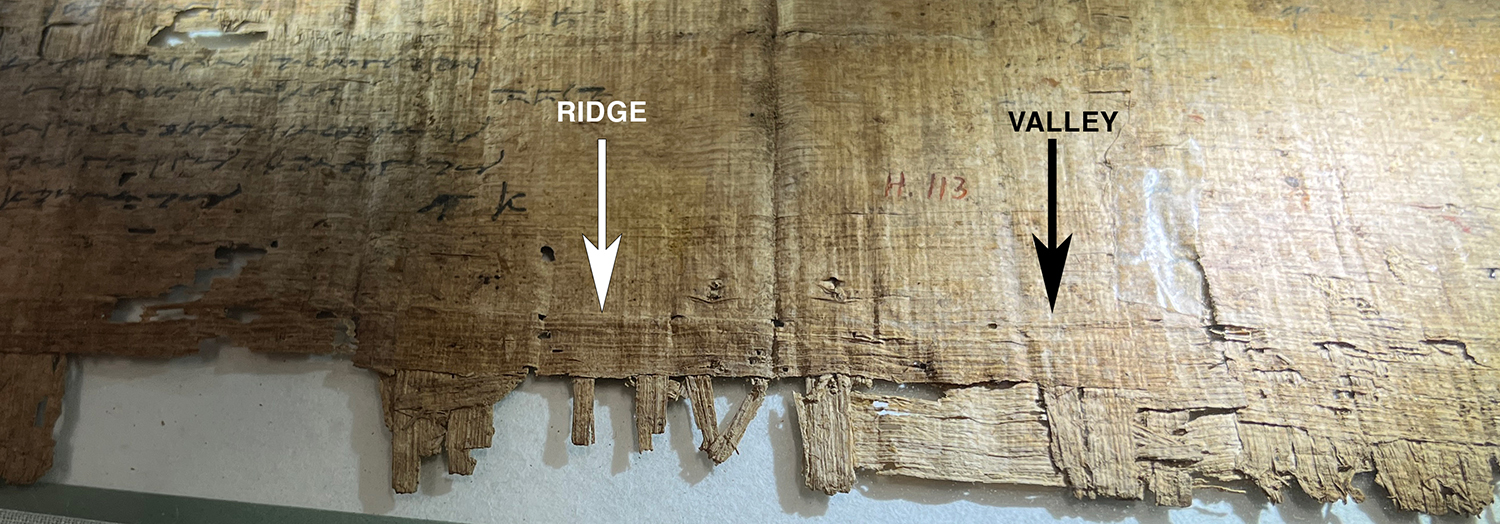
Coming in to the meeting I was a bit skeptical of parts of the authors’ reconstruction (specifically, steps 3-7) and wanted a closer look at the many holes in the papyrus. But I have come away with a sense that we are looking at something quite interesting here, even if I’m not fully on board with the idea that we have the remains of a codex. Because I had never seen a document folded and tacketed in exactly the way the authors describe, I was doubtful about this point, but I’m now inclined to agree that this seems like a good explanation of the physical remains, namely the fold patterns, the presence and position of the thread, and the directions of puncture shown in the various pairs of holes. The fold patterns in particular were clearly visible under raking light.
P.Hib. 113 under raking light, showing horizontal fold on the lower half of the papyrus that took place after the vertical fold
None of us who were present could point to any parallels for this sort of thing (Ptolemaic accounts produced on a bifolium that was subsequently sealed and tacketed in this manner). But then again nobody would have thought to look for evidence of such parallels before now.
Whether such a document was ever one of several bifolia joined together to form a codex was a matter of considerable debate. Essentially, that portion of the authors’ argument depends upon the interpretation of a single pair of holes in the papyrus, which the authors read as evidence of a stabbed binding that went through the folded papyrus from front to back (the corresponding pair of holes in the upper half of the papyrus would have been in a portion of the papyrus that is now lost). Are these holes evidence of a stab binding? I think more work is needed to clarify this point. But after having had a close look at the papyrus, I would say that I’m open to being persuaded.
The meeting raised many questions: What visual evidence is left by the pressure of a thread against the edge of a hole in papyrus? Can we have a “clean” typology of holes in papyrus (what if an insect has a go at the edges of a hole that was originally created by a needle?)? Under what circumstances does ink transfer occur? Could the process of making cartonnage cause it? More generally, what do we actually know about the process of making cartonnage? And what do we actually know about early twentieth-century processes of dismantling cartonnage? How, exactly, did they do it back then? And, maybe most interesting for me: How much can we really rely on analogies from the behavior of modern, commercially produced papyrus (in terms of folding, piercing, and interacting with thread, for example)?
In short, we have more thinking to do.
As I reflect on the discussions of the last couple days, I’m reminded of Grenfell and Hunt’s early encounter with the remains of a single-quire papyrus codex, which I’ve mentioned here before. Grenfell and Hunt were at first puzzled by a papyrus fragment containing just bits of the very beginning and the very end of the text of the Gospel of John, but they eventually settled on what seems to be (now, in retrospect, to us) the obviously correct conclusion: Their papyrus was the surviving fragment of an outer bifolium of a codex containing the gospel composed of a single, thick quire. But to Grenfell and Hunt, this kind of construction was a surprise:
“Such an arrangement certainly seems rather awkward, particularly as the margin between the two columns of writing in the flattened sheet is only about 2 cm. wide. This is not much to be divided between two leaves at the outside of so thick a quire. But as yet little is known about the composition of these early books.”
My takeaway from this was that “as usual, Grenfell and Hunt were willing to be surprised and recognized that many of their expectations might be overturned by the vast amount of new evidence they were uncovering in those early days.”
Examining this papyrus in Graz together with a diverse group of experts encourages me to remember not to stifle my own willingness to be surprised when a critical evaluation of the evidence warrants it. It’s important to keep an open mind when presented with a confounding piece of evidence.
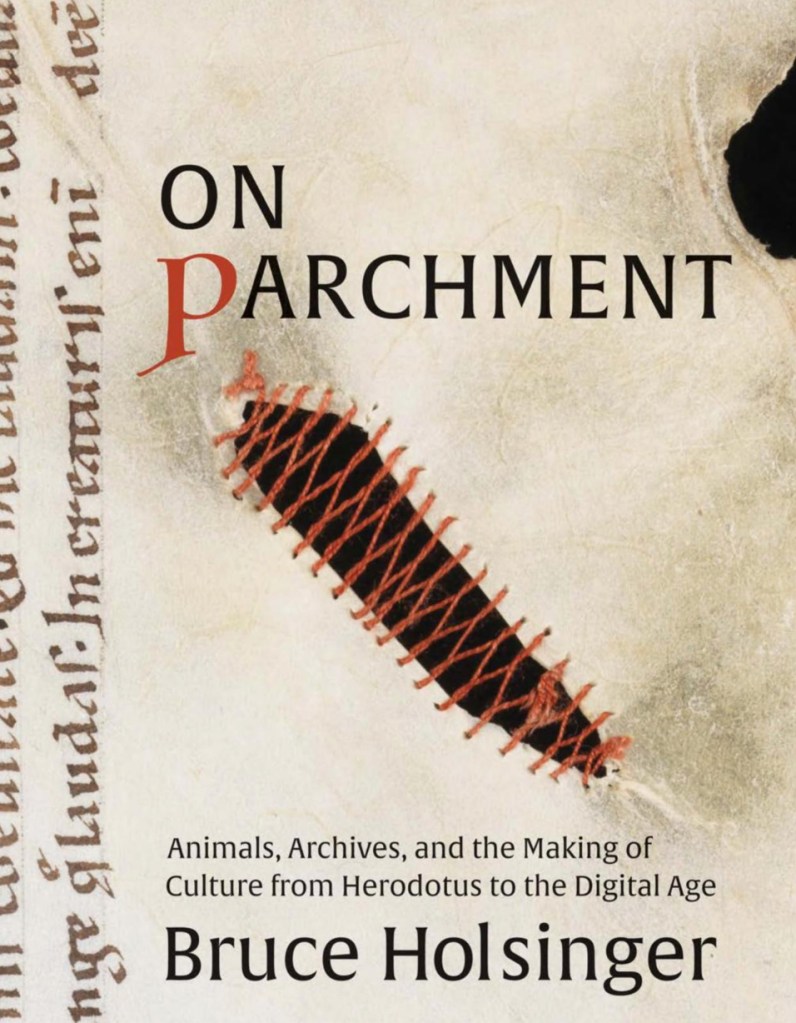
I have papyrus rolls on my mind right now, but I’m also interested in parchment rolls. I’ve been reading an excellent new book by Bruce Holsinger, On Parchment: Animals, Archives, and the Making of Culture from Herodotus to the Digital Age (Yale University Press, 2023). There are loads of interesting observations in the book and many, many striking images (from a production standpoint, YUP did a superb job on this book). One image that really resonated was a picture from the Parliamentary Archives in Westminster. Until 2017, Acts of Parliament had to be recorded on parchment scrolls. This large production of rolls has of course led to a need for large scale storage of rolls. Lots and lots of rolls. What does that look like?
The Act Room, Parliamentary Archives, Victoria Tower, Westminster; image source: Bruce Holsinger, On Parchment.
Seeing the endless shelves of rolls, each with their index tag for identification hanging out makes me wonder if this is how we ought to imagine the larger library spaces of Roman antiquity. And of course the picture also immediately brings to mind the drawing of the lost relief from Trier showing a man working with rolls on a shelf:
Image source: Christoph Brouwer and Jakob Masen, Antiquitatum et Annalium Trevirensium (Liége: Jo. Mathiæ Hovii, 1671), vol. 1, p. 105.
I have not yet finished reading Holsinger’s book, but I can definitely recommend it already for those who are interested in the materiality of manuscripts and book history.
Over the years, I’ve had many occasions to talk about the manufacture of papyrus rolls. I typically describe them as fairly simple artifacts–several individual sheets of papyrus pasted together to form a roll. And a papyrus roll is relatively simple when compared to a codex, with its different materials and many parts. But I’ve recently been trying to make a good quality papyrus roll, and it has turned out to be a little more complicated than I anticipated. The main issue is just the size. Papyrus rolls in antiquity could be quite long.
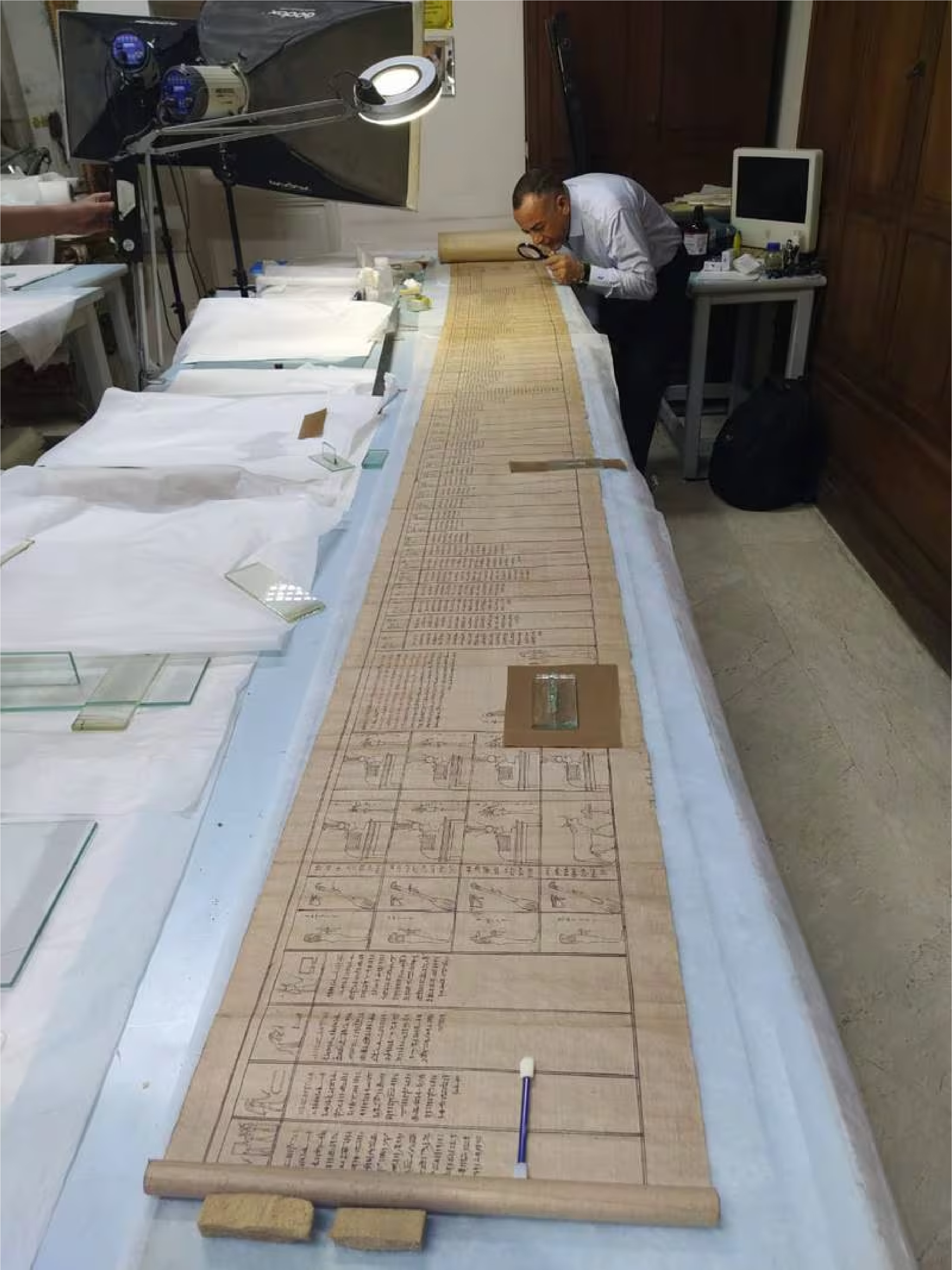
It can be a little challenging to get a sense of just how long these rolls actually were. Even when they have survived intact, they tend to be cut into pieces so that they can fit in reasonably sized glass frames. But when you see a well preserved roll laid out, you get an impression of the scale of these things. Here is a recently discovered Hieratic papyrus roll that is 16 meters (≈52.5 feet) long. Note that most of it is still rolled up near the head of the gentleman with the magnifying glass:
The “Waziri Papyrus” partly unrolled; image source: MENA
I’ve been experimenting with making a shorter roll. My original idea was to aim for a roll of about 10 meters, what we might think of as an “average” papyrus roll of the Roman period. I had 25 papyrus sheets (30 cm high and about 40 cm wide). So far so good. But I immediately faced several hurdles:
Simply having access to a large enough space to make something 10 meters (≈33 feet) long
Making a wheat flour paste that is the right consistency–thick enough to hold the sheets together but not so thick that it becomes overly stiff when dry
Applying the paste evenly and fully without creating overflow
Keeping the sheets properly aligned when pasting, especially as the roll becomes longer
Having a sufficient number of suitable weights to keep pressure on the kollēseis (the overlapping areas where the sheets are pasted together) while drying
These factors combined to make me a bit less ambitious and to trim the roll size by half. My first attempt is still drying. I’ll post later with the results.
Thanks to Mike Holmes for informing me that the most recent issue of Zeitschrift für Papyrologie und Epigraphik contains an article reporting the results of radiocarbon analysis of five papyrus manuscripts and one parchment manuscript that took place about a decade ago:
Daniel Stevens, “Radiocarbon Analysis of Six Museum of the Bible Manuscripts,” Zeitshcrift für Papyrologie und Epigraphik 227 (2023) 153-160.
This follows upon the publication of the results of AMS analysis of the “Wyman Fragment” of Romans in 2022:
Daniel Stevens, “The Wyman Fragment: A New Edition and Analysis with Radiocarbon Dating,” New Testament Studies 68 (2022) 431-444.
Among the pieces just published in ZPE are some Egypt Exploration Society distribution papyri that were sold by Dirk Obbink to Hobby Lobby in 2010 (these are not the stolen Oxyrhynchus Papyri but rather pieces that were “distributed” to museums, universities, and seminaries after they were published in the early twentieth century). Also included are: P.Oxy. 15.1780 (New Testament P39, a distribution papyrus apparently not bought through Obbink), the Bodmer Psalms codex (P.Bodmer 24), and a piece of the Tchacos-Ferrini Exodus codex (MOTB PAP.000447).
There are some noteworthy features in this set of analyses. Two of the papyrus documents are dated internally from their textual contents: MOTB PAP.000379, a distribution papyrus from Tebtunis dated to 44 CE and P.Oxy. 12.1459 a document dated to 226 CE. Five samples were taken from P.Oxy. 12.459 and sent to five different labs. The results from four of the labs were in reasonable agreement, while the fifth lab produced results that were far too early. I’ll have more to say about this analysis later.
But for now I want to focus on one of the literary pieces that has interested me for a long time, P.Bodmer 24, a copy of the Psalms in Greek that the Greens purchased in a private sale from the Fondation Martin Bodmer (now MOTB MS.000170). This codex has been assigned to different dates over the years on the basis of its scripts (the codex is the work of two copyists). The original editors, Rodolphe Kasser and Michel Testuz, assigned the codex to the first quarter of the fourth century, without excluding a slightly earlier date.1 Similarly, Eric Turner described P.Bodmer 24 as “iii/iv.”2 Colin H. Roberts, however, assigned the codex to the second half of the second century on the following grounds:
“The first hand is of a common type of which a good example is my Greek Literary Hands 17a, which can be dated to the middle of the second century a.d. It is a hand of which the beginnings can be seen in Schubart, Pal. 3 abb. 79 and a later development in P.Graec.Berol. 20. The second hand is also of a familiar type; it has something in common with Schubart’s Pal. abb. 82 and with P.Graec.Berol. 31. I should have no hesitation in saying that the Bodmer Psalms was written in all probability in the second half of the second century a.d.“3
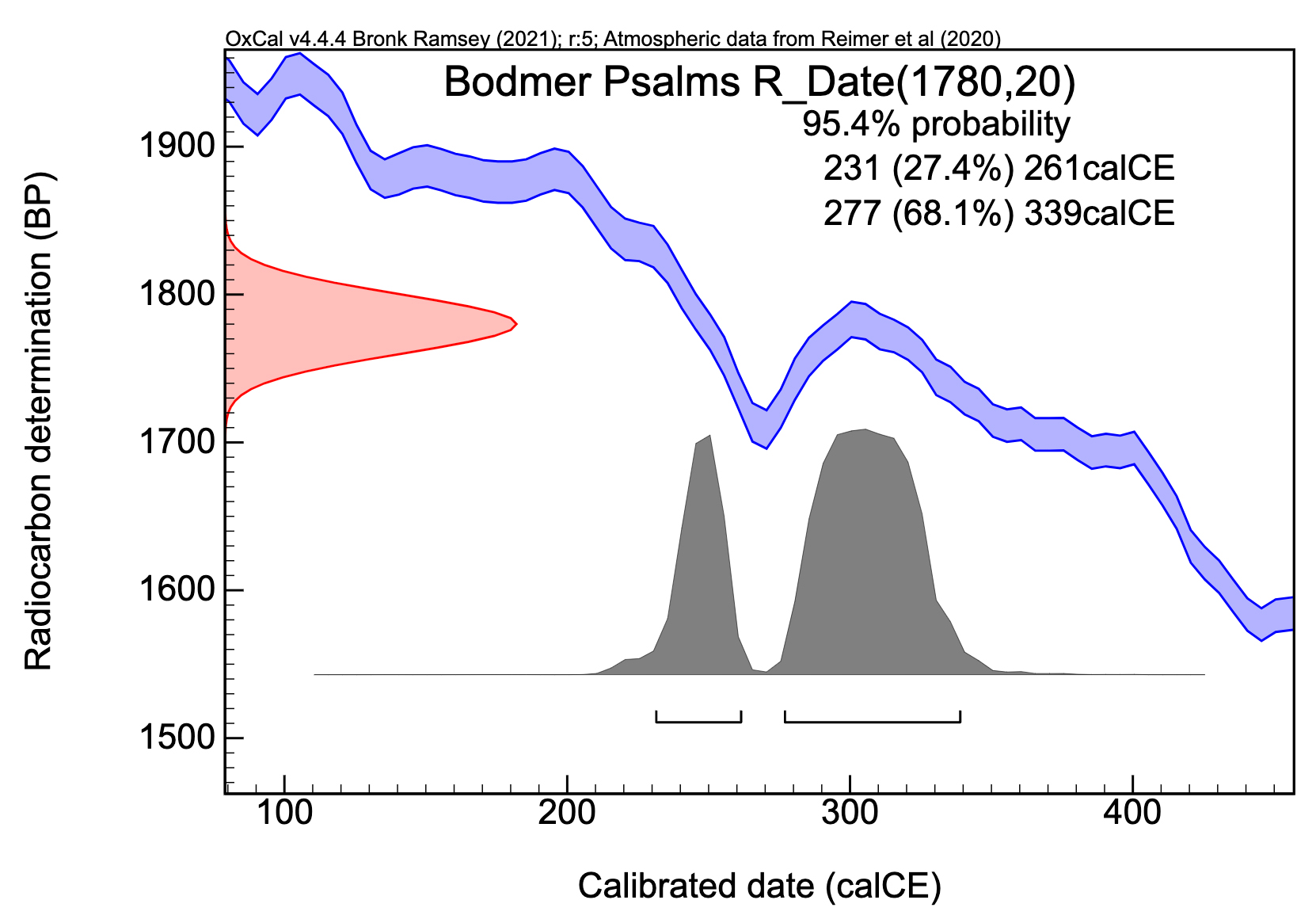
The results of the radiocarbon analysis shed some light on the discussion. The sample tested yielded an age of 1780 ± 20 radiocarbon years BP. A result in this range when adjusted using the latest calibration data (IntCal20) produces two discontinuous ranges of calendar dates:
The resulting ranges of calendar dates, 231-261 CE or 277-339 CE, are consistent with the palaeographic estimates of Kasser/Testuz and Turner, but these results cast doubt on the second century date assigned by Roberts. Thus, although the radiocarbon analysis does not give us a precise date (in fact it yields two discontinuous ranges that span just over a century), the AMS analysis does give us useful information that substantially improves our knowledge of the age of this codex: The papyrus used to make it was most likely harvested between about 230 and 340 CE.
Rodolphe Kasser and Michel Testuz, Papyrus Bodmer XXIV: Psaumes XVII – CXVIII (Bibliotheca Bodmeriana, 1967), 22: “il ne serait pas impossible de la dater de la fin du IIIe siècle; il sera plus prudent, cependant, de l’attribuer à une époque un peu plus tardive: disons, grosso modo, le premier quart du IVe siècle.” ↩︎
Eric G. Turner, The Typology of the Early Codex (Philadelphia: University of Pennsylvania Press, 1977), 21, 59, and 171. ↩︎
Jean-Dominique Barthélemy, “Le Psautier grec et le Papyrus Bodmer XXIV,” Revue de Théologie et de Philosophie, 3rd series, 19 (1969) 106-110, quotation at 106-107. ↩︎
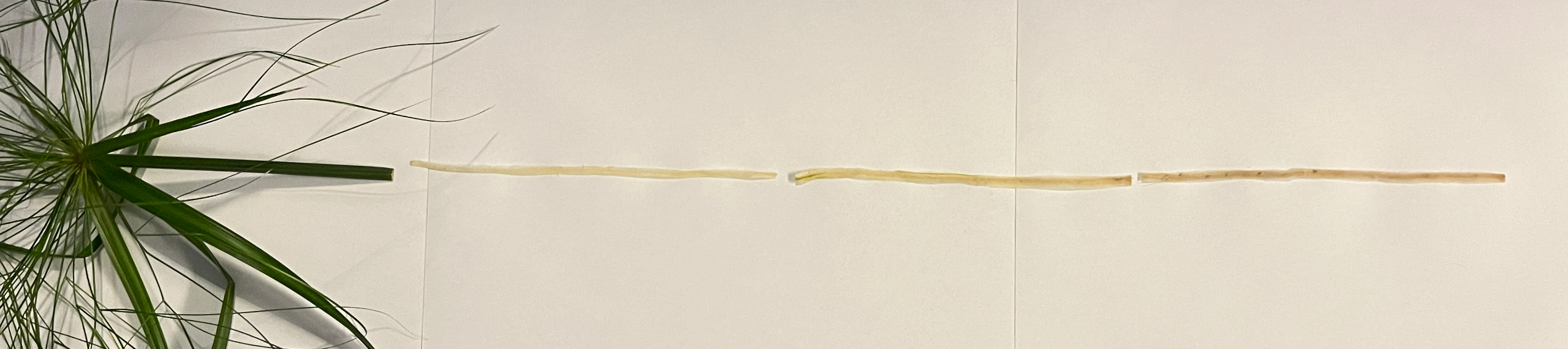
A few months ago, I observed that two stalks of papyrus from the same plant could produce quite different colored sheets of papyrus. I’ve also noticed that the same stalk of papyrus can produce strips that, although they look the same when freshly cut, have different colors when dry. I wondered whether this color difference might relate to the area of the stalk from which the strips come (the top end or the root end).
I figured this was easy enough to test using a stalk from one of the papyrus plants I grew from seeds earlier this year. The stalks on my plants are quite skinny, but I’m still able to make small sheets from them. So, I cut the stalk into sections and then made strips from them. When freshly cut and shorn of its green husk, the whole stalk has a translucent grey-ish white color. But after a few minutes in the air, the portion nearer the root began to turn a reddish color. This effect diminished as you moved up the stalk toward the top, where a lighter yellow color developed.
The different colors of a papyrus stalk after a few minutes of exposure to air; lighter near the top, darker near the root
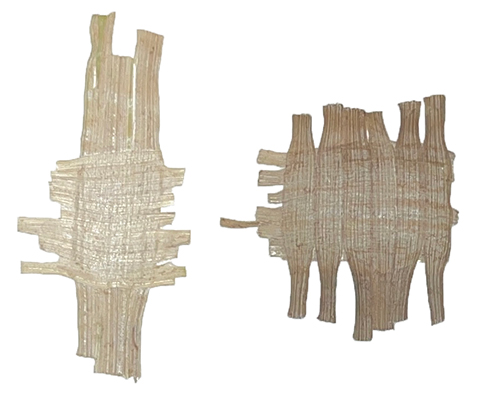
This pattern of coloration became more pronounced as the strips dried. The reddish area at the bottom dried to a fairly dark brown color after 24 hours. Strips from the upper part dried to a much lighter color. The image below shows small sheets made from middle strips on the left and lower strips on the right (the upper-most strips are simply too narrow to use effectively). The color difference is fairly stark:
Papyrus sheet made from strips from the middle of the stalk (left); papyrus sheet made from strips from the lower portion of the stalk (right)
I tried this on three stalks from the same root cluster and had similar results. I also observed a slightly less pronounced version of this phenomenon on strips cut from larger stalks from the local botanical garden.
In general, the upper portions produce strips of a much lighter color, but the strips become very thin due to the narrowing of the stalk near the top. At the lower portion of the stalk, the strips are broad, but the color of the papyrus becomes quite dark when exposed to air. For the purpose of making usable papyrus sheets, it’s really the portion of the stalk in the middle–where the breadth is decent and the color is still light–that is the best part.
This observation potentially sheds some light on a passage in Pliny’s famous description of the manufacture of papyrus (Natural History, book 13). Pliny writes the following (according to the text and translation in Lewis, Papyrus in Classical Antiquity):
Praeparatur ex eo charta diviso acu in praetenues sed quam latissimas philyras; principatus medio, atque inde scissurae ordine.
Paper is made from the papyrus plant by separating it with a needle point into very thin strips as broad as possible. The choice quality comes from the centre, and thence in the order of slicing.
As Lewis notes, there are several puzzles in this short passage, but for now I’m interested in the phrase principatus medio. Lewis understands medio as the center, or core portion, of the pith. But if my observations about the color differences of the pith up and down the stalk are right, then it seems like medium could equally refer to the middle part of the length of the stalk, between top and the root, where the strips are lighter color but still relatively wide. And in fact, already in 1976, Adam Bülow-Jacobsen argued for this interpretation of medio on other grounds:
“I am convinced that medium must be taken quite plainly to mean the part of the plant which is mid-way between the top and the root, and there is good physical reason to understand it thus: All fibers in a papyrus stem run all the way from bottom to top and a cross-section at the top and at the bottom of the same stem will reveal the same number of vascular bundles in both, although the diameter of the stem is much smaller at the top than at the bottom. In terms of strips cut along the fibers this means that a strip from near the bottom of the plant will seem to contain fewer and thicker fibers, which will stand out like wires once the pith between them has been hammered out flat and dried. A strip from near the top of the plant will have great concentration of fibers with little pith between them and will be too narrow for convenience.”1
Bülow-Jacobsen notes that other experimenters came to different conclusions, but the argument from the differences in color in the different levels of the stalk would seem to support his analysis and exegesis of Pliny’s text.
Adam Bülow-Jacobsen, “principatus medio: Pliny, N.H. XIII, 72 sqq.,” Zeitschrift für Papyrologie und Epigraphik 20 (1976) 113-116. ↩︎
Several years ago, I tried to sort out some of the confusion that surrounds the so-called Robinson Papyri, a collection of papyrus manuscripts accumulated by the archaeologist David M. Robinson (1880-1958) and eventually inherited by the classicist William H. Willis (1916-2000). The confusion results from seemingly conflicting descriptions of the collection published by Willis, and the close but unclear relationship between the Robinson Papyri and two other collections, the Mississippi Papyri and the Deaton Papyri. I had first encountered the Robinson Papyri because of my interest in still another intersecting collection, the Bodmer Papyri. Figuring out the Robinson Papyri became more urgent in 2015, when Dirk Obbink claimed that the Robinson Papyri were the source of the now infamous Sappho papyrus that he published (“P.Sapph.Obbink”).
David M. Robinson and William H. Willis
This series of posts (here, here, and here) raised a number of questions. Many of them have now been answered by an informative and thorough new article:
Sharp’s detailed archival research at the University of Mississippi, Duke University, and elsewhere has uncovered some of the reasons for the confusion within these collections. What all these collections have in common is the figure of Willis, who had physical custody of the Robinson Papyri (which he owned through inheritance), the Mississippi Papyri, the Deaton Papyri, and a few scraps of Bodmer Papyri. Sharp demonstrates quite clearly that Willis allowed these groups to intermingle in different ways. This matters because Willis owned the Robinson Papyri but not the other collections. It is thus surprising to learn that some of the Mississippi Papyri and Deaton Papyri became Robinson Papyri and were donated to Duke as the personal property of Willis. As Sharp notes in the case of P.Deaton 28, which was donated to Duke by John Deaton:
“It is impossible to know with certainty why Willis decided to claim personal ownership of P.Deaton 28 rather than donate it to Duke in Deaton’s name. What can be documented is that Willis had P.Deaton 28 appraised for $12,000 as part of his donation to Duke and that he claimed those donations as tax write-offs.”
Willis’s numerous and important contributions to classical studies and papyrology are well known. Sharp’s research adds a new dimension to Willis’s academic legacy and sheds light on the entanglement of papyrologists and the antiquities trade in the twentieth century.
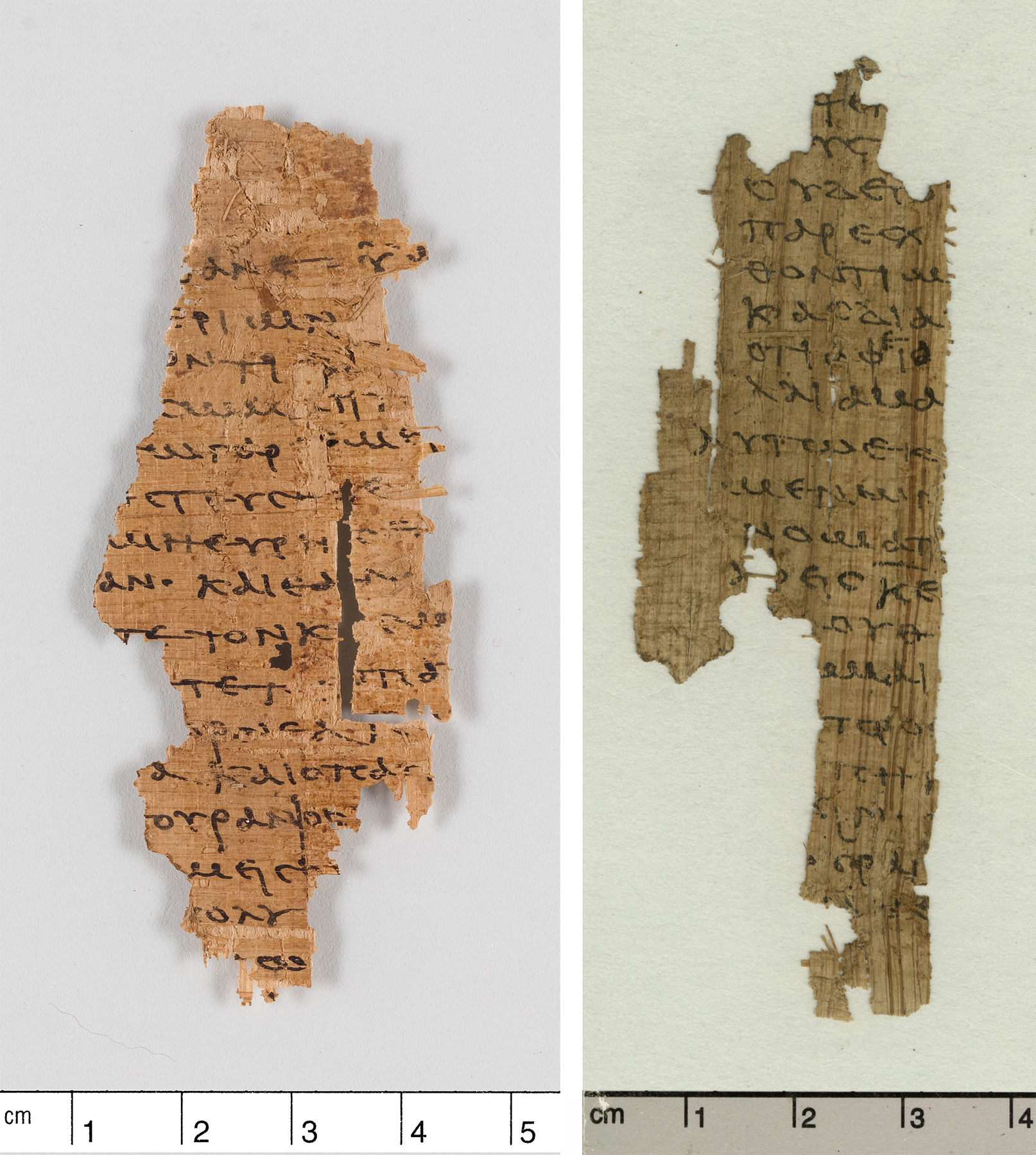
The editors of P.Oxy. 87.5575, the recently published papyrus fragment with a collection of sayings of Jesus, stated that P.Oxy. 60.4009, another papyrus with material about Jesus, “may well be in the same hand, though the loops in that papyrus are sometimes more pronounced and there is perhaps less lifting of the pen.” In preparation for a meeting of the North American Society for the Study of Christian Apocryphal Literature yesterday, I spent some time with images of the two papyri and managed to convince myself that these pieces were in fact copied by the same person.
I’m often critical of efforts to assign precise dates on the basis of handwriting to undated manuscripts of Greek, Latin, and Coptic writing of the Roman era. The comparisons involved in that process depend on a number of assumptions that I’ve discussed elsewhere on multiple occasions. The comparisons made in palaeographic dating are always a matter of more similar and less similar, and there is always room for debate. When the question has to do with identifying the work of a particular copyist, however, the task is sometimes easier. I say “sometimes” because when it comes to expert execution of highly formal scripts, it really can be difficult to tell the work of one copyist from another (think of the debates around the number of copyists involved in the production of Codex Vaticanus). But when the scripts involved are less formal and the degree of execution more, we might say, relaxed, the process of identifying the work of a single copyist in multiple manuscripts can be more straightforward. It’s a matter of saying, “Look at this combination of idiosyncrasies. These two samples of handwriting were produced by the same person.”
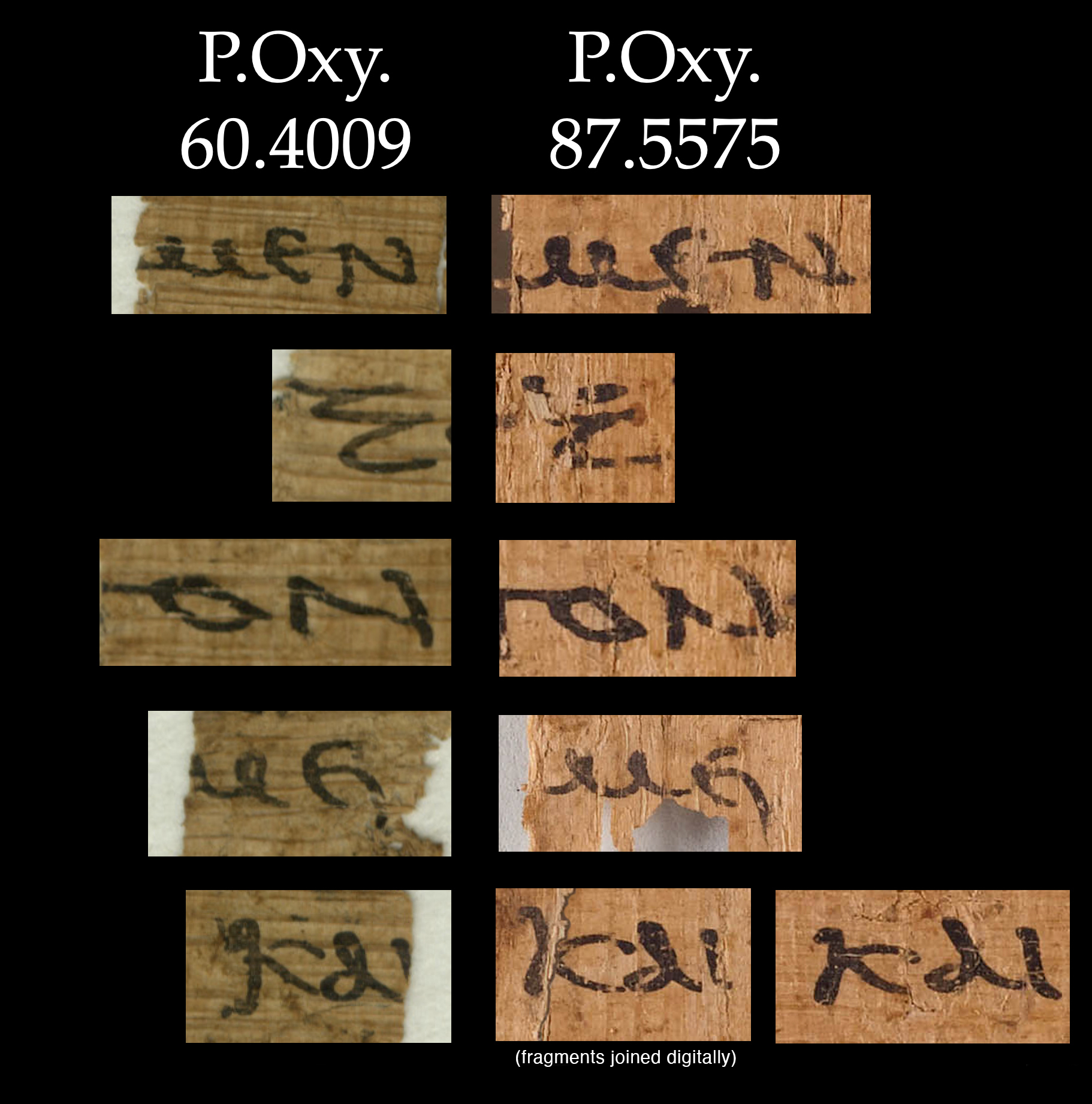
So, here’s a side-by-side comparison of what I would consider a set of idiosyncrasies sufficient to identify the work of a single copyist in P.Oxy. 87.5575 and P.Oxy. 60.4009:
The mu is formed with no lifting of the stylus and with the belly sitting on the lower notional line. The crossbar of the epsilon extends to the top of the first vertical stroke in the nu. The formation of the ξ in both pieces is virtually identical, made without lifting the stylus. The upper right quadrant of the omicron in both pieces is occasionally flattened. The epsilon-iota combination is regularly produced with the iota simply trailing off the middle bar of the epsilon and extending below the lower notional line. The oblique strokes of the kappa in και extend out in an almost horizontal fashion and bend down slightly toward the lower loop of the alpha.
Each of these individual features could be paralleled pretty easily in other papyri, but the combination of all of them in both pieces and the level of graphic similarity on display here make me comfortable saying these two fragments were the work of the same copyist. There are occasionally some slight differences in the formation of some letters, but these all fall within what I would call a normal level of variation for any copyist.
There is at least one other example among the Christian material at Oxyrhynchus in which we find the same copyist responsible for two manuscripts. AnneMarie Luijendijk pointed out to me several years ago that P.Oxy. 8.1078 (Hebrews) and P.Oxy. 6.850 (Acts of John) were likely written by the same person. Arthur Hunt had actually made the identification in his edition of P.Oxy. 8.1078, but I had not noted the reference. It is also worth recalling the recently published set of Septuagint papyri, P.Oxy. 84.5404-5408, which seem to have been copied by the same person but apparently were part of different codices.
I would be even more interested to see if it is possible to identify the work of a single copyist who was responsible for both Christian and non-Christian papyri.
Earlier this year, I noted the news that we may have a new candidate for the earliest surviving portion of a codex, P.Hib. 113, a papyrus excavated from the Egyptian town of Hibeh and now kept at the University of Graz. Theresa Zammit Lupi and the team at Graz have now produced a much more detailed study of the papyrus, which is freely available here.
I have not yet had the opportunity to read the paper carefully and think it through, but a quick scan shows that it is well illustrated and promises to make further study of this artifact much more informed. I look forward to the ongoing discussion.